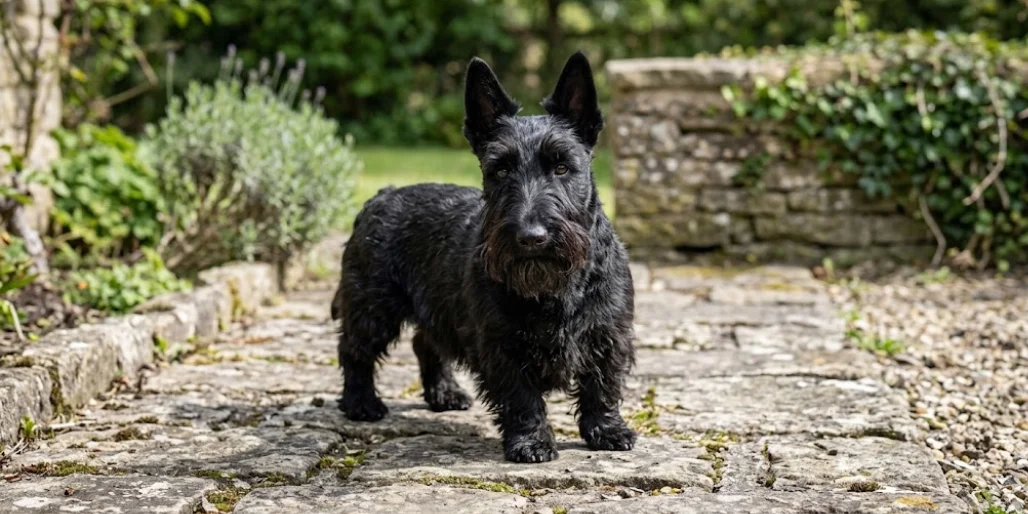
The Scottish Terrier, affectionately known as the Scottie, is a small dog with a big personality. This guide will provide you with all the essential Scottish Terrier dog breed information, covering their history, characteristics, temperament, and care needs to help you understand what makes this breed so unique and beloved.
Introduction to the Scottish Terrier
Overview of the Scottish Terrier Breed
The Scottish Terrier is a distinctive and charming dog breed, instantly recognizable by its sturdy build and alert expression. Often described as “diehard,” this small dog possesses a confident and dignified demeanor. Known for its wiry coat and keen intelligence, the Scottie makes a wonderful companion for those who appreciate a spirited and independent canine friend.
History and Origin of Scotties
The origins of the Scottish Terrier are deeply rooted in the Scottish Highlands, where they were originally bred to hunt vermin like badgers and foxes in their dens. Recognized by the AKC in 1885, this breed was once known as the Aberdeen Terrier. Their rich history as tenacious hunters has shaped the resilient and feisty temperament that Scotties exhibit today.
Characteristics of Scottish Terriers
Scottish Terriers are characterized by their compact size, erect ears, and distinct beard. They possess a wiry coat, which can come in black, brindle, or wheaten colors, requiring regular grooming. Despite their small stature, they have the presence of a big dog, making them excellent watchdogs. Their unique appearance truly sets them apart as a beloved dog breed.
Scottish Terrier Personality and Temperament
Understanding the Scottish Terrier Temperament
The Scottish Terrier personality is often described as independent, dignified, and spirited. While they can be aloof with strangers, Scotties are incredibly affectionate and loyal to members of the family. Their feisty nature and sharp intelligence mean they thrive with consistent training and positive reinforcement from puppyhood.
Socialization Needs for Scotties
Early socialization is crucial for Scottish Terriers, especially around other dogs and new people. Introducing your Scottie puppy to various environments helps them develop into a well-adjusted adult. Without proper socialization, their natural protective instincts might lead to shyness or aggression, so consistent exposure is key for a well-rounded companion.
Behavioral Traits of Scottish Terriers
Scotties are known for their strong prey drive, a remnant of their hunting past, making games like tug-of-war particularly enjoyable for them. They can be quite vocal, making them excellent watchdogs. While generally healthy, the breed can be prone to hereditary conditions like Scottie cramp, craniomandibular osteopathy, and Von Willebrand’s disease, so regular veterinary check-ups are important.
Scottish Terrier Care Requirements
Grooming Needs of Scottish Terriers
Grooming your Scottish Terrier is essential to maintain their distinctive appearance and healthy coat. Their wiry coat, which can be black, brindle, or wheaten, requires regular brushing to prevent mats and remove loose hair. Many Scottie owners choose to hand-strip their dog to maintain the coat’s natural texture, or opt for professional groomers to clip or trim it, paying special attention to their iconic beard.
Exercise Requirements for Scotties
Despite being a small dog, Scotties have a fair amount of energy and require regular exercise to stay happy and healthy. Daily walks and playtime in a secure, fenced yard are usually sufficient to meet their needs. Their strong prey drive means they might chase small animals, so always keep your Scottish Terrier on a leash during outdoor excursions to prevent them from bolting.
Nutrition and Diet for Scottish Terriers
Providing your Scottish Terrier with a balanced and nutritious diet is crucial for their overall well-being. High-quality dog food appropriate for their age, size, and activity level is recommended. It’s important to monitor their food intake and avoid overfeeding, as Scotties can be prone to weight gain, which can exacerbate other health issues. Consult your veterinarian for personalized dietary advice.
Health and Veterinary Care for Scotties
Common Health Issues in Scottish Terriers
Like many purebred dogs, Scottish Terriers can be predisposed to certain hereditary health issues. Some common concerns include Scottie cramp, a neurological condition affecting muscle coordination; craniomandibular osteopathy, a painful jaw condition; and Von Willebrand’s disease, a bleeding disorder. Regular check-ups with your veterinarian can help detect and manage these conditions early.
Regular Veterinary Check-ups for Scotties
Consistent veterinary care is paramount for the long-term health of your Scottish Terrier. Regular check-ups allow your vet to monitor their overall health, administer necessary vaccinations, and perform screenings for common breed-specific conditions. These proactive visits are crucial for early diagnosis and treatment, ensuring your beloved Scottie lives a full and healthy life.
Maintaining a Healthy Lifestyle for Your Scottish Terrier
Beyond veterinary visits, maintaining a healthy lifestyle for your Scottish Terrier involves proper nutrition, regular exercise, and mental stimulation. Providing a stimulating environment with toys and consistent positive reinforcement training helps keep your Scottie’s mind sharp. A well-balanced approach to their care will ensure your feisty, dignified companion remains a cherished member of the family.
Scottish Terrier Breed Standard
Understanding the Breed Standard for Scottish Terriers
Understanding the Scottish Terrier breed standard is crucial, whether you’re a prospective owner, a breeder, or simply an admirer of this distinctive canine. The official breed standard, set by organizations like the American Kennel Club (AKC), outlines the ideal characteristics of a Scottish Terrier, from their physical appearance, such as their sturdy build, erect ears, and wiry coat, to their quintessential dignified and feisty temperament. This benchmark ensures the preservation of the breed’s unique traits and health.
Judging Criteria for Scotties in Dog Shows
In dog shows, Scotties are judged rigorously against the established breed standard. Judges evaluate various aspects, including their compact size, strong head with a keen expression, and the texture and color of their wiry coat, which can be black, brindle, or wheaten. The dog’s movement, temperament—exhibiting that typical diehard Scottie spirit—and overall balance are also critical factors, ensuring the canine embodies the ideal Scottish Terrier characteristics.
How to Choose a Scottish Terrier Puppy
Choosing a Scottish Terrier puppy involves careful consideration to ensure you bring home a healthy and well-adjusted companion. Look for reputable breeders who prioritize the health and temperament of their Scotties. Inquire about the puppy’s parents’ health clearances, particularly regarding conditions like Scottie cramp or Von Willebrand’s disease. Observing the puppy’s personality—a blend of feisty and affectionate—and ensuring they come from a clean, stimulating environment will set the foundation for a happy life with your new family member.
Conclusion
Final Thoughts on Owning a Scottish Terrier
Owning a Scottish Terrier is a rewarding experience, offering a loyal and spirited companion. While their independent nature and grooming needs, including regular brushing and occasional trimming or clipping of their wiry coat and beard, require commitment, the unique personality of a Scottie is unparalleled. They are truly dignified, affectionate, and make excellent watchdogs, enriching the lives of those who appreciate their distinctive charm and feisty spirit.
Resources for Scottie Owners
For current and prospective Scottish Terrier owners, numerous resources are available to support you. The Scottish Terrier Club of America is an excellent starting point, offering valuable information on breed health, responsible breeding, and events. Consulting your veterinarian for health concerns, connecting with local Scottie enthusiasts, or seeking advice from an experienced groomer can help you provide the best care for your beloved canine.
Explore the Dog A-Z Breeds Guide for More Information
For those captivated by the world of purebred dogs or eager to learn more about various breeds, the Dog A-Z Breeds Guide offers a wealth of comprehensive dog breed information. This guide, an invaluable resource from Pawandbreeds, can help you further explore the diverse characteristics, temperaments, and care requirements of numerous canine companions beyond the Scottish Terrier.
FAQ
Q: What’s the Scottish Terrier dog breed actually like as a pet?
A: Honestly, Scotties are little bundles of personality packed into a short-legged body. They’re independent, feisty, and super loyal to their families, but they can also be pretty stubborn. If you want an ideal dog that’s more “dignified companion” than “eager to please,” a Scottie might be your match. They’ve got this confident strut that makes them look way more important than their size suggests, and their pointed ears (some call it prick ears) give them that alert, always-watching expression.
Q: Is this breed good toward strangers and unfamiliar people?
A: Scotties tend to be pretty reserved toward strangers and unfamiliar people. They’re not the type to run up and lick every new face they see. They’ll usually size someone up before deciding if they’re worth the attention. This makes them decent watchdogs since they’ll bark to let you know someone’s around, but don’t expect them to be instant best friends with every guest who walks through your door.
Q: What are the exercise needs for a Scottish Terrier?
A: A Scottie needs moderate exercise needs – they’re not marathon runners, but they do need regular activity to stay happy and avoid getting into mischief. Daily long walks plus some playtime in a securely fenced yard works great. Remember, this breed was used to hunt den animals like badgers and even otter back in the day, so that hunting instinct is still very much alive. They love digging and chasing small critters, so keep that in mind during walks.
Q: Does the Scottish Terrier’s coat need special grooming, like getting hand stripped?
A: Yes, and this is a big one people don’t always expect! Scotties have a wiry double coat with a soft undercoat underneath, and if you want to keep that classic texture and color, hand stripped grooming is the traditional method (though clipping is more common for pet owners). You’ll also need to trim the furnishing around their legs and beard regularly to keep things neat. As for how often you should bathe them, once every few weeks is usually enough unless they get into something messy.
Q: Are Scottish Terriers good with kids, especially younger children?
A: This is where things get a little nuanced. Scotties generally do better with older children who understand how to respect a dog’s space rather than younger children who might tug on ears or coats. They’re not naturally the most patient breed with rough handling, and their independent streak means they might snap if pushed too far. Early socialization and obedience training can help a lot here, but supervision is always key regardless of age.
Q: What health issues should I know about, like cataract or mast cell tumors?
A: Like every dog breed, Scotties have some genetic predispositions worth knowing about. Cataract can develop and potentially cause blindness if untreated, so regular vet checkups matter. Mast cell tumors are another concern – these are a type of skin cancer that can range from mild to serious, and sometimes require surgery to remove. There are also other serious conditions like Scottie cramp and von Willebrand’s disease that show up in the breed. None of this means every Scottie will have these problems, but it’s good to be aware and choose a reputable breeder who screens for these issues.
Q: Can a Scottish Terrier handle apartment living?
A: Surprisingly, yes! Despite their spunky energy, Scotties actually do fine with apartment living because of their smaller size and moderate activity requirements. As long as you’re giving them daily walks and some mental stimulation, they can adapt well to smaller spaces. They’re not hyper dogs bouncing off walls – they’re more likely to nap on the couch when they’re not busy investigating every corner of your home.
Q: Is training a Scottie easy, and do they respond well to obedience training?
A: Here’s the honest truth – obedience training with a Scottish Terrier takes patience. They’re smart, but that independent, stubborn streak means they don’t always see the point in following commands just because you asked. Positive reinforcement, consistency, and keeping training sessions short and fun work best. They’re not the type to blindly obey, they need to feel like there’s something in it for them too.
Q: Who is Fala and why is this name associated with the breed?
A: Fala was Franklin D. Roosevelt’s famous Scottish Terrier, and honestly, this pup became almost as iconic as the president himself! Fala traveled with FDR, appeared in photos and newsreels, and even has his own statue at the FDR Memorial in Washington D.C. This little scottie needs no introduction in American history books, and he definitely helped boost the breed’s popularity and public image as a loyal companion.
Q: What does a Scottish Terrier like in terms of daily life and activities?
A: A typical Scottish Terrier likes having a job to do, even if that job is just patrolling the backyard for suspicious squirrels. They enjoy digging, exploring, and using their nose thanks to that strong hunting instinct. They also love having a consistent routine and bonding with their favorite humans. At the end of the day, though, they’re just as happy curling up next to you as they are chasing something across the yard.