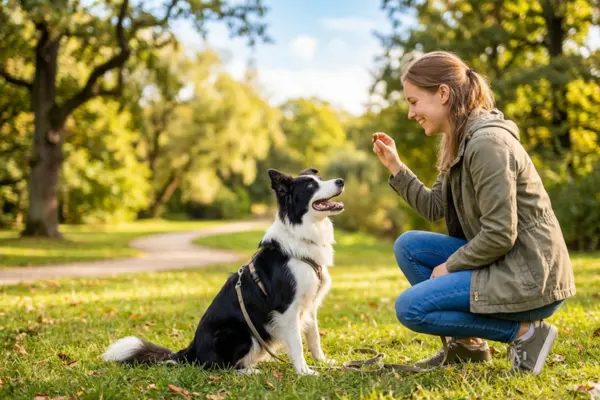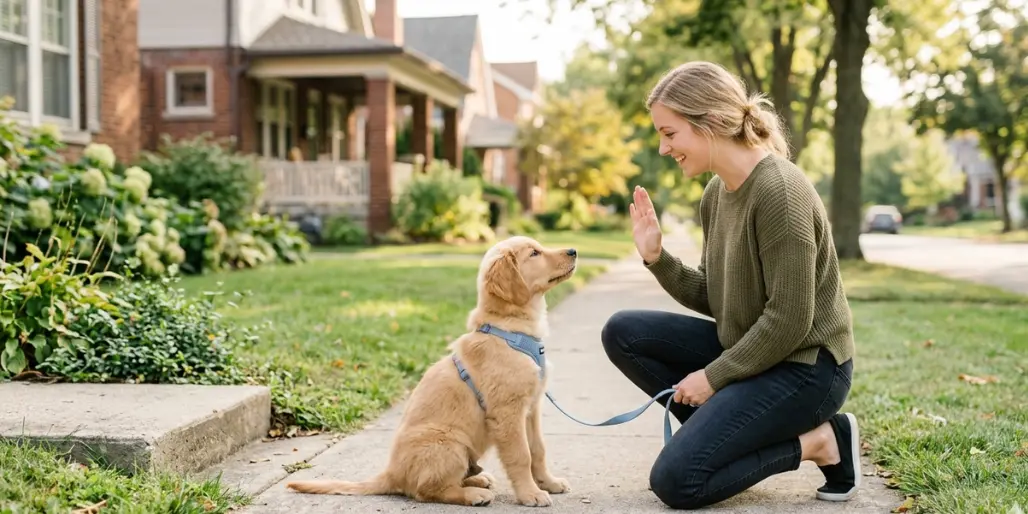
Have you ever searched for how to teach a dog to sit, then wondered why your puppy only listens when food or a cookie is in your hand? I’ve seen this many times while helping people train their dogs: the lure becomes the cue, and that creates confusion. So instead of making sitting feel like a trick or a stand-alone exercise, I like to begin with simple games, positive games, and thoughtful reinforcement — the same approach covered in our complete dog training for beginners guide. This keeps the lesson easy, calm, and rewarding, while giving the dog choice, control, clarity, and real joy in the process.
Once your dog masters sit, stay is the natural next step. A dog that can sit reliably is ready to learn how to stay for longer periods and at greater distances.
For example, in my neighborhood, I noticed my brand-new puppy stays calm when we pause near the sidewalk, but he usually tries to sit only when I have a cookie in my hand. Instead of forcing the position or using a lure, I wait quietly and give him a little time to make his own choice. When he begins offering sits without seeing food, I softly use the cue and reward him with praise, so teaching sit feels more natural, positive, and rewarding. This small outcome builds trust, confidence, connection, and better understanding, because my puppy starts to understand that sitting is not just about getting a treat. It is about making good choices in real life, even with small changes happening around us in the neighborhood
Sit is also the foundation for reliable recall training. A dog that sits on command is far easier to call back safely. Read our full guide on how to teach a dog to come when called.
Stick around, because next we’ll walk through the simple, real-life steps I use to help a dog learn to sit without pressure or confusion.
Teach Your Dog to Sit in 9 Easy Steps
- First, stand in front of your dog while they are standing, and hold a tasty treat near their nose with your thumb, index, and finger.
2. Keep your hand close to their face, then slowly move it in an arc over their head so they can follow and track the treat.
3. As your dog raises their head, their rear and bottom should go down until it touches the floor or ground.
4. The instant your dog sits, click your clicker, praise them, and give a reward so they associate the sitting position with something good.
5. Keep the session short, but repeat it a number of times in regular sessions; in my experience, calm practice works better than long training.
6. If your dog backs up instead of sitting, put a wall or barrier behind them, because this teaching method involves gentle luring, not force.
7. When your dog starts sitting quickly and naturally, add the cue word sit as they move into place, but be careful not to say it before the movement starts.
8. Next, phase out the lure by offering only the command sit; with consistent work, your dog will eventually be able to sit without needing the treat.
9. Add an additional release cue like okay so your dog can know when the step has ended, and keep keeping the lesson clear from start to finish, starting with step 1.