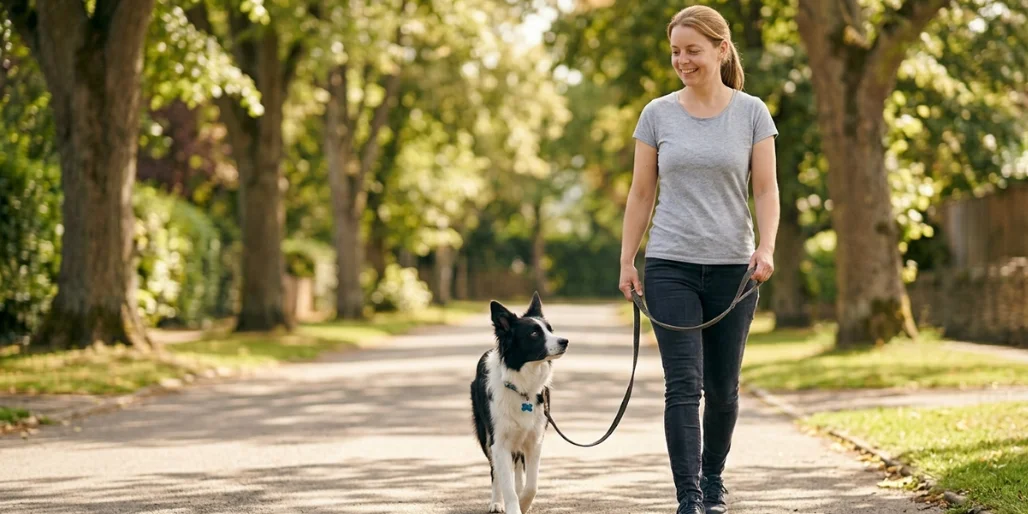
Teaching your dog to heel is a fundamental aspect of dog training that can significantly improve your walks and overall bond with your canine companion. This guide will walk you through simple and effective methods to achieve a perfect heel, ensuring a more enjoyable experience for both you and your dog.
What is the Heel Command and Why is it Important?
The “heel” command is a crucial obedience skill that instructs your dog to walk politely beside you, typically on your left side, without pulling on the leash. It’s important because it establishes clear boundaries, prevents your dog from lunging at distractions, and makes walks much more pleasant and safe for both the handler and the pup. When your dog learns to heel, you gain greater control in various environments, ensuring a calm and focused walk.
Understanding the Heel Position
The heel position typically means your dog is walking alongside your left leg, with their shoulder aligned with your left hip. This consistent placement is key to successful heel training, allowing for a loose leash and clear communication. You want to teach your dog to maintain this position, even when you stop or change direction, demonstrating a solid understanding of the cue. This precise positioning is a cornerstone for effective obedience.
Benefits of Teaching Your Dog to Heel
Teaching your dog to heel offers numerous benefits beyond just a pleasant walk. It strengthens your bond, builds your dog’s focus on you, and provides a valuable skill for navigating busy environments safely. A dog that understands the heel command is less likely to pull, reducing strain on both of you and making outings far more enjoyable. This foundation skill is a cornerstone of advanced dog training.
Common Mistakes in Dog Training
Many common mistakes can hinder your progress when trying to teach your dog to heel. These include inconsistent reinforcement, pulling on the leash instead of luring or correcting, and failing to gradually introduce distractions. Rushing the process before your dog understands the basic concept can also lead to frustration. Avoid these pitfalls to ensure your pup learns efficiently and positively.
How Can You Teach a Dog to Heel Effectively?
Teaching your dog to heel effectively requires patience, consistency, and a clear understanding of fundamental dog training principles. The goal is for your dog to walk comfortably and attentively by your side, maintaining the heel position without pulling on the leash. This isn’t just about controlling your dog; it’s about building a strong communication channel and fostering a cooperative relationship. By breaking down the process into manageable steps and using positive reinforcement, you can teach your dog to heel, transforming chaotic walks into enjoyable strolls.
Essential Tools for Training Your Dog to Heel
Before you begin to teach your dog to heel, gather the essential tools that will facilitate effective training. A sturdy, flat buckle collar or a well-fitting harness is crucial, as is a standard 6-foot leash. High-value treats, small and easy for your puppy to consume quickly, will serve as powerful reinforcement. A clicker can also be an excellent tool for marking the exact moment your dog performs the desired action. These simple items are fundamental in establishing the right environment for your dog to learn the heel command.
Step-by-Step Guide to Teaching the Heel Command
To teach your dog the heel command, start in a quiet environment with minimal distractions. Begin by holding a treat to lure your dog to your side, specifically the left side, so their shoulder is aligned with your left hip – the correct heel position. As your dog moves into position, say “yes” or click, then immediately reward them. Take one step forward, luring your dog to maintain the heel position, and repeat the “yes” and reward. Gradually increase the number of steps, always reinforcing when your dog stays at your side without pulling. Consistency is key to help your pup understand what you want to teach them.
Using a Leash for Effective Training
The leash is an invaluable tool for effective heel training, but it’s important to use it correctly. Initially, the leash acts as a gentle guide to keep your dog in the heel position. The aim is to achieve a loose leash, meaning there is no tension between you and your dog. If your dog starts to wander or pull, a gentle, brief correction with the leash can redirect them back to your side, followed immediately by praise and a reward when they return to the correct heel position. Avoid constant pulling, as this teaches your dog to pull back; instead, use the leash for clear, concise communication to teach your dog to heel without pulling.
What Are Some Effective Correction Techniques for Dog Training?
Effective correction techniques in dog training are crucial for addressing unwanted behaviors while maintaining a positive relationship with your canine companion. The goal of a correction is not to punish, but to redirect and communicate to your dog that a certain action is not desirable, guiding them back to the correct behavior. When teaching your dog to heel, for instance, a correction might be a gentle leash pop to bring your dog back to the heel position when they start to wander. It’s important that corrections are timely, consistent, and immediately followed by an opportunity for your dog to perform the desired action, allowing for positive reinforcement.
Positive Reinforcement Strategies
Positive reinforcement is the cornerstone of effective dog training, especially when you want to teach your dog to heel. This strategy involves rewarding your dog immediately when they perform the desired behavior, such as maintaining the heel position on your left side. High-value treats, verbal praise like “yes,” or a favorite toy can all serve as powerful reinforcers. By consistently rewarding your dog for walking without pulling and staying in the correct heel position, you are strengthening the association between the action and a positive outcome. This makes your dog more likely to repeat the desired behavior, transforming heel training into an enjoyable experience for both the handler and the pup.
How to Correct Common Issues While Teaching Your Dog to Heel
When you teach your dog to heel, common issues like pulling on the leash or lagging behind often arise. To correct pulling, a quick, sharp tug on the leash and an immediate change of direction can effectively redirect your dog’s focus back to you, bringing them closer to the heel position. If your dog lags, a gentle pull forward combined with an encouraging “heel” cue can motivate them to catch up. The key is to make corrections instant, brief, and consistent, ensuring your dog understands what they did incorrectly and what you want them to do instead. Follow every correction with an opportunity for your dog to get it right, so you can reward them for maintaining a loose leash.
When to Seek Professional Help in Dog Training
While many aspects of dog training, including how to teach your dog to heel, can be managed at home, there are times when seeking professional help is beneficial. If you find yourself consistently struggling with a particular behavior, or if your dog exhibits aggressive tendencies or severe anxiety, a professional dog trainer or behaviorist can provide tailored guidance. They possess the expertise to identify underlying issues, develop a comprehensive training plan, and teach you advanced techniques that might be necessary. Recognizing when to involve dog training experts ensures your pup receives the most effective support, helping them to become a well-behaved and happy companion.