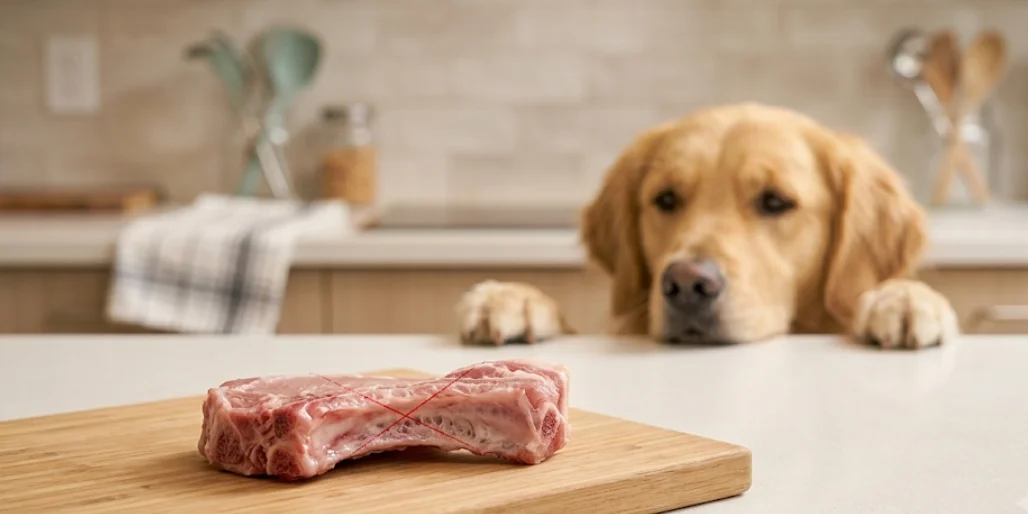
Many dog owners wonder about the safety of giving their furry friends pork bones, but it’s best to avoid feeding them due to the risks involved. It’s a common question with a less-than-straightforward answer. While a dog’s natural instinct might be to chew on bones, not all bones are created equal when it comes to their well-being. This article will delve into the details, helping you understand the potential risks and offering advice if your dog eats pork bones— for a broader look at safe options, see our complete guide on what bones are good for dogs
Pork Bones and Dog Safety
Understanding Pork Bones
When we talk about pork bones, we’re referring to a variety of bone types that come from a pig, including smoked pork bones, ranging from the smaller rib bones and pork chop bones to larger pork femur bones. These can be raw pork bones or cooked pork bones, and their preparation significantly impacts their safety for dogs. Some pet owners might consider them a natural chew for their dog, similar to how they might view other dog bones, but it’s crucial to understand their unique characteristics before offering them as a treat for your dog.
Are Pork Bones Safe for Dogs?
The short answer to whether pork bones are safe for dogs is generally no, especially when they are cooked. While some might argue that raw bones are acceptable, the consensus among veterinarians is to avoid giving your dog pork bones altogether due to various risks — a position the American Veterinary Medical Association (AVMA) reinforces in its official guidance on bone-related dangers for dogs. Unlike some specifically prepared dog bones, the structure of pork bones, whether raw or cooked, makes them potentially hazardous for your pet. It’s not a treat that is generally recommended as safe for dogs to eat.
Potential Risks of Dogs Eating Pork Bones
There are several significant risks when your dog eats pork bones. Cooked pork bones, much like chicken bones, become brittle and can splinter into sharp fragments, making them unsafe for your canine companion. These bone fragments can cause a choking hazard or, once ingested, lead to serious internal bleeding by puncturing the digestive tract. Even raw pork bones, while less likely to splinter, can still pose a risk of an intestinal blockage if large pieces are swallowed, or they can introduce harmful bacteria into your dog’s system, making giving your dog pork ribs or other pork bones a risky decision.
Types of Pork Bones
Raw Pork Bones vs. Cooked Pork Bones
It’s really important to understand the big difference between raw pork bones and cooked pork bones when considering if your dog eats pork bones. Raw pork bones, straight from the butcher, are generally considered a slightly lesser risk than their cooked counterparts, though still not entirely safe. They are more flexible and less likely to splinter into sharp fragments that can cause serious internal damage or be a choking hazard. However, even raw bones can still present an intestinal blockage risk if your dog swallows large pieces, and they might carry harmful bacteria. Cooked pork bones, on the other hand, are an absolute no-go. The cooking process makes these bones brittle and they splinter easily, which can lead to serious internal bleeding or puncturing of the digestive tract.
Pork Chop Bones: Are They Safe?
Pork chop bones are a common type of pork bone that often sparks the question, “Can dogs eat pork bones, especially these?” Unfortunately, pork chop bones, whether raw or cooked, present a significant risk. If they are cooked, they are extremely dangerous as they can splinter into sharp pieces that can cause severe internal damage, much like cooked chicken bones. Even if they are raw, their relatively small size and shape make them a choking hazard, and they can still lead to an intestinal blockage. Many people think these small bones are less risky, but a veterinarian would almost always advise against giving your dog any kind of pork chop bone. It’s just not worth the risk to your dog’s health.
Identifying Bones Safe for Dogs
When you’re trying to figure out if specific bones are safe for dogs, the general rule with pork bones is to avoid them entirely. While some raw bones from other animals might be considered safe for strong chewers under strict supervision, raw pork bones still carry risks like harmful bacteria and the potential for an intestinal blockage. Cooked bones of any kind, especially cooked pork bones, should never be given to your dog because they splinter easily and pose a severe choking hazard and internal injury risk to your dog’s intestine. The safest bet for your furry friend is to stick to specially designed dog bones or veterinarian-approved dental chews that are specifically made to be safe for dogs to eat and chew on without the dangers of splintering or blockages in the digestive tract.
Feeding Guidelines for Pork
How to Safely Give Your Dog Pork Bones
It’s genuinely important to be super careful if you’re ever considering giving your dog any kind of pork bones, and honestly, most veterinarians would strongly advise against it, as it’s not safe. The risks of your dog eating pork bones, whether they’re raw or cooked, are just too high, and it’s not safe for their health. Cooked pork bones, especially, are a big no-no because they splinter easily and can cause serious internal damage or be a choking hazard. Even raw pork bones carry risks like harmful bacteria and the potential for an intestinal blockage. If you want to give your dog something to chew, it’s always better to stick to specially designed dog bones or veterinarian-approved chews that are safe for dogs.
Signs Your Dog Eats a Pork Bone
If your dog eats a pork bone, especially a cooked one, you need to keep a very close eye on them for any signs of trouble. Symptoms to look out for include vomiting, diarrhea, constipation, lethargy, loss of appetite, straining to defecate, or a swollen abdomen. These could all be indicators of an intestinal blockage, internal bleeding, or damage to the digestive tract from splintered bone fragments. If you notice your dog choking or having difficulty breathing, that’s an immediate emergency. It’s crucial to understand that even seemingly small pieces of pork bone can cause serious issues, so don’t underestimate the potential danger.
What to Do If Your Dog Eats a Pork Bone
If you suspect your dog eats a pork bone, the very first thing you should do is contact your veterinarian immediately. Don’t try to induce vomiting or give your dog any home remedies without professional advice, as this could cause more harm. Your vet will be able to advise you on the best course of action, which might involve bringing your dog in for an examination, X-rays to locate the bone fragments or blockage, or even surgery if necessary. Early intervention is key, so don’t delay in seeking veterinary attention if your dog has consumed pork bones, raw or cooked, as it could prevent more serious complications down the line.
Alternatives to Pork Bones
Safe Chew Options for Dogs
Instead of taking the risk with pork bones, there are so many fantastic and safe chew options available that your dog will absolutely love! Look for veterinarian-approved dental chews that are designed to clean teeth and satisfy your dog’s urge to chew without the dangers of splintering or intestinal blockage. Durable rubber toys, such as Kongs filled with treats, provide hours of mental stimulation and safe chewing. You can also explore specific types of safe dog chews made from materials that are digestible or designed not to splinter. Always ensure any dog chews you choose are appropriate for your dog’s size and chewing style to prevent choking hazards.
Homemade Treats: Cooking for Your Dog
If you love spending time in the kitchen, why not whip up some delicious and healthy homemade treats for your furry friend instead of offering risky pork bones? There are countless recipes available for dog biscuits, frozen delights, and meat-based snacks that are safe and nutritious. You can use ingredients like lean meats (cooked chicken or beef, never raw pork or smoked pork), vegetables like carrots and green beans, and wholesome grains. Making your own treats means you control the ingredients, avoiding harmful additives and ensuring everything is safe for your dog’s digestive tract, especially when it comes to pork meat. It’s a wonderful way to show your love without the danger of your dog eating pork bones.
Consulting Your Vet about Dogs Eating Pork
When in doubt about your dog’s diet, especially concerning things like whether dogs eat cooked pork or pork bones, your veterinarian is always the best resource. They can provide personalized advice based on your dog’s age, breed, health status, and any existing medical conditions. Your vet can discuss the risks of your dog eating raw pork or cooked pork bones, help you identify safe dog chews, and even guide you on appropriate homemade treat recipes. Regular consultations with your vet ensure that you’re making informed decisions about your dog’s nutrition and overall health, helping you keep your beloved pet safe and happy for years to come.
FAQ’s
Q: Can dogs eat cooked pork bones safely?
A: No, it’s not safe for dogs to eat cooked pork bones. Cooked pork bones splinter easily and become extremely brittle, which makes them one of the most dangerous bone types for your furry friend. When cooked pork bones are fragile, they can break into sharp shards that damage your dog’s mouth, teeth, and digestive tract. These fragments can get stuck in your dog’s throat or cause intestinal blockages and tears. Even though it might seem like a good natural treat, it’s best to keep cooked pork bones away from your pup and choose safer chew options instead.
Q: Is it safe for dogs to eat raw pork bones?
A: Raw pork bones are generally considered safer than cooked ones since they don’t splinter as easily, but they still come with risks. Pork bones may carry harmful bacteria like salmonella, especially if the meat is undercooked pork or hasn’t been handled properly. Raw and cooked bones both pose potential dangers, though raw bones are less likely to break into dangerous shards. However, even raw bones can damage your dog’s teeth or get stuck in their digestive system. Before offering any bones to your pet, always check with your vet about what’s considered safe for dogs based on your individual dog’s size, health, and chewing habits.
Q: What happens if my dog accidentally ate a pork bone?
A: If your dog ate a pork bone, monitor them closely for the next 24-48 hours for any signs of distress. Watch for symptoms like vomiting, diarrhea, loss of appetite, excessive drooling, difficulty swallowing, or abdominal pain. Bones can break and cause serious issues including choking, damage to your dog’s mouth and teeth, or intestinal blockages and perforations. If you notice any concerning symptoms or if you have questions about your dog’s condition, contact your veterinarian immediately. Don’t wait to see if things improve on their own, as internal injuries from bones are dangerous and can become life-threatening quickly.
Q: Can dogs eat cooked pork meat without the bones?
A: Yes, dogs can eat cooked pork meat as long as it’s plain, fully cooked, and boneless. Make sure the pork is prepared without seasonings, garlic, onions, or excessive fat, which can be unsafe for dogs. While lean, cooked pork can be a decent protein source, fatty cuts can lead to pancreatitis, a serious and painful condition. Feed pork in moderation as an occasional treat rather than a regular meal component. Avoid giving your dog processed pork products like bacon, ham, or sausages, which contain high levels of salt and preservatives that aren’t healthy for pets.
Q: Why are pork bones more dangerous than other bones?
A: Pork bones, especially when cooked, are particularly hazardous because they’re softer and more porous than bones from other animals like beef. This means cooked pork bones splinter easily into sharp, jagged pieces that can cause severe damage. These fragments can pierce your dog’s mouth, throat, stomach, or intestines, leading to emergency situations. Even raw pork bones may crack or splinter under pressure from your dog’s teeth. The combination of their tendency to break unpredictably and their potential to carry bacteria makes pork bones unsafe for dogs compared to other alternatives specifically designed for canine chewing.
Q: What are safer chew options instead of pork bones?
A: Instead of giving your dog pork bones, offer safe alternatives that can support dental health without the risks. Good options include commercially-made dental chews designed for dogs, rubber chew toys like Kongs filled with treats, large carrots, or specially-prepared recreational bones from your butcher that are appropriate for your dog’s size. If you want something that feels like a natural treat, consider beef knuckle bones or marrow bones that are larger and less likely to splinter (always supervise). You can also find synthetic bones made specifically for dogs that satisfy their chewing instinct. Always check with your vet to find the best options for your individual pet.
Q: Can pork bones support dental health in dogs?
A: While some people believe bones can support dental health by scraping away plaque, pork bones are not the right choice for this purpose. The risks far outweigh any potential benefits since bones are dangerous and can actually break your dog’s teeth rather than clean them. Bones can cause fractured teeth, which are painful and require expensive veterinary treatment. If you’re looking to improve your dog’s dental health, stick with vet-approved dental chews, special dental diets, regular teeth brushing, or professional cleanings. These methods are much more effective and won’t put your dog at risk of serious injury.
Q: What should I do if I have questions about my dog’s diet and bone safety?
A: If you have questions about your dog’s nutrition or what treats and chews are safe, always check with your vet first. Every dog is different, and what works for one pet might not be appropriate for another based on size, age, health conditions, and chewing style. Your veterinarian can provide personalized recommendations for safe chewing options and help you understand which foods and treats are best for your specific dog. They can also guide you on what to do in emergency situations and help you create a balanced diet plan. When in doubt, it’s best to keep potentially dangerous items like pork bones away from your pet until you get professional advice.