Welcome to PawAndBreeds, your ultimate resource for all things canine! If you’re looking for comprehensive guidance on how to train a poodle, especially a lively miniature poodle puppy, you’ve come to the right place. This article will delve into effective training tips to ensure your new poodle puppy grows into a well-behaved and happy companion. For more in-depth information, be sure to check out our extensive dog breeds guide.
Understanding the Poodle Breed
Overview of Poodle Breeds
The poodle breed is renowned for its elegance, intelligence, and playful spirit, making them fantastic companions — a reputation formally recognised by the American Kennel Club (AKC), which consistently ranks Poodles among the most intelligent and versatile breeds in the US. There are three main sizes within the poodle family:
| Poodle Size | Key Characteristic |
| Standard Poodle | Distinctive curly coat |
| Miniature Poodle | Sharp intellect |
| Toy Poodle | Playful spirit |
While they differ in size, all share the same sharp intellect and distinctive curly coat. Each poodle may have subtle variations in temperament, but their core characteristics remain consistent across the breed. Understanding these fundamental breed traits is crucial when you train a poodle, regardless of its size.
Characteristics of Miniature Poodles
Miniature poodles, with their small size, offer a wonderful balance of portability and robustness, making them very adaptable pets. This intelligent dog is known for its keen mind and eagerness to please, which makes training a miniature poodle a rewarding experience. As a poodle owner, you’ll quickly discover that your mini poodle thrives on mental stimulation and enjoys learning new things. These characteristics are key to developing an effective training approach for your pup.
Temperament and Behavior Traits
Poodles are highly intelligent and often ranked among the smartest dog breeds, displaying a remarkable capacity for learning. This intelligence means a bored poodle can quickly become a mischievous poodle, so providing plenty of mental stimulation is vital. Their temperament is generally jovial and affectionate, but without proper training, they can develop habits like separation anxiety. A well-trained poodle, however, is a joy to have around, showcasing their breed trait of being highly trainable and eager to engage in activities like scent work or trick training.
Essential Training Tips for Your Poodle Puppy
At PawAndBreeds, we believe that consistent and early training is fundamental for any new poodle puppy. Establishing a solid foundation is crucial, and with the right dog breeds guide, you can ensure your miniature poodle puppy grows into a well-mannered companion. When you train a poodle, remember that positive reinforcement and patience are your best friends. These training tips are designed to make the process enjoyable for both you and your intelligent dog.
Basic Commands to Start With
Starting with basic commands is essential for any poodle puppy. You should focus on commands such as:
- “Sit”
- “Stay”
- “Come”
- “Leave it”
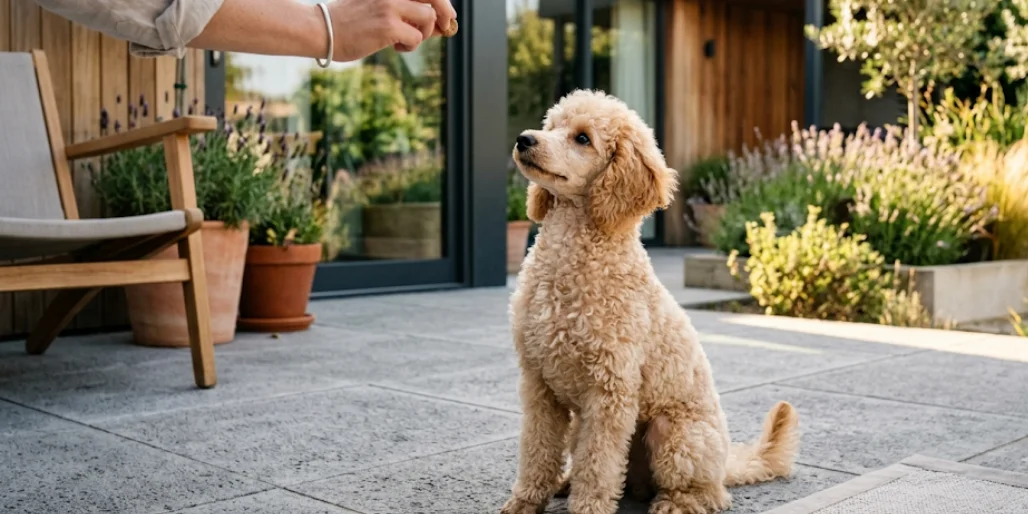
Use clear, consistent verbal cues and hand signals when you train a poodle. Keep training sessions short and fun to maintain your miniature poodle’s attention. This early puppy training will set the stage for more advanced commands and help your pup understand what is expected of them.
Socialization Techniques
Socialization is a vital part of raising a well-adjusted miniature poodle. Expose your poodle puppy to various sights, sounds, people, and other friendly dogs. This helps prevent the development of fear or aggression and fosters a confident temperament. Gradual exposure in positive environments will help your intelligent dog feel comfortable in new situations, making them a more adaptable and happy companion.
Positive Reinforcement Methods
Positive reinforcement is the most effective training approach for your highly intelligent poodle. Reward desired behaviors immediately with treats, praise, or toys. This strengthens the association between the action and the reward, making your poodle puppy more likely to repeat the behavior. Avoid punishment, as it can damage your bond and make your mini poodle fearful of training.
Common Challenges in Training a Poodle
Even with their reputation as one of the smartest dog breeds, training a miniature poodle can come with its unique set of challenges. It’s important for any poodle owner to understand that patience and consistency are key. A bored poodle can sometimes develop undesirable habits, so providing adequate mental stimulation is essential. Addressing these common hurdles head-on will ensure you have a well-trained poodle.
Addressing Behavioral Issues
Behavioral issues, such as nipping or excessive barking, can arise if your poodle puppy isn’t properly trained or receives enough mental stimulation. Redirect unwanted behaviors by providing appropriate chew toys or engaging in brain games. Understanding the root cause of these issues is crucial for effectively training your poodle. Consistency in your response is vital to help your pup learn what is acceptable.
Overcoming Stubbornness
While generally eager to please, a miniature poodle may sometimes display a stubborn streak. This often happens if they are bored or not motivated. Keep training sessions engaging and use high-value rewards to capture their attention. Varying your training routine and incorporating fun activities like scent work or trick training can also help overcome any reluctance, making the poodle training tips more effective.
Dealing with Distractions
Poodles are intelligent dogs, but like all puppies, they can be easily distracted. Start training in a quiet environment and gradually introduce more distractions as your poodle puppy masters commands. Short training sessions are key to maintaining their focus. Practicing commands in various settings will help your mini poodle generalize their learning and remain responsive, even with tempting diversions.
Advanced Training for Miniature Poodles
Once your miniature poodle puppy has mastered basic obedience, it’s time to explore advanced training options to keep their intelligent dog brain engaged. Poodles are highly trainable and excel in various dog sports and activities that provide ample mental stimulation. Continuing with advanced training not only strengthens your bond but also showcases the incredible capabilities of your mini poodle, transforming them into a truly well-trained poodle. At PawAndBreeds, we believe in unlocking the full potential of your beloved companion, and these training tips will help you do just that.
Agility Training for Poodles
Agility training is an excellent way to harness your miniature poodle’s energy and intelligence. Their small size and athletic build make them natural contenders for navigating obstacle courses, which involves:
- Jumping hurdles
- Weaving through poles
- Running through tunnels
This activity provides intense mental stimulation and physical exercise, preventing a bored poodle and fostering a confident temperament. Agility training is a fantastic opportunity to further train a poodle, enhancing their responsiveness and discipline.
Trick Training to Stimulate Your Puppy
Trick training is not just for entertainment; it’s a powerful tool for providing mental stimulation to your poodle puppy. Teaching fun tricks like “play dead,” “roll over,” or “fetch specific items” challenges your intelligent dog and reinforces their desire to learn. This form of training utilizes positive reinforcement and keeps your mini poodle engaged, preventing common behavioral issues that can arise from boredom. These poodle training tips make learning enjoyable for both you and your pup, building their confidence and expanding their skill set.
Preparing for Dog Shows and Competitions
For poodle owners interested in showcasing their dog’s breed traits and advanced training, preparing for dog shows and competitions can be a rewarding journey. This involves refining obedience commands, perfecting specific gaits, and focusing on the poodle’s overall presentation and temperament. Competitions demand a high level of discipline and consistency in training your poodle, highlighting their status as one of the smartest dog breeds. It’s an opportunity to celebrate the hard work you’ve put into raising a well-trained poodle.
Resources for Poodle Owners
Being a poodle owner is a rewarding experience, and having access to the right resources can make all the difference in raising a happy, well-trained poodle. Whether you’re just starting with a poodle puppy or looking to refine the skills of your year-old mini, there are numerous avenues to explore. These resources, from training classes to community forums, provide valuable insights and support to help you navigate the journey of training a miniature poodle, ensuring your intelligent dog thrives.
Poodle Training Classes and Programs
Enrolling in poodle training classes and programs is highly beneficial, especially for a new poodle owner. Professional trainers can offer tailored poodle training tips, address specific behavioral issues, and guide you through various stages, from basic puppy training to advanced obedience. These classes provide a structured environment where your miniature poodle can learn alongside other dogs, enhancing their socialization skills and reinforcing good temperament. This hands-on guidance ensures your intelligent dog receives proper training.
Books and Online Courses on Poodle Training
For those who prefer self-paced learning, there’s a wealth of books and online courses dedicated to poodle training. These resources often cover everything from potty training and crate training for your poodle puppy to more specialized topics like scent work and trick training. They provide detailed instructions and diverse training approach ideas that you can implement at home. Accessing these guides can be incredibly helpful for providing consistent mental stimulation and resolving challenges, ensuring you have a highly intelligent and well-adjusted dog.
Community Support and Forums for Miniature Poodle Owners
Connecting with other miniature poodle owners through community support groups and online forums can be an invaluable resource. These platforms offer a space to share experiences, ask questions about training your poodle, and gain insights into common breed traits and specific challenges. Hearing from fellow poodle owners about their triumphs and difficulties, such as dealing with separation anxiety or a bored poodle, can provide encouragement and practical poodle training tips. It fosters a sense of camaraderie and ensures you never feel alone on your journey to raise a well-trained poodle.
FAQ’s
Q: How do I start training my mini poodle puppy and what makes them easy to train compared to standard poodle?
A: Start with short, fun sessions—5–10 minutes several times a day—using high-value treats and praise. Miniature and toy poodles are part of the same poodle family as the standard poodle and are one of the most intelligent dog breeds, so they pick up cues quickly. Keep commands consistent, reward immediately, and remember they’re sensitive to tone—use upbeat voices, not harsh corrections. Early positive training builds an affectionate dog who loves to learn.
Q: What basic obedience should I teach first when training your poodle puppy?
A: Begin with sit, stay, come, and leash manners. Teach recall with fun games like hide and seek so your puppy associates coming when called with play. Use small, tasty treats and praise, and practice in low-distraction areas before moving to busy spots. Short, frequent reps work best since toy and miniature poodles have lots of energy but short attention spans.
Q: How do breed trait and intelligence affect training your poodle?
A: Poodle breed trait includes high intelligence and eagerness to please, which makes them easy to train but also prone to boredom. Mental stimulation is as important as physical exercise—teach tricks, play hide and seek, and rotate toys. Without enough challenge they can develop nuisance behaviors or become prone to anxiety, so keep training varied and engaging.
Q: When should I start potty training and socialization for a year old mini or younger puppy?
A: Start potty training as soon as you bring your puppy home and intensify socialization between four to six weeks onward and especially before 16 weeks. For a year old mini who’s not trained, it’s never too late—use the same positive methods but expect some extra patience. Regular schedules, crate training, and lots of outdoor exposure to people and other dogs help build confidence.
Q: How much exercise and mental work does a mini poodle need—are they mentally and physically active?
A: Yes—mini poodles are both mentally and physically active. Plan daily walks, play sessions, and short training bursts. Brain games, puzzle toys, and obedience exercises count as exercise because they expend mental energy. A bored poodle can become destructive, so mix physical play with training and scent games.
Q: What are gentle ways to handle a poodle puppy that’s sensitive to tone or gets anxious?
A: Use calm, positive reinforcement and avoid yelling—poodles are sensitive to tone and can shut down or become fearful. Reward desired behavior with treats and affection, redirect instead of punishing, and desensitize to triggers gradually. If your poodle is prone to anxiety, set up predictable routines and consider short, frequent training to boost confidence.
Q: Can I use puppy food as a training tool, and what treats are best for mini poodle puppies?
A: Yes—small pieces of puppy food can work, but high-value treats (tiny bits of cooked chicken, freeze-dried liver, or commercial training treats) are more motivating. Use age-appropriate puppy food for meals and save special treats for training. For a tiny mouth, cut treats into pea-sized pieces to avoid overfeeding.
Q: Are poodles really bred as water retrievers and does that influence training games?
A: Historically, poodles were bred as water retrievers, which explains their love of fetching and swimming. Incorporate water play, retrieving, and scent work into training if your poodle enjoys it. Games that tap into those instincts, like fetch or hide and seek with toys in varied locations, make training feel like play.
Q: How do I transition training from puppy to adult dog and prevent behavioral issues later?
A: Keep training consistent as your puppy grows into an adult dog. Gradually increase distractions and practice longer duration cues. Maintain socialization, reinforce manners, and continue mental challenges. If you started training early—around four to six weeks socialization and regular practice—you’ll have an easier time with an obedient, well-adjusted adult. If issues arise, consider a positive-reinforcement trainer rather than harsh methods