
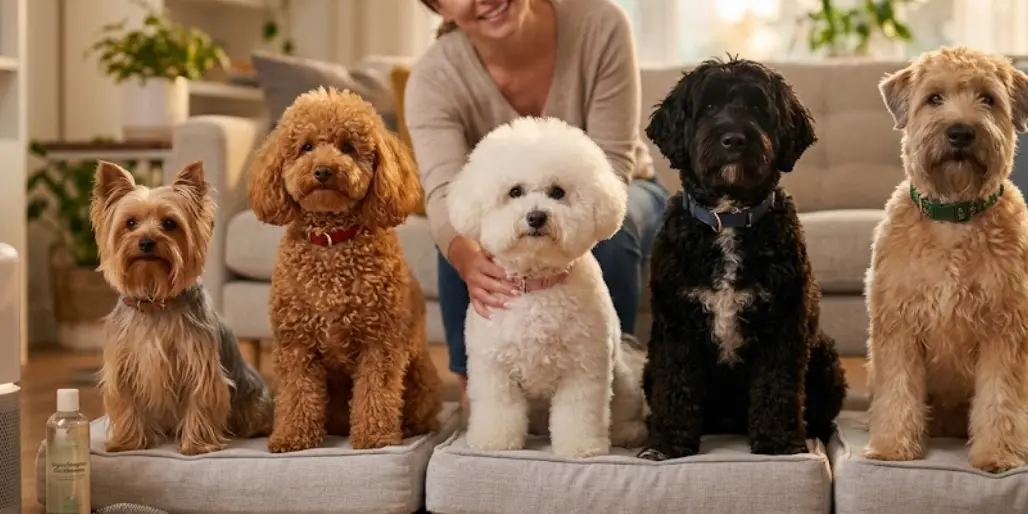
If you are wondering what makes a dog hypoallergenic, the truth is that no dog is completely 100 percent allergen-free, but any hypoallergenic dog breed produces fewer allergens like dander and saliva. When you suffer from dog allergies, choosing a hypoallergenic dog breed that sheds less can completely change your daily life, letting you finally enjoy owning a dog without constant discomfort.
Understanding Hypoallergenic Dogs
What Makes a Dog Hypoallergenic?
When looking into what makes a dog hypoallergenic, you need to understand that every dog breed produces allergens through dander, urine, and saliva rather than just shedding fur. While no single dog breed is entirely allergy-free, certain breeds are considered hypoallergenic because their coats shed very little, meaning less dander gets trapped in your home environment.
Common Allergy Symptoms in Dog Owners
People with dog allergies often experience frustrating allergy symptoms like sneezing, itchy eyes, and runny noses whenever they are near pets. If you are an allergy sufferer dealing with pet allergies, even mild exposure to dog saliva or floating dander can trigger uncomfortable allergic reactions that make hanging out with furry friends really tough.
Why Choose Hypoallergenic Dog Breeds?
Choosing a hypoallergenic dog breed is a total game changer for people with allergies who still love dogs and want a companion without the constant sneezing fits. By picking dogs that shed less and produce fewer allergens, you can significantly reduce your daily allergy symptoms and finally live comfortably with a happy pet.
Terriers Considered Hypoallergenic
Boston Terriers: An Overview
When you start looking into terriers considered hypoallergenic, the charming Boston Terrier often comes up despite typically having a short coat that can shed a bit. Even though a Boston Terrier is not strictly listed among hypoallergenic dog breeds, many allergy sufferers find they manage okay with regular brushing and baths to keep floating dander down to a minimum.
Yorkshire Terriers and Their Allergen Levels
The lovely Yorkshire Terrier is widely recognized as a fantastic hypoallergenic dog breed because its silky hair acts more like human locks than traditional fur. A typical Yorkshire produces much less dander, meaning people with dog allergies can often cuddle this tiny terrier without suffering from severe allergy symptoms or nasty allergic reactions all day.
Soft-Coated Wheaten Terrier: A Popular Choice
Another great choice among terrier breeds is the Soft-Coated Wheaten Terrier, which is frequently considered hypoallergenic because its single curly coat sheds very little. If you suffer from dog allergies but absolutely love dogs, owning a friendly terrier like this can help you manage pet allergies while enjoying a wonderful, energetic companion.
Other Hypoallergenic Dog Breeds
Poodles: Standard, Miniature, and Toy
Every single poodle variety, whether standard, miniature, or toy, is famously considered hypoallergenic due to a tight curly coat that traps dander instead of releasing it. This unique hair texture means that a poodle will shed very little, making it one of the absolute best dog breeds for allergy sufferers who want a smart pet.
Portuguese Water Dog: A Versatile Option
The energetic Portuguese Water Dog is another brilliant hypoallergenic dog breed that features a wonderful single coat designed to shed less than other typical pets. If you are an allergy sufferer looking for an active swimming buddy, this impressive breed produces fewer allergens and fits wonderfully into households wanting to avoid heavy dander.
Other Breeds for Allergy Sufferers
Beyond traditional terriers and water dogs, there are several other hypoallergenic breeds that work wonders for people with allergies, including:
- The Maltese
- The Bichon Frise
If you want to explore even more options before making a final decision, check out our helpful guide on small hypoallergenic dogs to find your perfect match today at PawandBreeds.
Choosing the Right Hypoallergenic Dog for You
Factors to Consider for Allergy Sufferers
When choosing a hypoallergenic dog breed, every allergy sufferer must evaluate how well they manage pet allergies before bringing any new pet home. Because certain breeds produce fewer allergens, you want to pick a dog breed that fits your lifestyle. Consider how much time you have to groom your dog regularly and ensure your chosen hypoallergenic dog breed minimizes dander production to protect you from unexpected allergic reactions and pesky allergy symptoms every single day.
Dog Grooming and Maintenance Tips
Proper grooming is essential because even the best hypoallergenic dog breed requires consistent baths and brushing to remove trapped dander from its fur. When you own a hypoallergenic dog, keeping up with regular grooming prevents loose hair and lingering allergens from building up around your living space. Taking time to groom your hypoallergenic dog breed properly ensures that sensitive people with dog allergies can live comfortably without constantly experiencing uncomfortable allergy symptoms or severe sneezing fits.
Resources for Finding Hypoallergenic Breeds
Finding the right hypoallergenic dog breed can sometimes feel overwhelming, but plenty of helpful resources exist to guide you toward suitable hypoallergenic dogs. You can consult professional breeders, rescue groups, or read specialized articles online to discover which specific hypoallergenic dog breed matches your household needs. Researching various hypoallergenic breeds thoroughly ensures you select a wonderful companion that keeps your daily pet allergies under control while bringing endless joy into your home.
Conclusion
Final Thoughts on Hypoallergenic Dogs
Owning a hypoallergenic dog breed is truly wonderful for any dog lover who previously struggled with frustrating dog allergies and severe allergy symptoms. While no single dog breed is entirely free of allergens, selecting a hypoallergenic dog breed that sheds less makes a massive difference in your daily comfort. Enjoying life with a hypoallergenic dog means you can finally cuddle your furry friend without constantly worrying about bothersome allergic reactions.
Additional Resources: Small Hypoallergenic Dogs
If you are still exploring your options for the ideal hypoallergenic dog breed, you should check out our detailed guide on small hypoallergenic dogs to discover more tiny companions. Finding the ultimate hypoallergenic dog breed depends on your personal lifestyle, housing situation, and specific allergy management needs. Exploring different hypoallergenic dogs helps ensure you pick a wonderful pet that fits seamlessly into your everyday routine and keeps your home peaceful and sneeze-free.
PawandBreeds: Your Guide to Dog Breeds
Navigating the world of hypoallergenic dogs can be challenging, but trusted platforms like PawandBreeds are here to help you find the absolute best companion for your lifestyle. Whether you prefer a small terrier or a curly poodle, understanding each hypoallergenic dog breed ensures a happy life for both you and your pet.
FAQ
Q: What exactly are hypoallergenic dog breeds for allergy sufferers?
A: So here’s the thing – there’s no such thing as a 100% truly hypoallergenic dog. What people mean when they say “hypoallergenic dog breeds for allergy” is that these breeds produce less dander and shed way less than your average pup. Since allergies to dogs are usually triggered by proteins found in dog saliva, dander, and urine (not just the hair itself), dogs that won’t shed as much tend to spread less of that allergen around your house. That’s basically the whole deal.
Q: Are terriers hypoallergenic, like really?
A: This is a super common question! Terriers are hypoallergenic in the sense that many terrier breeds shed very little compared to other dogs. Think Kerry Blue Terriers or Bedlington Terriers – these guys have curly, wool-like coats that catch loose hair instead of scattering it everywhere. But let’s be real, terriers don’t produce zero allergens, so if you’ve got severe pet allergies, you’ll still want to spend time with one before committing.
Q: Is a Yorkshire Terrier a good choice for people with allergies?
A: Yep, the Yorkshire Terrier is often recommended as a solid choice for allergy sufferers. They’ve got hair instead of fur, which means way less shedding and dander floating around. That said, every dog is different, and some folks might still react a bit, so it’s smart to meet one in person first if your dog allergies are on the serious side.
Q: Do hairless breeds work better for people who suffer from dog allergies?
A: Honestly, hairless breeds like the Chinese Crested can be a great option since there’s no coat to trap dander and distribute it around your home. Less dog hair floating around definitely means less mess and often fewer allergy triggers. But keep in mind these dogs still produce dander on their skin and saliva, so they’re not a magic fix – just another low-shedding option worth considering.
Q: What’s the difference between a dog that sheds a lot versus low-shedding dogs?
A: Great question! Dogs that shed heavily (like Huskies or German Shepherds) constantly release loose fur covered in dander into your environment, which can seriously trigger your allergies. Low-shedding dogs, on the other hand, keep most of their hair until you brush it out yourself. That’s why breeds that shed less are generally easier on people with pet allergies – less airborne allergen, fewer sneezing fits.
Q: Can I still get a dog if I have allergies, or should I just stick with allergy shots?
A: You don’t have to choose one or the other necessarily! Lots of people with mild to moderate dog allergies do fine with a specific dog breed that’s low-shedding, especially when combined with good habits. Allergy shots (immunotherapy) can help build up your tolerance over time too. Honestly, a combo approach often works best – pick a hypoallergenic-ish breed AND talk to your doctor about allergy shots if your symptoms are rough.
Q: How do I minimize allergic reactions if I already have a dog at home?
A: A few tricks really help here. Brush your dog regularly (preferably outside!) to catch loose hair and dander before it spreads everywhere. Wash their bedding often, vacuum frequently, and consider an air purifier. Bathing your dog every couple weeks also cuts down on dander buildup. These simple habits make a huge difference even if your pup isn’t from the official hypoallergenic dog breeds for allergy list.
Q: Are hypoallergenic dogs a good idea for first-time dog owners who have allergies?
A: Totally, as long as you do your homework. Many hypoallergenic breeds like Poodles or Bichon Frises are also known as great family pets and are relatively easy to groom once you get the hang of it. As a first-time dog owner with allergies, just make sure you spend time around the breed beforehand, ask your allergist for advice, and be ready to commit to regular grooming since low-shedding doesn’t mean no-maintenance.
Q: Which breeds shed the least and are considered best for allergy sufferers?
A: The usual suspects include Poodles, Bichon Frises, Maltese, Portuguese Water Dogs, Kerry Blue Terriers, Bedlington Terriers, and the Yorkshire Terrier. These breeds produce less dander and loose hair compared to heavy shedders. None of them are a guaranteed fix for everyone, but they’re consistently recommended as the best dogs for people with allergies based on real owner experiences and vet recommendations.





