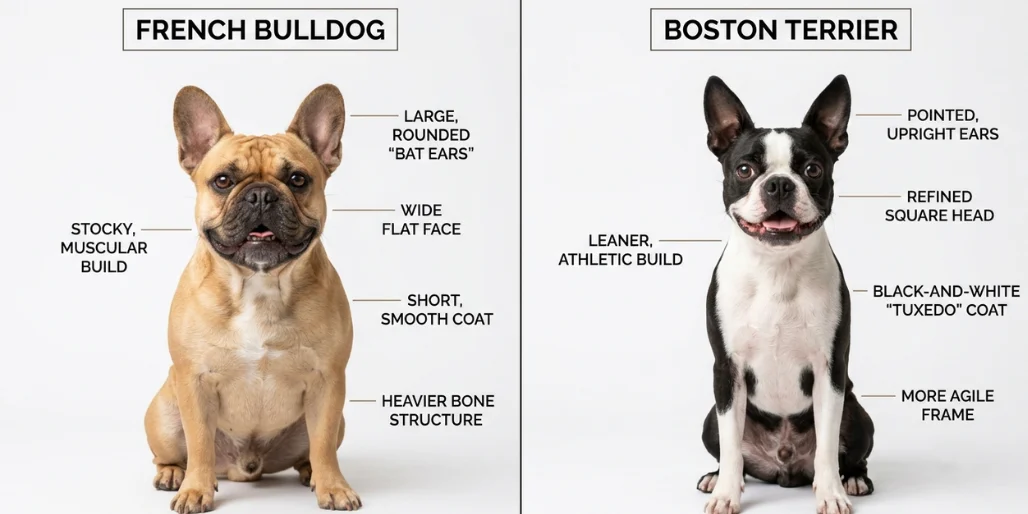
Choosing between a French Bulldog and a Boston Terrier can be tough, as both breeds are incredibly charming and have a lot to offer. While they share some striking similarities, particularly their adorable flat faces and compact size, there are also distinct differences in their temperament, appearance, and health considerations that pet parents should be aware of — much like the differences between other commonly mixed-up breeds, such as the American Bulldog and Pitbull. Let’s dive into what makes each breed unique and help you decide which furry friend might be the perfect fit for your home.
Overview of the Breeds
Introduction to French Bulldogs
The French Bulldog, often affectionately called a “Frenchie,” is a popular dog breed known for its distinctive bat-like ears and muscular, compact body. These charming companions are famous for their affectionate nature and generally laid-back temperament, making them wonderful family pets. When considering a French Bulldog, it’s important to be aware of certain characteristics and potential health factors:
- They come in various coat colors, including fawn, brindle, and pied.
- They are brachycephalic, meaning they have short snouts, which can predispose them to breathing problems, a crucial factor for potential owners to consider.
Introduction to Boston Terriers
The Boston Terrier, often dubbed “the American Gentleman” due to its tuxedo-like markings, is another beloved brachycephalic breed with an equally captivating personality. Boston Terriers are typically lively and intelligent, known for their playful spirit and devotion to their families. Their striking coat colors often involve a combination of
- black
- brindle
- seal with crisp white markings
Like French Bulldogs, their flat face can lead to breathing issues, making responsible breeding practices and proper care essential.
Comparative History of the Breeds
While distinct, both French Bulldogs and Boston Terriers share a fascinating history, with some experts believing they may even have a common ancestor. The French Bulldog’s lineage is said to be a cross between an English Bulldog and local ratters in France. The Boston Terrier, on the other hand, originated in the United States in the late 19th century, believed to be a cross between an English Bulldog and the now-extinct White English Terrier. These two breeds have evolved into the beloved companions we know today, each with its unique charm and heritage.
Temperament of French Bulldogs and Boston Terriers
Personality Traits of French Bulldogs
French Bulldogs are renowned for their laid-back and affectionate temperament. Often described as “couch potatoes,” these Frenchies love to relax with their pet parents and are generally very mellow. While they can have playful bursts, their overall activity level is moderate, making them excellent companions for apartment living. They are known for being patient and good with children, embodying a calm and sweet nature that makes them beloved. Key aspects of their temperament include:
- Being patient and good with children.
- A calm and sweet nature.
Personality Traits of Boston Terriers
Boston Terriers, in contrast, typically possess a more energetic and lively temperament. These Bostons are often full of spunk and playful curiosity, always ready for a game or an adventure. They are highly intelligent and eager to please, which can make them quite trainable. While affectionate like French Bulldogs, their enthusiasm means they often have a higher activity level and thrive on engagement with their families, showcasing the unique personality differences between the two breeds.
How Temperament Influences Ownership
The distinct temperaments of French Bulldogs and Boston Terriers significantly influence ownership experiences. A Frenchie’s calm demeanor means they might be better suited for pet parents seeking a relaxed companion, whereas a Boston Terrier’s higher energy requires a more active lifestyle. Understanding these differences in temperament is crucial for potential owners to ensure a harmonious match with their chosen breed. Pawandbreeds advises always to consider lifestyle alignment when selecting between these two beloved breeds.
Activity Level and Exercise Needs
Exercise Requirements for French Bulldogs
French Bulldogs have moderate exercise requirements due to their brachycephalic nature, which can lead to breathing problems. Short, leisurely walks and indoor play are usually sufficient to keep a Frenchie healthy and happy. Overexertion, especially in warm weather, should be avoided to prevent overheating and respiratory distress. Their activity level is lower compared to many other breeds, fitting well into a more relaxed home environment.
Exercise Requirements for Boston Terriers
Boston Terriers, while also a brachycephalic breed, generally have higher exercise needs than French Bulldogs. They enjoy longer walks, playtime in a secure yard, and engaging in mentally stimulating activities. Despite their flat face, Bostons are quite agile, but pet parents must still be mindful of their breathing problems, particularly during vigorous exercise or hot weather. Regular, varied activity helps keep these lively dogs content and prevents boredom.
Best Activities for Both Breeds
For French Bulldogs, gentle strolls, puzzle toys, and short play sessions in a cool environment are ideal activities. Boston Terriers, on the other hand, benefit from brisk walks, fetch, and even dog sports like agility, provided precautions are taken for their brachycephalic traits. Both breeds enjoy spending quality time with their pet parents, making interactive games and training sessions excellent ways to fulfill their physical and mental exercise needs, always keeping their comfort and health in mind.
Health Considerations
Common Health Issues in French Bulldogs
French Bulldogs, while adorable, are prone to several health issues due to their unique physiology. As a brachycephalic breed, they often suffer from breathing problems, including Brachycephalic Obstructive Airway Syndrome (BOAS), which can make breathing difficult, especially during exercise or in hot weather. They are also susceptible to spinal problems like intervertebral disc disease (IVDD) and certain skin allergies. Pet parents of Frenchies must be vigilant about these potential health concerns to ensure their well-being.
Common Health Issues in Boston Terriers
Boston Terriers also face specific health challenges, primarily due to their brachycephalic nature. Similar to French Bulldogs, they can experience breathing problems and are prone to eye conditions such as cataracts and glaucoma. Patellar luxation, a knee joint issue, is another concern for this breed. Responsible breeders for both Boston Terriers and French Bulldogs strive to minimize these hereditary conditions, but potential pet parents should be aware of them.
Comparative Lifespan and Health Maintenance
Both French Bulldogs and Boston Terriers generally have a lifespan of 10-12 years, provided they receive proper care. Regular veterinary check-ups, a balanced diet, and appropriate exercise are crucial for maintaining their health. Due to their brachycephalic traits, both breeds require careful monitoring of their breathing, especially in extreme temperatures. Understanding the similarities and differences in their health profiles helps pet parents provide optimal care for their beloved companions.
Choosing the Right Breed for You
Boston Terrier or French Bulldog: Which is Better?
Deciding between a Boston Terrier or French Bulldog truly depends on your lifestyle and preferences. If you’re looking for a more laid-back companion who enjoys relaxing, a French Bulldog might be your ideal match. However, if you prefer an energetic, playful dog that enjoys more activity, a Boston Terrier could be a better fit. Both breeds offer immense love and companionship, but their distinct temperaments and needs are key differentiators.
Factors to Consider for Pet Parents
When choosing between French Bulldogs and Boston Terriers, pet parents should consider several factors. Evaluate your living situation—do you have a large home or an apartment? Consider your activity level and how much time you can dedicate to exercise. Research potential health issues specific to each breed and factor in veterinary care costs. Lastly, think about the temperament that best aligns with your family dynamic.
Conclusion: Making the Right Choice
Both French Bulldogs and Boston Terriers make wonderful pets, each with unique charms and characteristics. By understanding their similarities and differences in temperament, activity level, and health considerations, you can make an informed decision. Whichever popular dog breed you choose, be prepared to provide love, responsible care, and attention to ensure a happy and healthy life for your new companion.
FAQ’s
Q: french bulldog vs Boston terrier — what are the main visual differences?
A: The french bulldog vs Boston terrier comparison often comes down to build and face: Frenchies are stockier, with a compact body and bat-like ears, while Boston terriers have a more square, athletic look with longer legs and a distinct tuxedo-like coat, often featuring a white stripe. Both are flat-faced and breeds are brachycephalic, but Bostons usually look a bit taller and leaner.
Q: How does french bulldog health compare to Boston terrier health?
A: french bulldog health and Boston terrier health share issues because both are flat-faced (brachycephalic): breathing problems, heat sensitivity, and dental crowding. Frenchies often have a higher risk of severe breathing and spine issues, while Boston terriers can be prone to eye problems. Both need careful cooling in hot or humid weather and regular vet checks from a reputable breeder if possible.
Q: Is a boston terrier and a french a better family dog — which is easier to train?
A: A boston terrier and a french bulldog can both be great family dogs. Bostons tend to be a bit more energetic and eager to please, so they may be slightly easier to train. Frenchies are stubborn but super affectionate. Either way, consistent, positive training works best and both do well with families who understand their brachycephalic limits and grooming needs.
Q: Which is more likely to handle hot or humid weather — Boston terriers vs French bulldogs?
A: Neither boston terriers vs french bulldogs handle hot or humid weather well because both are flat-faced. However, French bulldogs often struggle more and can be at higher risk during heat waves. Always avoid strenuous activity in hot or humid conditions, provide shade and water, and never leave them in a parked car.
Q: What about size — how do weights compare between the two breeds?
A: Boston terriers are usually less than 25 pounds in many lines, but some can weigh up to 28 pounds. French bulldogs are compact and typically fall in a similar range, though show lines and pet lines vary. If you’re looking for a lighter dog, check individual parents or breeder records rather than assuming one breed will always be smaller.
Q: Were these breeds developed in France — what’s the history behind the terrier and a french bulldog?
A: The terrier and a french bulldog history is linked to England and France. French bulldogs were developed in France from toy bulldogs brought over by English lace workers; Boston terriers were developed in the U.S. with English bulldog and terrier ancestors. The first boston terrier was registered in America, and the Boston Terrier Club of America helped standardize the breed.
Q: Are boston terriers or french bulldogs better for apartment living?
A: Both boston terriers or french bulldogs are great apartment dogs because they don’t need huge yards and are fairly adaptable. Keep in mind they’re flat-faced and can’t handle long, hot walks; short, regular exercise is sufficient. Choose based on energy level—Bostons may need a bit more playtime, while Frenchies often prefer being couch companions.
Q: Any breeding or ethical concerns — how to pick a reputable breeder and avoid problems like fighting dog lines?
A: Always choose a reputable breeder who provides health clearances and transparent lineage. Avoid anyone promoting aggressive “fighting dog” traits or unclear backgrounds. Look for breeders who screen for brachycephalic issues, breeding ethics, and socialization practices. Clubs and breed-specific organizations can guide you—like checking with the Boston Terrier Club of America for trusted resources.