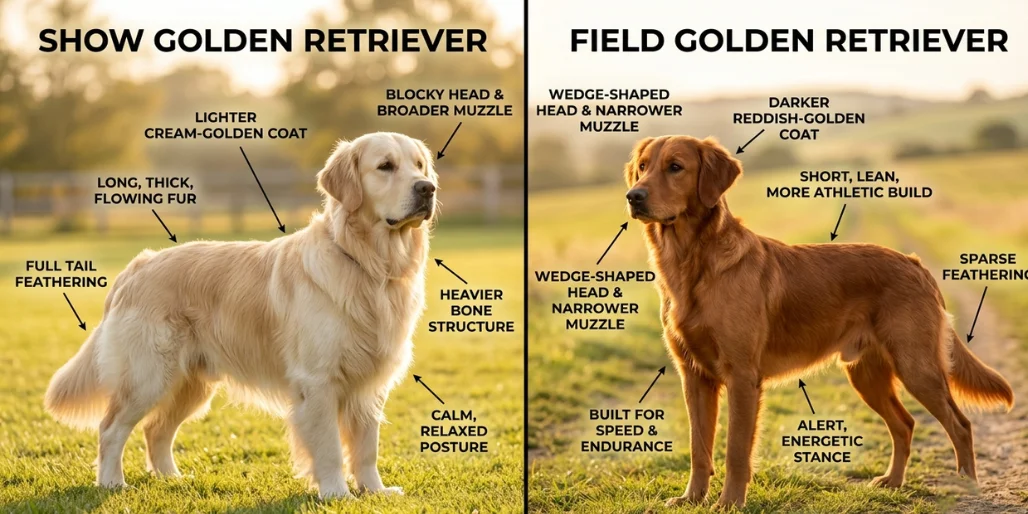
Thinking about bringing a new furry friend into your home, especially a gorgeous Golden Retriever puppy? You’re in for a treat! This guide will help you navigate the nuances between Red and Field Golden Retrievers, ensuring you pick the perfect companion, whether for the show ring, competitive field trials, or just as a loving family dog.
Understanding the Golden Retriever Variants
Golden Retrievers are a beloved breed, known for their friendly demeanor and striking good looks. However, many people are unaware that there are distinct types within this breed, primarily categorized as show line and field line, which often manifest in different coat colors, temperaments, and energy levels. Understanding these subtypes is crucial for any prospective owner, especially if you have specific goals for your new puppy, such as participation in dog shows or field trials.
Red Golden Retrievers
Red Golden Retrievers are a captivating variant, often catching the eye with their rich, darker golden coat. While not a separate breed, these “red goldens” are known for their deep, lustrous, redder hue, which can range from a warm copper to an almost mahogany shade. This striking coat color has sometimes led to them being perceived as “rare,” though they are simply a part of the beautiful spectrum of golden retriever coats. Breeders often emphasize their conformation and robust build.
Field Golden Retrievers
Field Golden Retrievers, also known as “field goldens” or “field line” retrievers, are bred for their working ability and athletic prowess, often excelling in field trials and obedience competitions. These retrievers typically possess a sleeker build, a higher energy level, and a strong drive to retrieve. Their coats are often a lighter golden, sometimes even a cream golden, but their primary distinction lies in their working temperament and agility, making them ideal for active families or those involved in canine sports.
Comparison of Show and Field Types
When comparing show golden retrievers and field golden retrievers, the differences extend beyond just coat color. Show line Goldens, often represented by the “cream golden” or other lighter shades, are bred to meet the American Kennel Club (AKC) breed standard for conformation, focusing on appearance and structure suitable for the show ring. In contrast, field goldens, whether they are a “red retriever” or a lighter shade, are selected for their working ability, trainability, and stamina, making them excellent retriever dogs for hunting or demanding canine activities. Pawandbreeds brand dogs are an excellent choice for any of these varieties.
Choosing the Right Puppy for You
Bringing home a golden retriever puppy is an exciting journey, and making the right choice depends heavily on your lifestyle and expectations for your new family member. For those seeking a companion for conformation shows or a more relaxed family dog, a show golden retriever might be the perfect fit, often showcasing the breed standard’s ideal appearance. Conversely, if you’re an active individual or involved in field trials, a field golden, known for its higher energy and drive, could be your ideal pup. Consider whether you prioritize the refined looks of a cream golden or the robust working ability of a retriever dog before making your decision.
Factors to Consider for Show Golden Retrievers
If your heart is set on a show golden retriever, several factors come into play beyond just their beautiful golden coat. You’ll want to focus on a golden retriever puppy whose conformation aligns closely with the American Kennel Club (AKC) breed standard, ensuring they have the structural integrity and appearance desired in the show ring. A reputable breeder will be able to guide you toward pups with strong pedigrees, often emphasizing traits like a balanced temperament and a confident demeanor, essential for success in dog shows. While color variations exist, including stunning cream goldens, the overall breed standard for structure and movement is paramount for these show line goldens.
Traits of Red Golden Retriever Puppies
Red golden retriever puppies are undeniably captivating with their darker golden, often rich, redder coat, and many potential owners are drawn to their striking appearance. While some might perceive them as “rare,” they are simply a beautiful variation within the golden retriever breed. These red goldens often come from field line backgrounds, meaning they can sometimes possess a higher energy level and a strong retrieve drive, making them excellent retriever dogs for active families. However, their temperament is typically still the affectionate, biddable nature characteristic of all golden retrievers, making them wonderful companions even if you’re not participating in field trials.
English Cream vs. Traditional Golden Retrievers
When considering a golden retriever puppy, you might encounter the terms “English Cream” and “Traditional Golden Retrievers,” which primarily refer to differences in appearance and lineage, especially concerning coat color. English Cream goldens typically have a much lighter, often almost white or cream golden coat, a broader head, and a generally calmer temperament, making them ideal family dogs. Traditional golden retrievers, as recognized by the AKC, often exhibit a wider range of shades of gold, from light to a darker golden. Both subtypes are purebred golden retrievers and possess the breed’s characteristic affectionate nature, but an English Cream might be preferred for its distinct look and potentially more mellow disposition.
Training and Socialization Tips
Early Training for Golden Retriever Puppies
Early training is absolutely crucial for your golden retriever puppy, laying the foundation for a well-behaved and happy companion. Starting with basic obedience commands like “sit,” “stay,” and “come” as soon as your pup arrives home helps establish good habits and strengthens your bond. Positive reinforcement, using treats and praise, works wonders with this intelligent breed. Consistent and patient training will help manage their natural enthusiasm and higher energy, ensuring your golden retriever matures into a well-adjusted family dog. Remember, a well-trained red golden retriever or any shade of golden is a joy to live with.
Socializing Your Red Retriever
Socializing your red retriever is just as important as early training, especially for a vibrant golden retriever puppy. Expose your pup to a variety of sights, sounds, people, and other friendly dogs from a young age to help them develop a confident and well-adjusted temperament. Attending puppy classes can provide a structured environment for this, allowing your red goldens to interact positively with different stimuli. Proper socialization prevents future behavioral issues and ensures your red retriever is comfortable and secure in various situations, making them an excellent retriever dog in any setting.
Best Practices for Show Preparation
Preparing your show golden retriever for the show ring requires dedication and attention to detail. Beyond regular grooming to maintain that beautiful golden coat, focus on teaching your pup to stand calmly for examination by judges, walk gracefully on a lead, and display a confident demeanor. Practice these skills frequently in short, positive sessions to build your golden retriever’s comfort and enthusiasm. Working with an experienced breeder or handler who understands the breed standard and the specific nuances of conformation shows can be incredibly beneficial for aspiring show line goldens, including those stunning cream goldens.
Joining the Golden Retriever Club
Benefits of Club Membership
Joining a local or national golden retriever club offers a wealth of benefits for any golden retriever owner, whether you have a show line or field line golden. These clubs provide invaluable resources, from experienced breeder directories to training tips and networking opportunities with fellow enthusiasts. You’ll gain access to a community that understands the nuances of the golden retriever breed, whether discussing the temperament of red goldens or the ideal conformation for a show golden retriever. Membership also often includes informational newsletters and events tailored to these wonderful dog breeds, enhancing your ownership experience.
Participating in AKC Events
Participating in American Kennel Club (AKC) events is an exciting way to showcase your golden retriever’s talents and celebrate the breed. Whether your golden retriever puppy is destined for conformation shows, obedience trials, or field trial competitions, the AKC offers a diverse range of opportunities. For show line goldens, the show ring is the ultimate stage, while field goldens can excel in events designed for retriever dogs. These events are not only competitive but also a fantastic way to bond with your purebred pup, learn more about the breed standard, and meet other dedicated golden retriever breeders and owners.
Resources for Show and Field Owners
For both show and field owners, the golden retriever club and the AKC provide an extensive network of resources. You’ll find guidance on everything from finding reputable golden retriever breeders who prioritize health and temperament to specialized training programs for obedience and field trial work. Access to experienced mentors can be incredibly helpful for navigating the complexities of dog shows or preparing your retriever dog for challenging field conditions. These resources ensure that whether you have a red golden retriever or an English cream, you have the support needed to help your pup reach its full potential.
FAQ’s
Q: How do I choose the right pup for show vs club owners when I want a cream golden or dark gold puppy?
A: For shows you’ll want a pup from a proven breeding line with the right conformation, mouth, and coat color (light cream to dark gold are all possible). Club owners focused on performance or companion work can prioritize temperament—laid-back or highly intelligent pups that are easy to train. Ask breeders for pedigree, health clearances, and photos of parents to see if the pup matches the breed name and goals.
Q: Is a cream golden pup “rare” compared to darker golden retrievers, and does color affect show chances?
A: Pale cream and light cream Golden Retrievers aren’t necessarily rare; they’re part of the gene pool. Color alone usually won’t disqualify a pup in most registered breeds, but judges in some regions favor a certain shade. Focus more on structure, movement, and temperament—those trump color in most shows.
Q: What health checks should club owners run on a pup, especially to avoid issues like hypothyroidism or other genetic problems?
A: Get hips, elbows, cardiac exams, and thyroid screening where recommended. Ask for OFA or equivalent certifications for breeding stock and parents’ clearances. Responsible breeders will screen for recessive conditions and share health histories to reduce risk of hypothyroidism and other inherited issues.
Q: Can a cream golden pup be a good choice if I want a laid-back pet but also plan basic training or obedience training for shows?
A: Yes—many cream golden pups are adaptable and have an eagerness to please. Golden Retrievers are highly intelligent and easy to train, so a pup can be both laid-back at home and responsive in obedience training. Early socialization and consistency are key.
Q: How soon should I start training my pup for conformation shows and club events? Any difference for a cream golden?
A: Start basic training and socialization as early as 8–10 weeks—crate, leash manners, and gentle handling of muzzle and paws. Conformation-specific training (stacking, gaiting) can begin around 4–6 months. Color like cream golden doesn’t change training timeline; focus on foundation skills first.
Q: Are there breeding concerns with cream golden pups, such as mutation, recessive traits, or narrowing the breeding line?
A: Cream shades can be linked to specific breeding lines; overusing a single line risks narrowing the gene pool and concentrating recessive issues. Responsible breeders outcross carefully and screen for mutations or health problems. Avoid breeding without health clearances to protect the breed and future pups.
Q: How do I tell a purebred pup from a crossbreed or other different breeds like tweed water spaniel mixes or labs?
A: Look at pedigree records and registration papers from recognized clubs. Physical traits (long hair, muzzle shape, overall build) and temperament help, but the surest proof is papers and DNA testing if in doubt. “Golden retriever vs” other breeds can be subtle—ask for documentation.
Q: What lifestyle and care should I expect with a cream golden pup—grooming, exercise, and temperament?
A: Cream goldens have similar needs to other golden retrievers: regular grooming for long hair, daily exercise, and mental stimulation. They tend to be lovable, adaptable, and eager to please, making them great family dogs and working partners. Watch diet and joints, and maintain vet checks to keep them healthy and show-ready.