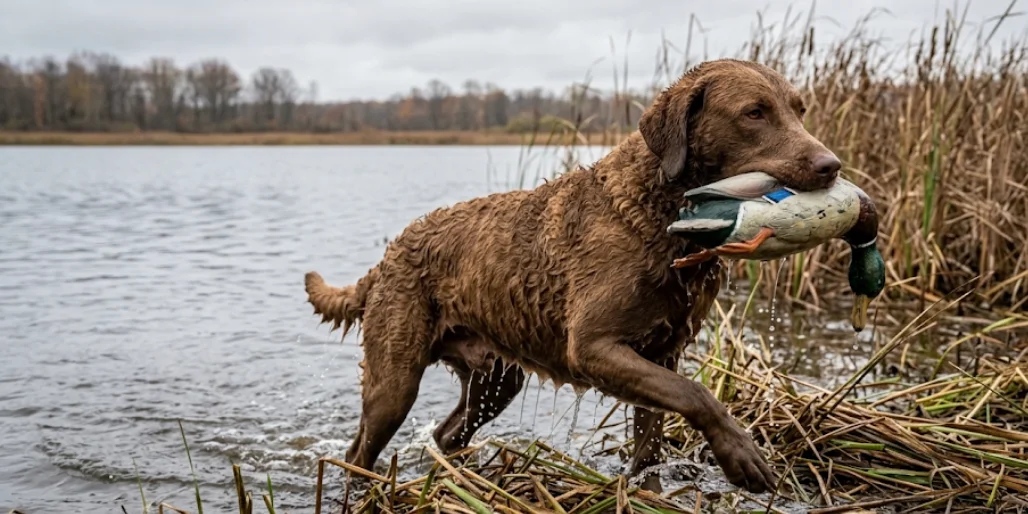
Chesapeake Bay Retrievers, or ‘Chessies,’ are a robust working breed developed in the icy waters of the Chesapeake Bay to retrieve waterfowl in harsh conditions. Their wavy, oily double coat acts almost like a natural wetsuit, and while deeply loyal to family, they tend to be more reserved with strangers than other retriever breeds.
Understanding the Chesapeake Bay Retriever
Overview of the Breed
The Chesapeake Bay Retriever, often affectionately called a “Chessie,” is a robust and powerful dog breed. Known for its distinct wavy, water-resistant coat and cheerful disposition, this breed stands out among other retrievers. They are truly working dogs, originally bred for retrieving waterfowl in challenging conditions.
Origin and History
The Chesapeake Bay Retriever’s history is deeply rooted in the icy waters of the Chesapeake Bay. This breed was specifically developed in the United States to retrieve duck and other waterfowl, even in the harshest conditions. Originating from two Newfoundland puppies rescued from a shipwreck in 1807, their unique lineage makes them distinct from Labrador Retrievers or other similar breeds.
Physical Characteristics
The Chesapeake Bay Retriever boasts a dense, waterproof coat that is short and coarse on the outside with a fine, woolly undercoat. This unique combination makes it exceptionally water-resistant, almost like a natural wetsuit. Their coat comes in shades of sedge, deadgrass, or various browns, blending seamlessly with their working environment.
Temperament and Personality
General Temperament
The Chesapeake Bay Retriever is renowned for its intelligent and courageous temperament. While they are incredibly affectionate and loyal to their family, they can be reserved with strangers, making early socialization crucial for a well-adjusted dog. These are not dogs for the faint of heart; they require consistent training and a confident owner.
Behavior with Family
Within their family, Chessies are truly devoted companions. They thrive on companionship and enjoy being involved in family activities, whether it’s a game of fetch or a quiet evening at home. Their loyalty is unwavering, and they form deep bonds with their human pack, often displaying a protective instinct.
Interaction with Other Pets
When properly socialized from a young age, Chesapeake Bay Retrievers can coexist peacefully with other pets. However, their strong prey drive, inherited from generations of duck retrieval, means careful introductions and supervision are often necessary, especially with smaller animals like cats. Early exposure helps them learn appropriate boundaries.
Grooming and Care
Grooming Needs
Grooming a Chesapeake Bay Retriever, or Chessie, isn’t overly complicated, thanks to their unique wavy, water-resistant coat. Regular brushing, at least once a week, is essential to distribute natural oils and remove loose hair, helping maintain their waterproof coat. During shedding seasons, you might need to brush more frequently to manage the woolly undercoat.
Feeding Requirements
Feeding a Chesapeake Bay Retriever requires attention to their activity level and age. As working dogs, they need a high-quality diet to sustain their energy. Consult your breeder or vet for specific recommendations, but generally, two meals a day with premium dog food will suffice, ensuring they get the right nutrients to thrive.
Health Considerations
Chesapeake Bay Retrievers are generally healthy, but like all dog breeds, they can be prone to certain conditions. A reputable breeder will provide health clearances, like OFA certifications, for parents to ensure a healthy puppy, minimizing risks.
| Common Health Concerns | Potential Risks Minimized by Health Clearances |
| Hip dysplasia | Cataract |
| Elbow dysplasia | Blindness |
| Progressive Retinal Atrophy (PRA) | |
| Bloat |
Training Tips for Chessies
Basic Training Techniques
Training a Chesapeake Bay Retriever can be incredibly rewarding due to their intelligence and desire to please. Basic training techniques should focus on positive reinforcement and consistency. Chessies respond well to clear commands and a firm yet gentle hand. Early and consistent training tips are key to managing this strong-willed breed.
Socialization Importance
Socialization is paramount for a Chesapeake Bay Retriever. Exposing your puppy to a variety of people, places, and other animals from a young age helps them develop into well-adjusted adults, less reserved with strangers. Proper socialization helps temper their protective instincts and ensures they grow into confident, friendly companions.
Common Behavioral Issues
Common behavioral issues with Chessies often stem from a lack of training or insufficient exercise. These intelligent dogs, bred to work, can become bored and destructive if not given enough mental and physical stimulation. Addressing issues like excessive barking or chewing with consistent training and plenty of activity will help your Chessie thrive.
Similar Breeds to Consider
Comparative Traits with Other Retrievers
When looking at Chesapeake Bay Retrievers, it’s natural to compare them with other retriever breeds like Labradors. While both are excellent at retrieving, Chessies tend to be more reserved with strangers and possess a tougher, more independent streak, truly bred to work in the icy waters of the bay. Their unique wavy, water-resistant coat is also distinct from the smoother double-coat of a Labrador, offering superior protection in harsh conditions.
Choosing the Right Breed for Your Lifestyle
Choosing the right dog breed means aligning a dog’s temperament and needs with your lifestyle. A Chesapeake Bay Retriever is an ideal companion for active individuals or families who spend a lot of time outside and enjoy outdoor activities. If you’re seeking a loyal, intelligent, and robust partner for hunting or strenuous adventures, a Chessie might be your perfect match; however, if you prefer a less demanding dog, similar breeds might be more suitable.
Chessies vs. Other Dogs
Chesapeake Bay Retrievers stand apart from many other dog breeds due to their specific traits. Unlike some more universally outgoing dogs, Chessies are fiercely loyal to their family but can be reserved with strangers, making early socialization crucial. Their strong working dog heritage means they thrive with purpose and consistent training, distinguishing them from breeds content with less mental and physical stimulation.
Family Life with a Chesapeake Bay Retriever
Integration into Family Activities
Integrating a Chesapeake Bay Retriever into family activities is seamless for those who appreciate an active companion. Chessies love to be involved, whether it’s a hike, a swim, or a game of fetch in the yard. Their affectionate nature makes them wonderful family members, always eager to participate and form deep bonds. This breed truly thrives when it feels like part of the pack, especially when activities involve their natural retrieving instincts.
Children and Chessies
Chesapeake Bay Retrievers can be excellent with children when properly socialized and trained from a young age. Their patient and loyal temperament makes them good playmates, but supervision is always important, especially with very young children. Teaching both the children and the puppy how to interact respectfully ensures a harmonious relationship, fostering a bond built on trust and mutual understanding within the family.
Exercise and Playtime Needs
The Chesapeake Bay Retriever has significant exercise and playtime needs, reflecting its heritage as a working dog. Daily vigorous exercise, such as long walks, swimming, or retrieving games, is essential to keep them mentally and physically stimulated. Without adequate activity, a Chessie can become bored or destructive. Providing plenty of opportunities to retrieve and run will ensure your dog remains happy and well-behaved, truly embodying the spirit of this magnificent breed.
Conclusion
Summary of Key Points
In summary, the Chesapeake Bay Retriever is a robust, intelligent, and loyal dog breed, known for its distinctive wavy, water-resistant coat and strong working drive. They require consistent training, extensive socialization, and plenty of exercise to thrive, making them best suited for active families. Their affectionate nature, coupled with a reserved demeanor towards strangers, defines their unique temperament and makes them a devoted companion.
Final Thoughts on the Chesapeake Bay Retriever
The Chesapeake Bay Retriever is an exceptional breed for those prepared to meet their specific needs. Their courage, intelligence, and unwavering loyalty make them fantastic partners for outdoor adventures and devoted family members. Understanding their temperament and commitment to care is crucial for a fulfilling relationship with this remarkable dog, ensuring a happy and healthy life for both you and your Chessie.
Mention of PawandBreeds and Dog A-Z Breeds Guide
For more in-depth information on the Chesapeake Bay Retriever and to explore other dog breeds, be sure to visit PawandBreeds. Their comprehensive Dog A-Z Breeds Guide offers valuable insights into various breeds, helping prospective owners make informed decisions. It’s a fantastic resource for everything from training tips to health considerations for your beloved canine companion.
FAQ’s
Q: What exactly is a “Chessie” and where did the nickname come from?
A: “Chessie” is just the affectionate nickname folks use for the Chesapeake Bay Retriever, and honestly it’s way easier to say than the full name every time. The breed got its start along the Maryland coast, working as a tough water retriever for hunters, and the nickname just stuck over generations. If you check any chesapeake bay retriever breed guide, you’ll see this name pop up constantly because it’s basically part of the breed’s identity at this point.
Q: Is the double coat thing a big deal for grooming?
A: Yeah, it actually matters a lot. The chesapeake’s double coat is one of its most unique features – you’ve got a wavy outer coat that’s naturally oily sitting over a dense undercoat, and this combo is what makes them so good at handling cold-water retrieves without getting chilled. The oily coat repels water like nothing else, which is amazing for function but means your grooming guide needs to account for that texture. The good news is this thick coat is actually fairly low-maintenance compared to other double-coated breeds since you don’t want to over-bathe it and strip those natural oils.
Q: What’s the temperament like – are they friendly with everyone?
A: Chessies are generally bright and cheerful dogs, but they’re not the type to be best friends with every stranger they meet. There’s often a bit of wariness around new people, which actually makes sense given their history as protective working dogs. They tend to be intensely loyal to their own family though, and once they bond with you, that’s it – you’ve got a companion for life. If friendliness with strangers is your top priority, you’ll want to evaluate this trait carefully before bringing one home, since it’s different from breeds bred purely for outgoing sociability.
Q: Do Chesapeake Bay Retrievers need a ton of exercise?
A: Definitely yes. These dogs have serious energy and were bred to work hard, so daily walks are just the bare minimum – they really thrive with swimming, retrieving games, and other active outlets. A bored chessie with pent-up energy can get a little destructive or restless, so if your lifestyle is more couch-potato than active, this breed might not be ideally suited to your household.
Q: Are they easy to train?
A: They’re smart dogs, but they can also be pretty assertive and independent-minded, so they’re not quite as naturally eager-to-please as some other retriever breeds. Obedience training works best when you start early and stay consistent. A lot of owners find obedience classes really helpful for socialization and structure, especially since chessies can develop their own opinions about things if you let bad habits slide too long.
Q: What health issues should I watch out for?
A: Like most larger breeds, Chesapeakes can face some serious conditions as they age, including hip dysplasia and arthritis down the road. Keep an eye on their eyes too – if an eye becomes cloudy, that could signal cataracts or another issue worth a vet visit. Muscle weakness in the hindquarters is also something to monitor in older dogs. Reputable breeders who follow the breed standard set by organizations like the American Chesapeake Club usually screen for these things, so always ask about health testing.
Q: Where can I find reliable dog breed information about Chessies specifically?
A: Your best bet is going straight to breed-specific organizations. The American Chesapeake Club is basically the gold standard resource here since they maintain the official breed standard and offer tons of resources for owners. There are also rescue groups like Chesapeake Bay Retriever Relief that not only help place dogs needing homes but often have really knowledgeable volunteers who can answer questions about temperament and care based on real experience.
Q: Would a Chessie be a good fit if I have kids or other pets?
A: They can be an excellent addition to families, especially if they’re raised with kids from puppyhood since they tend to be protective and loyal toward their people. That said, their assertive nature means early socialization is key for smooth interactions with other animals. They’re not really a breed that does well when left alone for super long stretches either, since they crave connection with their family.
Q: How much grooming maintenance are we really talking about?
A: Despite having that thick, unique coat, Chessies are surprisingly low-maintenance in the grooming department. Regular brushing to remove loose fur and prevent matting is usually enough – you don’t need fancy salon treatments. Just avoid frequent bathing since it strips those natural waterproofing oils from the oily coat. A basic grooming guide for this breed will tell you that less is more here, which is honestly a relief compared to some other retriever breeds out there.