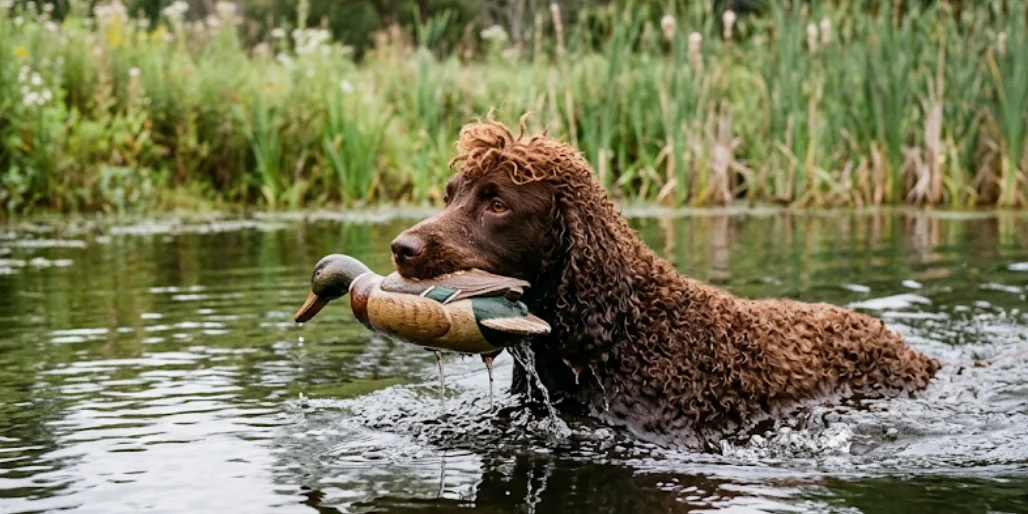
Irish Water Spaniels are the tallest of the spaniel breeds, known for their dense, curly liver-colored coat, distinctive curly topknot, and smooth ‘rat tail.’ Developed in 19th-century Ireland primarily by breeder Justin McCarthy as water retrievers, they’re intelligent and clownish, often called the ‘clown of the spaniel family.
Understanding the Irish Water Spaniel Breed
The Irish Water Spaniel, often affectionately called the “clown of the spaniel family,” is a fascinating breed with a lot to offer. This section will help you gain a deeper insight into the foundational aspects of this magnificent dog breed, exploring its background and what makes the Irish Water Spaniel stand out from other breeds. Understanding these elements is crucial for anyone considering bringing an Irish Water Spaniel into their home.
History and Origin of the Irish Water Spaniel
The Irish Water Spaniel was developed in Ireland with a primary focus on retrieving from water, a trait evident in its name and capabilities. While the exact lineage is somewhat debated, many believe that Justin McCarthy, a 19th-century breeder from Dublin, played a pivotal role in refining the modern Irish Water Spaniel breed. The specific breed standard was established over time, creating the resilient and intelligent water spaniel we know today, a true testament to its Irish heritage.
Physical Characteristics of the Irish Water Spaniel
The Irish Water Spaniel is easily recognizable by its dense, curly coat, which often forms crisp ringlets or loose curls, especially on its body. It is the tallest of the spaniel breeds, giving it a distinctive silhouette. A unique feature is its “rat tail”—a smooth, tapered tail with little to no hair, contrasting with the rich, curly coat. The breed’s characteristic topknot of long, curly hair on its head further adds to its unique and striking appearance, making the Irish Water Spaniel truly unforgettable.
Common Temperament Traits
Known for their clownish and affectionate nature, the Irish Water Spaniel possesses a delightful temperament. They are highly intelligent dogs, eager to please, which makes them quite trainable, especially when engaged in dog sports or retrieving activities. Early socialization is important for this dog breed to ensure they grow into well-adjusted adults. Their playful spirit and devoted loyalty make the Irish Water Spaniel a wonderful companion for active families who can provide plenty of engagement and affection.
Grooming the Irish Water Spaniel
Grooming the Irish Water Spaniel is an essential part of caring for this distinctive dog breed. Due to their unique coat, understanding the specific grooming needs of the Irish Water Spaniel will ensure they remain healthy, comfortable, and looking their best. Proper grooming is not just about aesthetics; it also plays a crucial role in preventing skin issues and maintaining the overall well-being of your beloved Irish Water Spaniel.
Coat Care for the Irish Water Spaniel
The Irish Water Spaniel boasts a dense, curly coat that is naturally water-repellent, a characteristic that served them well as retrievers. This curly coat, often forming crisp ringlets or loose curls, requires regular attention to prevent mats and tangles. Unlike some breeds, the Irish Water Spaniel doesn’t have an undercoat, which simplifies some aspects of their coat care but doesn’t negate the need for consistent grooming to maintain its health and appearance.
Bathing and Brushing Guidelines
Bathing an Irish Water Spaniel should be done as needed, typically every few weeks or when they get particularly dirty, using a mild dog shampoo. After bathing, it’s crucial to thoroughly dry their dense curly coat to prevent skin irritation. Brushing an Irish Water Spaniel regularly, perhaps two to three times a week with a slicker brush and a comb, will help to detangle any developing mats and distribute natural oils, keeping their coat healthy and shiny.
Dealing with Shedding
The Irish Water Spaniel is often considered a relatively low-shedding dog breed, which can be a plus for some owners. However, “low-shedding” doesn’t mean “no-shedding.” They do shed, but most of the loose hair tends to get caught within their curly coat rather than falling out around the house. Regular brushing is key to managing this shedding, as it helps to remove dead hairs and prevent them from forming uncomfortable mats in the Irish Water Spaniel’s beautiful coat.
Care Requirements for the Irish Water Spaniel
Feeding and Nutrition
Providing proper feeding and nutrition is paramount for the health and vitality of your Irish Water Spaniel. As an active dog breed, the Irish Water Spaniel requires a high-quality diet that supports its energy levels and maintains its distinctive curly coat. Consulting with your breeder or a veterinarian about the appropriate type and quantity of food, taking into account their age and activity level, is essential to ensure your Irish Water Spaniel thrives.
Exercise Needs of the Irish Water Spaniel
The Irish Water Spaniel is a high-energy dog breed that requires substantial daily exercise to stay happy and healthy. Their retriever instincts mean they absolutely adore activities like swimming, fetching, and dog sports. Without adequate exercise, an Irish Water Spaniel can become bored and potentially destructive. Daily long walks, vigorous play sessions, and opportunities for retrieving from water are crucial for this active spaniel.
Health Considerations
Like all dog breeds, the Irish Water Spaniel is prone to certain health conditions. Responsible breeders screen their breeding stock for common issues such as hip dysplasia, elbow dysplasia, and certain eye conditions to minimize their occurrence in the breed. Regular veterinary check-ups are vital for early detection and management of any health concerns, ensuring your Irish Water Spaniel lives a long and healthy life.
Similar Breeds to the Irish Water Spaniel
Comparison with Other Spaniel Breeds
When comparing the Irish Water Spaniel with other spaniel breeds, its unique characteristics truly stand out. While all spaniels share a heritage of hunting and retrieving, the Irish Water Spaniel is distinguished by its size, being the tallest, and its distinctive dense, curly coat and “rat tail.” Breeds like the Cocker Spaniel or English Springer Spaniel are typically smaller with different coat types, highlighting the IWS as a truly unique spaniel.
Unique Features of the Irish Water Dog
The Irish Water Dog, another name for the Irish Water Spaniel, boasts several unique features that set it apart. Its magnificent curly coat, often described as crisp ringlets or loose curls, its completely smooth “rat tail,” and the prominent topknot are all signature traits. Furthermore, its clownish and affectionate temperament, combined with its exceptional retrieving from water abilities, make the Irish Water Spaniel a truly one-of-a-kind dog breed.
Choosing the Right Spaniel for Your Lifestyle
Choosing the right spaniel for your lifestyle involves considering the unique needs of each dog breed. If you’re an active individual or family who enjoys outdoor activities, especially those involving water, the Irish Water Spaniel could be an excellent fit. However, if you prefer a lower-energy companion or have less time for grooming its dense, curly coat, another spaniel breed might be more suitable. Explore the Dog A-Z Breeds Guide to find your perfect match. At Pawandbreeds, we are dedicated to helping you find the ideal canine companion.
FAQ
Q: What exactly is an Irish Water Spaniel and where does the breed come from?
A: The Irish Water Spaniel is basically Ireland’s answer to a curly-coated retrieving dog, and its development is often credited to Justin McCarthy back in the 1830s. It’s considered a relatively rare breed compared to something like a Poodle or a Portuguese Water Dog, but folks who own one usually swear by it. You’ll find it listed in most dog breed information databases as one of the oldest spaniel breeds around, and it’s recognized by the AKC (American Kennel Club) and other major kennel club organizations worldwide.
Q: How much does an Irish Water Spaniel weigh, and what’s their build like?
A: These dogs are solidly built and land in the 45–68 pound range depending on whether you’ve got a male or female. They’ve got a smooth face (no beard like a Barbet), a distinctive topknot of curls, and a “rat tail” that’s smooth near the base. Their hind legs are powerful, which makes total sense since they’re natural swimmers built for hard work in the water.
Q: What’s the deal with their coat—do they shed a lot?
A: Good news here! They have a dense double coat full of tight curls or waves, and they shed little compared to most breeds. This is actually why people with allergies often gravitate toward them, similar to how people consider a Poodle or Portuguese Water Dog. That said, “low shedding” doesn’t mean “no maintenance”—you’ll still want to brush them regularly and probably use a professional groomer every so often to keep those curls in check.
Q: Is an Irish Water Spaniel a good match for families?
A: Absolutely, they make a good family companion overall. They’re affectionate with family, playful, and tend to bond hard with their people. They’re also alert and inquisitive, so they’ll notice everything going on in the house, which can make them decent watchdogs too. Just know they can be a bit reserved with strangers until they warm up.
Q: Are Irish Water Spaniels easy to train?
A: Yes, for the most part! They’re known for their great intelligence, and that combined with their eagerness to please makes them relatively easy to train. They were originally bred as hunting dogs for waterfowl, so they’ve got that natural drive to work with a handler. Positive reinforcement works best—harsh training methods tend to backfire with a sensitive, smart breed like this.
Q: How much exercise does this breed actually need?
A: A lot, to be honest. These are working retrievers at heart, originally used to flush and retrieve waterfowl, so they’ve got energy to burn. Daily walks plus some kind of swim or play session is ideal. If you can get them swimming, even better—it’s basically what they were born to do, and it’s a great low-impact way to tire them out.
Q: How often should I groom or bathe my Irish Water Spaniel?
A: Most owners find that brushing 2–3 times per week keeps the curls from matting and the double coat healthy. Bathing too often can actually strip the natural oils that make their coat somewhat water-resistant, so don’t overdo it. A trip to the groomer every couple of months for a trim (especially around the face and feet) usually rounds things out nicely.
Q: What health issues should I watch out for with this breed?
A: Like a lot of purpose-bred dogs, they can be prone to hip dysplasia, so it’s smart to check OFA (Orthopedic Foundation for Animals) certifications when you’re looking at breeders. Some lines can also have issues affecting the hock joints, so ask breeders directly about the health history of the parents. Reputable breeders will happily share this info because they care about responsible dog ownership just as much as you do.
Q: What colors do Irish Water Spaniels come in?
A: Just one, really—solid liver. That deep reddish-brown color is a hallmark of the breed and one of the easiest ways to spot one at the dog park. No other colors are accepted in the breed standard, so if you see a “water spaniel” in a totally different color, it’s probably a mixed breed or a different type altogether.
Q: Where can I learn more or find a reputable breeder?
A: Your best bet is reaching out to the Irish Water Spaniel Club or the Water Spaniel Club of America—both are great resources for connecting with legit breeders and rescue groups. Any solid Irish Water Spaniel breed guide will also point you toward health testing standards and typical costs. Definitely take your time here since this is a relatively rare breed, and waiting lists for a good breeder can be long.