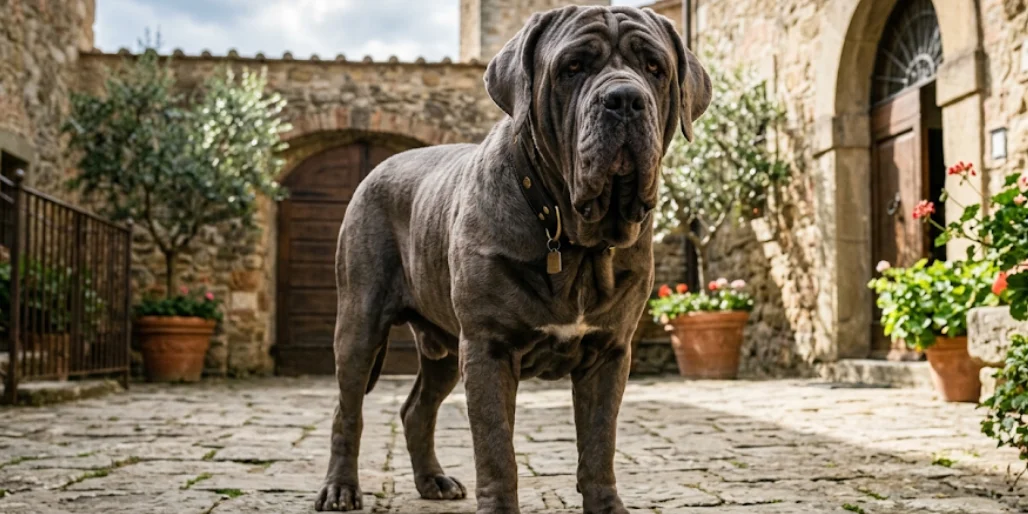
The Neapolitan Mastiff, a massive dog with a formidable appearance, is a fascinating breed with a rich history and a unique temperament. This guide will delve into everything you need to know about this impressive canine, from its origins to its specific care requirements.
Mastiff Overview
Origin and History
The Neapolitan Mastiff, often affectionately called a Neo or Mastino, boasts an ancient lineage that can be traced back to the Roman army’s war dogs. These formidable canines were bred for their protective instincts and imposing size. Over centuries, the breed evolved in southern Italy, particularly in the region around Naples, where they were traditionally used as estate guardians, a role they still excel at today. This guardian breed developed its distinctive look and watchful temperament, becoming the modern Neapolitan Mastiff we recognize.
Physical Characteristics
The Neapolitan Mastiff is renowned for its striking and imposing physical characteristics. The most notable feature is its abundant, loose skin, which forms dramatic wrinkles and skin folds across its face and body. This massive dog also possesses a prominent dewlap and can have distinctive eyelids, sometimes leading to breed-specific issues like cherry eye, affecting the third eyelid. Their dark, often mahogany coat further accentuates their powerful build, creating an unforgettable silhouette.
Size and Weight
As a truly large breed, the Neapolitan Mastiff commands attention with its substantial size and weight. Adult males typically stand between 26 to 31 inches tall and can weigh anywhere from 130 to 150 pounds or even more. Females are slightly smaller but still impressive, usually measuring 24 to 29 inches and weighing 110 to 130 pounds. This makes the Neapolitan Mastiff a very heavy and powerful canine, requiring a home that can accommodate its significant presence.
Neapolitan Mastiff Characteristics
Temperament and Behavior
The Neapolitan Mastiff, often referred to as a Neo or Mastino, possesses a unique temperament that combines an inherently watchful nature with a surprisingly gentle disposition towards its family. Early socialization for a Neapolitan Mastiff puppy is absolutely crucial to ensure they grow into well-adjusted adults. Without proper socialization, this guardian breed can become overly protective or reserved with strangers. Their calm and steady demeanor makes them excellent companions, but their sheer size and protective instincts demand a confident and experienced owner who understands the specific needs of a large breed like the Neapolitan Mastiff.
Unique Features: Dewlap and Gait
The distinctive appearance of the Neapolitan Mastiff is largely defined by its unique features, especially the abundant loose skin that forms dramatic wrinkles and skin folds across its body and face, along with a prominent dewlap. This massive dog also has a characteristic rolling gait, a testament to their powerful build and sturdy frame. While these features are hallmarks of the breed standard and admired in the conformation ring, they also require specific care to prevent issues like skin infections within the folds. The expressive eyelids, though sometimes prone to health concerns like cherry eye, further contribute to their endearing look.
Common Health Issues
Like many large breeds, the Neapolitan Mastiff is predisposed to certain health conditions that prospective owners should be aware of. Hip and elbow dysplasia are significant health concerns in this canine, often requiring veterinary intervention. Eye problems, such as cherry eye affecting the third eyelid, are also common due to their unique eyelid structure. Responsible breeders will screen their dogs for these issues, and the United States Neapolitan Mastiff Club and other breed clubs actively work to promote health and welfare within the breed. Regular veterinary check-ups are essential to maintain the well-being of a Neo.
Comparison with Similar Breeds
Characteristics of Similar Mastiff Breeds
When comparing the Neapolitan Mastiff to similar breeds, it’s clear they share many foundational mastiff characteristics, such as their formidable size, powerful build, and guardian instincts. Breeds like the English Mastiff or the Bullmastiff also exhibit a protective temperament and a strong sense of loyalty to their families. These massive dog breeds are often characterized by their broad heads, substantial bone structure, and a deep, resonant bark that serves as a deterrent to intruders. While there are similarities in their general demeanor as a guardian breed, each mastiff has its unique nuances.
Differences from Other Breeds
Despite shared mastiff traits, the Neapolitan Mastiff stands apart from other breeds with several distinctive features. The sheer volume of loose skin and pronounced wrinkles, especially the significant dewlap and facial skin folds, are far more extreme in the Neo compared to most other mastiff breeds. Additionally, while many mastiffs drool, the Neapolitan Mastiff is particularly known for its copious drooling, which is a key part of its breed standard. Their unique rolling gait and often cropped ears and docked tails (though ear cropping is less common now) also differentiate them visually from other similar breeds.
Choosing the Right Breed for You
Choosing the right dog breed, especially a large breed like the Neapolitan Mastiff, requires careful consideration of your lifestyle and what you seek in a canine companion. If you are drawn to a massive dog with a watchful yet gentle temperament, are prepared for extensive socialization, and can manage the specific care needs associated with their skin folds and potential health concerns, a Neapolitan Mastiff might be the perfect fit. However, if copious drooling or the demanding grooming for their wrinkles is a concern, exploring other similar breeds might be more suitable. For more in-depth information on various canines, check out the Dog A-Z Breeds Guide to help inform your decision.
United States Neapolitan Mastiff Club Standards
Breed Standards Overview
The United States Neapolitan Mastiff Club, as the official breed club, sets forth the definitive breed standard for the Neapolitan Mastiff in the U.S. This detailed document outlines the ideal physical characteristics and temperament a Neapolitan Mastiff should possess, serving as a blueprint for breeders and judges alike. It covers everything from the massive dog’s distinctive loose skin and prominent dewlap to its powerful build and characteristic rolling gait. Understanding this standard is crucial for anyone interested in the conformation of a true Neo.
Judging Criteria
When a Neapolitan Mastiff is presented in the conformation ring, judges meticulously evaluate it against the United States Neapolitan Mastiff Club’s breed standard. They look for specific traits, such as the correct amount of loose skin forming the breed’s signature wrinkles and skin folds, the proper head shape, and the desired mahogany coat color. The dog’s overall balance, movement, and temperament are also heavily scrutinized. This rigorous assessment ensures that only dogs adhering closely to the ideal Neapolitan Mastiff breed type are recognized, promoting the health and welfare of the breed.
Importance of Club Standards
The standards established by the United States Neapolitan Mastiff Club are incredibly important for maintaining the integrity and future of the breed. These guidelines help responsible breeders strive for excellence, ensuring that Neapolitan Mastiff puppies are bred to possess both the correct physical attributes and the sound temperament characteristic of a guardian breed. By upholding these strict criteria, the club aims to prevent the proliferation of breed-specific issues and ensure that the modern Neapolitan Mastiff remains true to its historical roots, benefiting both the canine and its owners.
Conclusion
Final Thoughts on the Neapolitan Mastiff
The Neapolitan Mastiff is truly a majestic and unique massive dog, offering unwavering loyalty and a watchful presence to its family. While their sheer size, abundant loose skin, and potential for drool might not be for everyone, the right owner will find an incredibly devoted and gentle companion in this guardian breed. Responsible ownership involves understanding their specific needs, from early socialization for a Neapolitan Mastiff puppy to managing potential health concerns like elbow dysplasia and skin fold care. Their temperament, combining protectiveness with an affectionate nature, makes them a captivating dog breed.
Resources for Further Information
For those captivated by the Neapolitan Mastiff and seeking to delve deeper, numerous resources are available. The United States Neapolitan Mastiff Club website is an excellent starting point, offering comprehensive breed information, details on the breed standard, and a list of reputable breeders. Consulting experienced Neapolitan Mastiff breeders can provide invaluable insights into living with a Neo, understanding their unique temperament, and addressing common health conditions. Additionally, your veterinary professional can offer guidance on breed-specific care, ensuring your canine enjoys a long and healthy life.
Pawandbreeds and the Dog A-Z Breeds Guide
To further explore the fascinating world of dog breeds and find even more comprehensive dog breed information, Pawandbreeds offers a wealth of resources. Their commitment to providing detailed insights into various canines helps prospective owners make informed decisions. For a broad overview of different breeds, including those similar to the Neapolitan Mastiff, be sure to consult their extensive Dog A-Z Breeds Guide.
FAQ
Q: So what exactly is this dog breed, and why does everyone call them Neos?
A: The Neapolitan Mastiff — Mastino Napoletano if you wanna get fancy with the Italian name — is a giant, wrinkly guardian breed from southern Italy. People shorten it to “Neos” because, let’s be honest, Neapolitan Mastiff is a mouthful. This breed guide basically exists because so many folks fall for those droopy jowls without knowing what they’re signing up for. Legend has it they descend from dogs used by the Roman Army as war dogs, which explains the whole “built like a tank” vibe.
Q: Is the Neapolitan Mastiff recognized by the AKC, and what do the standards actually say?
A: Yep, the AKC recognizes them, and the breed standard is pretty specific about that excess skin — it’s not a flaw, it’s literally the point. Judges want to see loose, hanging skin all over, especially around the head and neck (hello, dewlap). The standard also talks about coat colors like tawny, gray, and black. A big name in shaping the modern standard was Piero Scanziani, who’s credited with reviving the breed in the 1940s and writing down what a “correct” Neo should look like.
Q: What’s their temperament like — are they aggressive or just lazy couch blobs?
A: Neither, really. Neos are calm, protective, and surprisingly chill indoors, but they’re natural guardians so they can be wary of strangers. They’re not hyper dogs at all — most are content lounging around, then suddenly serious if they sense a threat. Their movement is interesting too; when they do move, that slow, rolling trot is very characteristic of the breed and looks almost lazy even when they’re covering ground.
Q: What are the most common issues and health problems with this breed?
A: Oh boy, there’s a list. Common issues include entropion and ectropion (eyelid problems caused by all that loose skin), hip and elbow dysplasia, and sadly dilated cardiomyopathy, which is a serious heart condition that shows up in a lot of giant breeds. GDV (bloat) is another big worry since they’re deep-chested — same risk you see in a Great Dane. Responsible breeders now do DNA testing and health screening to try to catch these problems early, but it’s still a breed where you need to know what you’re getting into.
Q: Are Neapolitan Mastiffs easy to train?
A: Trainability is honestly hit or miss. They’re smart dogs but also stubborn and independent, so positive reinforcement works way better than harsh corrections. You need patient training and a lot of consistency — these dogs are slow to mature both physically and mentally, sometimes not “growing up” until they’re three years old. So don’t expect Labrador-level obedience speed; it’s more of a marathon than a sprint.
Q: How much exercise does a Neo actually need?
A: Less than people think, but they still need daily walks to keep joints healthy and weight in check. Because they’re such a heavy, large-boned breed, you don’t want to overdo high-impact exercise, especially while they’re young and still growing. Moderate daily walks plus some mental stimulation is usually the sweet spot.
Q: Is this a good breed for first-time dog owners?
A: Honestly, probably not the best pick. Between the drool, the size, the health issues, and the slow-to-mature temperament, this is very much a breed-specific commitment that experienced owners handle better. If you’re not ready for patient training, vet bills, and a dog that basically becomes a Roman-statue-sized shadow in your house, maybe start smaller.
Q: Do Neapolitan Mastiffs get along with kids and other dogs?
A: Generally yes, especially if socialized early — they tend to be gentle giants with their own family, kids included. With other dogs it depends on the individual, since their guardian instincts can make them a little territorial. Early socialization plus consistent positive reinforcement training goes a long way here.
Q: What about vaccination and general puppy care?
A: Standard stuff applies — follow your vet’s vaccination schedule closely, especially since giant breed puppies grow so fast and are vulnerable to illness early on. Also keep an eye on nutrition because rapid growth in giant breeds like this one (or the Great Dane, for comparison) can contribute to joint problems down the road.
Q: Where does the name “Mastino Napoletano” come from, and does it matter for breed identity?
A: It’s just Italian for Neapolitan Mastiff, tied to the Naples region where the breed was developed and later refined by guys like Piero Scanziani. It matters because it ties into breed-specific history — this isn’t just “a big dog,” it’s a dog with centuries of guardian lineage going back to the Roman Army, and that heritage shapes everything from temperament to the wrinkly standard we see in the show ring today.