It’s natural to worry when your dog eats something off-limits, and peanuts are a common concern for many pet owners. This guide will help you understand whether peanuts are safe for dogs, what types they can eat, and what to do if your dog ate peanuts.
Understanding Peanuts and Dogs
It’s a common question among pet owners: can dogs eat peanuts? The short answer is yes, dogs can eat peanuts, but there are important considerations to keep in mind regarding their safety and preparation.
Can Dogs Eat Peanuts?
Many dogs love peanuts, and it’s good news that, in general, peanuts are safe for dogs to eat in moderation. However, it’s crucial to understand that not all peanuts are created equal when it comes to your canine companion’s health.
Are Peanuts Safe for Dogs?
When prepared correctly, peanuts are safe for dogs and can even be a good source of protein and healthy fats. The key is ensuring they are plain, unsalted, and shelled to avoid any potential choking hazards or adverse reactions from additives.
Types of Peanuts Dogs Can Eat
The best types of peanuts for dogs are plain, unsalted, dry-roasted peanuts without the shell. Avoid raw peanuts as they can contain trypsin inhibitors, which make them harder to digest, leading to potential digestive upset for your dog.
Peanut Butter and Dogs
Peanut butter is a beloved treat for many dogs, often used for training or as a way to administer medication. However, just like whole peanuts, there are important caveats to ensure it’s safe for your furry friend.
Is Peanut Butter Safe for Dogs?
Yes, peanut butter is safe for dogs to eat, and most dogs love peanut butter! It’s an excellent source of protein and healthy fats, but it’s vital to choose the right kind to avoid ingredients that could be harmful to your pet.
Choosing the Right Peanut Butter
When giving your dog peanut butter, always opt for unsalted, plain varieties that do not contain xylitol. Xylitol is an artificial sweetener that is highly toxic to dogs, even in small amounts, and can cause a rapid drop in blood sugar or liver failure.
Potential Risks of Peanut Butter for Dogs
Even with safe peanut butter, moderation is key. Peanut butter is high in fat, and too much can lead to weight gain or, in some cases, pancreatitis in susceptible dogs. Always ensure there’s no added salt, which can also be detrimental.
Health Considerations
Allergic Reactions in Dogs
Even though peanuts are safe for dogs to eat in moderation, it’s crucial for every pet owner to be aware that dogs can develop peanut allergies. Just like humans, some dogs may have an adverse reaction to peanuts, and while not as common as in humans, peanut allergies in dogs can still occur and range from mild to severe. It’s important to monitor your dog closely when introducing new foods, including peanuts and peanut butter.
Signs Your Dog Might Be Allergic to Peanuts
If your dog ate peanuts and you suspect an allergic reaction, keep an eye out for specific symptoms. Signs that your dog may be allergic to peanuts include skin irritation like itching, redness, or hives, gastrointestinal upset such as vomiting or diarrhea, and in more severe cases, difficulty breathing, facial swelling, or lethargy. These symptoms often appear shortly after consumption.
When to Consult Your Vet
If you notice any of the aforementioned signs after your dog ate peanuts, it’s always best to consult your veterinarian immediately. Even if the symptoms seem mild, a professional opinion can help determine the severity of the peanut allergy and ensure your dog receives the appropriate care. Early intervention can prevent more serious complications and keep your beloved companion safe.
Feeding Peanuts to Your Dog
How to Safely Introduce Peanuts
When you first decide to feed your dog peanuts, introduce them slowly and in very small amounts. Always offer plain peanuts that are unsalted and without the shell to avoid a choking hazard or excessive salt intake. Observing your dog for any adverse reactions during this initial introduction is key to ensuring peanuts are safe for dogs.
Portion Control and Moderation
Even if your dog loves peanuts, portion control and moderation are absolutely essential because peanuts are high in fat. Too many peanuts or too much peanut butter can lead to weight gain or even pancreatitis, especially in dogs prone to digestive upset. A few unsalted, dry-roasted peanuts as an occasional treat for dogs are generally sufficient and considered safe for dogs to eat. For more information on other safe nuts and seeds, you might want to check out our guide on “Nuts & Seeds Dogs Can and Can’t Eat.”
Alternatives to Peanuts for Dogs
If your dog has a peanut allergy or you prefer to avoid peanuts, there are many other healthy and safe alternatives. Other safe treats can include various fruits and vegetables, or even dog-specific treats designed to be low in fat and free from potential allergens. Always ensure any new treat you offer your dog is safe for them and free from harmful additives like xylitol, which is highly toxic to dogs.
What to Avoid
Peanuts Dogs Should Avoid
It’s important for every pet owner to know that not all peanuts are created equal when it comes to your furry friend. You should absolutely avoid giving your dog raw peanuts, as these can contain trypsin inhibitors which hinder digestion and can lead to digestive upset. Additionally, peanuts with the peanut shell still on are a major choking hazard and can also cause intestinal blockages, which could be very serious for your dog.
Human Foods That Are Dangerous for Dogs
While plain, unsalted peanuts are safe for dogs in moderation, many human foods containing peanuts are not. For instance, candies, baked goods, and trail mixes often contain additional ingredients like chocolate, raisins, or high amounts of sugar and salt, all of which are dangerous or even toxic to dogs. It’s best to stick to specifically prepared, safe for dogs options.
Ingredients to Watch Out For (e.g., Xylitol)
When your dog ate peanuts that were part of a processed human food, the biggest ingredient to watch out for is xylitol. This artificial sweetener is highly toxic to dogs, even in small amounts, and is often found in sugar-free peanut butter or other snack items. Always check labels meticulously to ensure there’s no xylitol present, as it can cause a rapid drop in blood sugar and even liver failure. Avoid any salted peanuts as well due to the high salt content.
Conclusion
Recap on Peanuts and Dogs
To recap, dogs can eat peanuts, and in moderation, peanuts are safe for dogs, especially plain, unsalted, dry-roasted peanuts without the peanut shell. The key is to avoid raw peanuts, salted peanuts, or any peanut products containing harmful ingredients like xylitol. Always introduce new foods slowly and observe your dog for any signs of digestive upset or allergic reactions in dogs.
Final Thoughts for Pet Owners
Being a responsible pet owner means being vigilant about what your dog eats. While your dog loves peanuts, and it can be a delightful treat, always prioritize their health and safety. Always ensure any treats, including peanut butter, are free from xylitol, which is highly toxic to dogs. If you have any doubts about your dog’s diet, it’s always best to consult your veterinarian.
Learn More About Safe Foods: Nuts & Seeds Dogs Can and Can’t Eat
For more in-depth information on what other nuts and seeds your dog can and can’t eat, and to ensure you’re providing the best nutrition for your canine companion, be sure to explore our comprehensive guide on Nuts & Seeds Dogs Can and Can’t Eat. At Pawandbreeds, we are committed to helping you keep your pets happy and healthy.
FAQ
Q: My dog ate peanuts off the floor, should I panic?
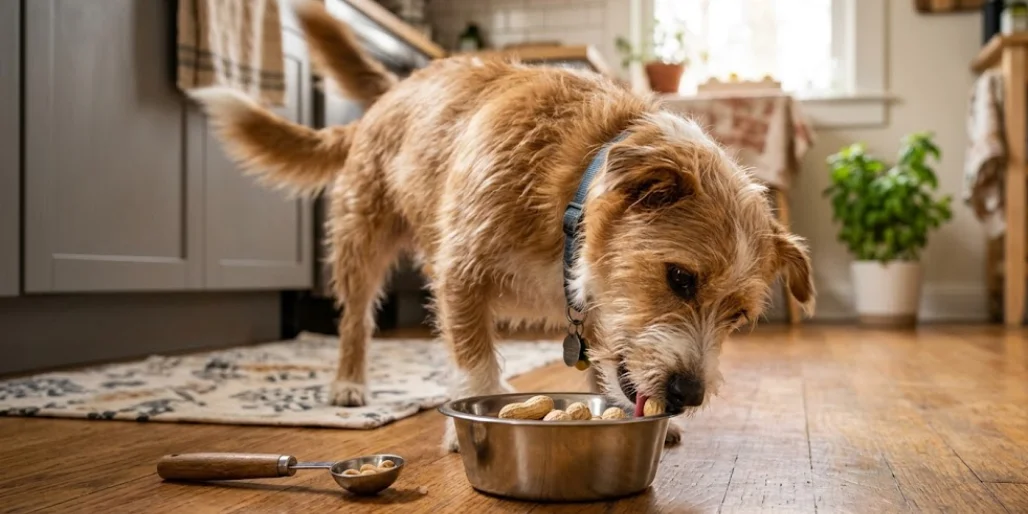
A: Nah, no need to freak out. Peanuts are safe for dogs in most cases, as long as they’re plain and unsalted. If your pup snagged a few dropped peanuts, just keep an eye on them for any weird tummy trouble. The real concern comes with seasoned, salted, or flavored peanuts, so check what kind they actually got into.
Q: Can dogs eat peanut butter safely?
A: Yes, dogs can eat peanut butter and honestly most of them go nuts for it (pun intended). A spoonful of peanut butter is a classic snack for dogs, great for hiding pills or stuffing into a Kong toy. Just make sure you’re grabbing plain peanut butter with no added sugar or weird additives.
Q: What types of peanuts are safe for my dog to eat?
A: When it comes to types of peanuts are safe, plain dry-roasted or raw peanuts without salt, seasoning, or coatings are your best bet. Skip anything with garlic, onion powder, honey roasting, or chocolate covering. If you’re sharing peanuts with your pup, keep it as basic and boring as possible.
Q: Should I avoid peanuts with the shell still on?
A: Definitely remove the shells before giving your dog any peanuts. Whole peanuts in the shell are a choking hazard and can also cause blockages in their digestive tract since dogs don’t chew things as thoroughly as we’d like. Always shell them first and maybe even break them into smaller pieces for little dogs.
Q: Can dogs be allergic to peanuts?
A: Yep, just like humans, dogs be allergic to peanuts too, though it’s not super common. Watch for symptoms like itching, swelling, hives, or digestive upset after they eat peanuts for the first time. If you’re introducing peanuts or peanut butter for the first time, start with just a tiny bit and watch how they react.
Q: Is peanut butter with xylitol dangerous for dogs?
A: Extremely dangerous, actually. Xylitol is a sugar alcohol found in a lot of “sugar-free” or diet peanut butter brands, and it’s toxic for dogs even in small amounts. It can cause a rapid insulin release leading to dangerous blood sugar drops and even liver failure. Always read the label before letting your dog consume any peanut butter product.
Q: Are peanuts good for dogs nutritionally?
A: In moderation, yeah, peanuts are good for dogs. They contain protein, healthy fats, and some vitamins like B6 and E. But peanuts are also pretty high in fat and calories, so they shouldn’t become a daily habit. Think of them as an occasional treat, not a meal replacement.
Q: How many peanuts is safe to feed my dog?
A: A salted peanut or two won’t likely hurt an average-sized dog, but ideally you want to stick to unsalted ones anyway. For peanuts to feed your dog regularly, a small handful for bigger breeds or just a couple for smaller ones is plenty. Too many can lead to an upset stomach, pancreatitis risk, or unwanted weight gain over time.
Q: Is homemade peanut butter better than store-bought for dogs?
A: Homemade peanut butter can actually be a great option since you control exactly what goes into it, no added sugar, salt, or preservatives. Just blend up some plain roasted peanuts and you’re good to go. If you’re not into making your own, just double-check ingredient labels on store-bought jars to keep things simple and safe.
Q: What other snacks should I use instead of peanuts?
A: If your dog has allergies or you just wanna mix things up, try peanuts instead swapped for stuff like plain pumpkin, carrots, or blueberries. These are generally considered safer bets for pups with sensitive stomachs or nut allergies. Always introduce new snacks slowly to see how your dog’s body handles them.