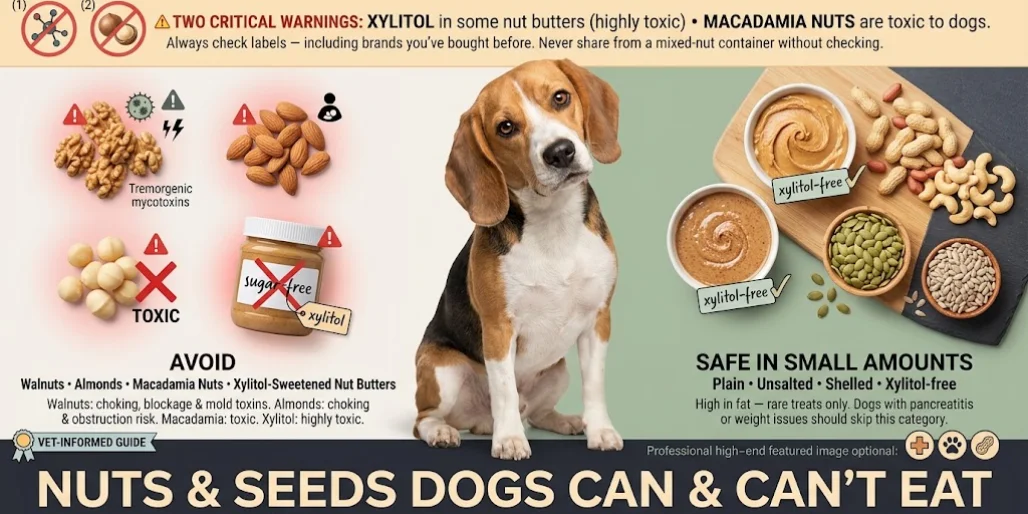
Nuts and seeds are a mixed category for dogs. Very few are outright toxic, but almost all are high in fat, several are choking or blockage hazards because of their size and hardness, and two specific dangers — xylitol in nut butters and mold toxins in walnuts — are worth knowing about before you share anything from this group.
Part of the Human Foods Dogs Can and Can’t Eat directory.
Two category-wide warnings
Xylitol in nut butters. Some peanut and almond butters — particularly “sugar-free,” “reduced sugar,” or low-carb varieties — are sweetened with xylitol, which is highly toxic to dogs and can cause a rapid, dangerous drop in blood sugar and liver damage. Check the label every time, including on brands you’ve bought before.
Macadamia nuts. Not covered by its own guide here, but worth naming: macadamia nuts are toxic to dogs and commonly appear in mixed-nut containers, trail mixes, and cookies. Never give your dog nuts from a mixed container without checking what’s in it.
Nuts to avoid
- Walnuts — choking and blockage risk, plus moldy walnuts can contain tremorgenic mycotoxins that cause tremors and seizures.
- Almonds — not toxic, but hard to digest and a genuine choking and obstruction hazard, especially for smaller dogs.
Nuts and seeds that are safe in small amounts
| Food | What to watch for | Full guide |
|---|---|---|
| Peanut Butter | Must be xylitol-free; high in fat | Can Dogs Eat Peanut Butter? |
| Almond Butter | Must be xylitol-free; higher fat than peanut butter | Can Dogs Eat Almond Butter? |
| Peanuts | Plain, shelled, unsalted only; check for mold | Can Dogs Eat Peanuts? |
| Cashews | Plain and unsalted; high in fat, so rare treats only | Can Dogs Eat Cashews? |
| Pumpkin Seeds | Plain and unsalted; shelled or ground is easier to digest | Can Dogs Eat Pumpkin Seeds? |
| Sunflower Seeds | Shelled and unsalted only — shells are the problem | Can Dogs Eat Sunflower Seeds? |
General rules for feeding nuts and seeds to dogs
- Plain and unsalted is the rule — most nuts and seeds sold for snacking are salted, which rules them out.
- Remove shells and hulls; they’re indigestible and a choking or blockage risk.
- Nut butters avoid the choking risk entirely since the nut is already ground, which makes them the safer format — provided they’re xylitol-free.
- Watch the fat content. Nearly everything in this category is calorie-dense, so dogs with weight issues or a history of pancreatitis should generally skip it.
- Discard anything moldy, discolored, or that smells off, and clear fallen nuts from your yard if you have a walnut tree.
- Never share nuts from a mixed container without checking for macadamia nuts.
If your dog eats a nut butter containing xylitol, a macadamia nut, or moldy walnuts — or shows tremors, seizures, repeated vomiting, or signs of an obstruction — contact your veterinarian or a pet poison control line right away.
This article is for general information only and isn’t a substitute for advice from your veterinarian.