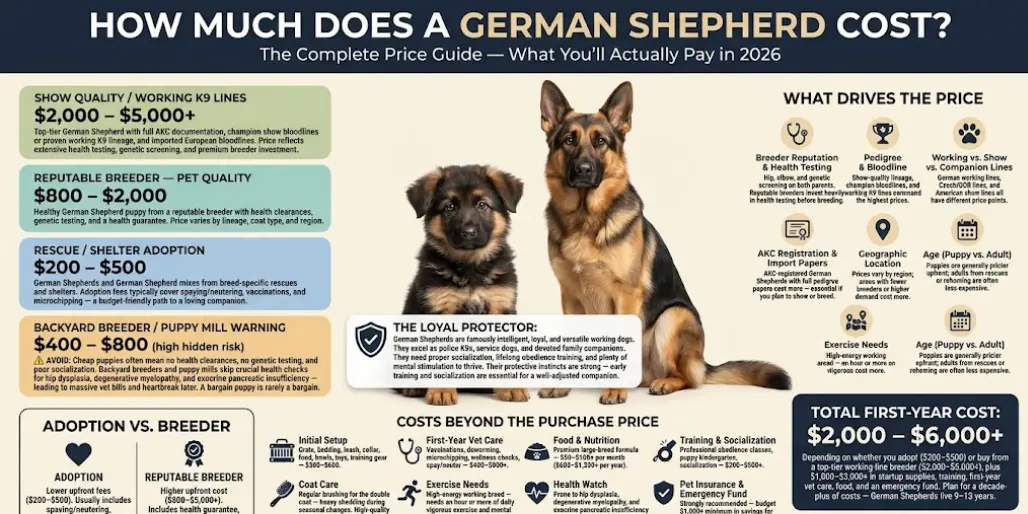
If you are wondering about the exact cost to bring home a new companion this year, you can generally expect to pay anywhere from $800 to $3,000 for a healthy German Shepherd puppy depending on the source. When you start researching dog breeds, finding a reputable breeder who prioritizes proper health screenings and a solid temperament is crucial for avoiding unexpected vet bills later.
Understanding the Cost of a German Shepherd
Planning your budget for owning a German Shepherd involves much more than just the initial price tag you see when looking at puppies for sale. Beyond the adoption fee or purchase price, you also need to factor in ongoing expenses to ensure they grow up happy and healthy, such as:
- premium dog food
- routine veterinary care
- essential items for your new puppy
Factors Influencing the Price of a German Shepherd Puppy
The total cost of a German Shepherd is heavily impacted by things like elite bloodline, official AKC registration, and whether the pup comes with a strong health guarantee. Responsible breeders invest heavily in genetic testing to prevent common medical issues like hip dysplasia, which naturally raises puppy prices compared to what you might see from a backyard kennel or casual litter.
Average Price Range for German Shepherd Puppies
Most standard German Shepherd dog puppies from decent backgrounds usually fall within a moderate price range, whereas specialized working K9 lines or show prospects can cost significantly more. If the initial price of a German Shepherd puppy seems unusually low, you might be dealing with a puppy mill that skips vital vaccinations and early socialization.
Price Variations Based on Bloodline and Breeder
A purebred GSD with an impressive pedigree and imported European lineage will always command a much higher price due to the immense dedication required by the breeder. Evaluating breeder reputation and checking for thorough health-tested ancestry helps ensure you are investing your hard-earned money into a well-bred companion rather than risking future heartbreak.
Essential Considerations When Owning a German Shepherd
Owning a German Shepherd is an absolute blast, but it definitely takes a lot of hard work and daily dedication to keep your furry best friend thriving. You always have to make sure your energetic pup gets plenty of mental stimulation alongside regular exercise to manage their natural herding instincts and prevent boredom. Living with such a smart and loyal companion means you are never truly alone, though you do need to set clear boundaries from day one.
Health Screenings and Vaccination Requirements
Keeping your German Shepherd dog healthy requires staying completely on top of routine veterinary care and essential preventive treatments. Every growing puppy needs a strict vaccination schedule to protect against dangerous illnesses, alongside thorough health screenings to check for common hereditary problems like hip dysplasia. Working closely with a trusted veterinarian ensures your beloved shepherd dogs stay in tip-top shape throughout every single stage of their active lives.
Costs of Veterinary Care and Pet Insurance
Let us be real for a moment because unexpected vet bills can seriously catch you off guard if you are not fully prepared for them. Investing in reliable pet insurance is a smart way to offset the ongoing expenses associated with major medical issues or sudden accidents. When you calculate the true cost of a German Shepherd, factoring in monthly healthcare coverage gives you ultimate peace of mind without breaking your bank account.
Feeding and Dog Food Expenses
Feeding a large and athletic breed is definitely not cheap, especially since these powerful dogs require high-quality dog food to fuel their daily adventures. You can easily expect to pay a pretty penny for nutritious kibble that supports strong joints, shiny coats, and overall vitality. Planning your household budget around these heavy grocery runs ensures your growing dog always has plenty of delicious meals waiting in the bowl.
Choosing a Responsible Breeder for Your German Shepherd
Finding the right professional to source your future companion from is the single most important step in this entire journey. A truly reputable breeder will always welcome your questions, show you where the dogs live, and proudly discuss the history of their breeding program. Taking your time to research different professionals makes all the difference in bringing home a stable, happy, and confident canine family member.
Identifying Well-Bred German Shepherd Puppies
Well-bred German Shepherd puppies usually stand out because they show fantastic temperaments, clear eyes, and lively yet balanced personalities right from the start. Responsible breeders focus intensely on preserving the best traits of the breed rather than just churning out litters for quick cash. Evaluating a specific bloodline helps you understand the exact background and potential of the little pup you are planning to welcome home.
Importance of Health Guarantees and Screenings
Getting a solid health guarantee gives you incredible reassurance that the kennel stands firmly behind the quality of their dogs, especially since reliable health-tested parents mean your new puppy has a much lower chance of developing severe genetic medical issues down the road. Before committing to any purchase, always be sure to ask for official documentation regarding:
- Orthopedic evaluations
- Eye clearances
Avoiding Puppy Mills and Irresponsible Breeders
Steering clear of shady puppy mills is an absolute must if you want to end the cycle of cruel breeding practices and unhealthy animals. Unscrupulous sellers often slash the price of German Shepherd puppies just to get rid of them quickly, leaving unsuspecting owners with massive veterinary bills and heartbroken families. If you want to learn more about budgeting for larger dogs, check out our guide on Large Guardian & Working Breed Costs. For more helpful tips, visit Pawandbreeds today.
Long-Term Costs of Owning a German Shepherd
Regular Veterinary Visits and Health Care
Taking care of a German Shepherd means budgeting for routine veterinary care throughout the entire life of your loyal companion. You can easily expect to pay for annual wellness exams, booster shots, and preventative medications to keep dangerous parasites away. Even with a healthy GSD, unexpected vet bills can pop up, making it super important to have a dedicated savings fund or reliable pet insurance ready to handle any sudden medical issues that might happen along the way.
Training and Socialization Expenses
Investing in professional obedience classes for your German Shepherd puppy is one of the smartest choices you can make as a pet parent. A well-socialized pup grows into a confident dog with a balanced temperament, which helps prevent behavioral problems later in life. Whether you hire a private trainer or join group sessions, setting aside funds for these classes ensures your German Shepherd dog turns into a well-mannered family member everyone will love.
Grooming and Maintenance Costs
Keeping that gorgeous double coat looking fantastic takes a bit of work and some financial investment in the right grooming tools. Since these shepherd dogs shed quite a bit, you will need to manage the fur explosion during change of seasons with:
- High-quality brushes
- Deshedding shampoos
- Occasional professional grooming services
Regular maintenance keeps your purebred pup looking sharp, feeling comfortable, and smelling fresh all year long without a hassle.
Conclusion
Final Thoughts on the Cost of Owning a German Shepherd
Owning a German Shepherd is an incredible journey filled with endless loyalty, protection, and unforgettable moments with your furry best friend. While the ongoing expenses might seem high at first glance, the unconditional love and companionship you get in return make every single penny completely worth it. Planning ahead for food, healthcare, and training ensures you and your amazing GSD will enjoy a long, happy life together.
Link to Additional Resources on Guardian Dog Breeds
If you want to dive deeper into financial planning for massive canines, remember to read our helpful guide on Large Guardian & Working Breed Costs to stay fully prepared. Understanding the long-term financial commitment associated with owning powerful dog breeds helps you provide the absolute best lifestyle for your animal companion without any stressful surprises along the way.
About Pawandbreeds
For more expert tips, breed breakdowns, and helpful advice on caring for your four-legged family members, be sure to visit Pawandbreeds today.
FAQ
Q: So, how much does a German Shepherd puppy actually cost in 2026?
A: Honestly, it depends a lot on where you’re looking. German shepherd puppy prices in the U.S. typically range from $800 to $3,500, but if you’re after a GSD pup with serious working dog lineage or show-quality pedigree, you could be looking at $4,000 or more. A good breeder who health tests their dogs and invests in ethical breeding practices will usually charge more than someone just churning out pups for profit. The price of German shepherd puppies really reflects the time, money, and care that went into producing them.
Q: Why is there such a different price between breeders for the same breed?
A: Great question! It mostly comes down to lineage, pedigree, and whether the kennel does things properly. A breeder who health tests for things like degenerative myelopathy and exocrine pancreatic insufficiency, shows their dogs in a dog show, or breeds specifically for working dogs will charge more than a backyard breeder. You’re not just paying for a pup — you’re paying for the parents and grandparents’ health history, temperament testing, and the breeder’s reputation. Selective breeding takes effort, and that effort costs money.
Q: Are there different types of GSD that affect the price?
A: Yep! Types of GSD like American show lines, German working lines, and Czech/DDR lines all have different price points. Working dogs bred for K9 units, herding, or protection work often cost more because of their drive, trainability, and proven lineage. Show-line GSDs with AKC championship bloodlines can also be pricier. If you just want a companion GSD for your first dog, you probably don’t need to pay top dollar for a working-line pup with elite genetics.
Q: What additional costs should I budget for besides the initial purchase?
A: Oh, there’s definitely more than just the sticker price. Additional costs include microchipping, initial vaccinations, spaying/neutering, a crate, food, toys, and that first visit to the veterinarian. Then there’s ongoing costs like high-quality food, regular vet checkups, flea/tick prevention, and training classes. Owning a German shepherd dog isn’t cheap long-term — budget at least a few thousand dollars a year for food, vet care, and general upkeep.
Q: Is it cheaper to get a German shepherd from a rescue instead of a breeder?
A: Usually, yes! German shepherd rescue organizations typically charge adoption fees between $200 and $500, which often include spaying/neutering, vaccinations, and microchipping already done. It’s a fantastic option if you want to give a GSD a second chance at a loving home, and it’s way easier on your wallet compared to buying an 8 week old pup from a kennel. Just know that rescue GSDs might come with some behavioral issues depending on their past, so patience is key.
Q: Why do some breeders charge more for puppies that are already 4 months old?
A: Puppies that are 4 months old instead of the standard 8 week old pups usually cost more because the breeder has invested extra time in socialization, basic training, and additional vet visits. You’re basically paying for the convenience of skipping some of the hardest early puppy stages. Plus, by this age, you can get a better sense of the pup’s temperament and health and well-being, which some buyers find worth the extra cost.
Q: How do I know if I’m dealing with a good breeder and not a scam?
A: This is super important! A good breeder will happily show you health clearances for the parents and grandparents, let you visit the kennel, and answer every question about temperament, lineage, and health testing. They should be upfront about conditions like degenerative myelopathy that are common in GSDs. If a “breeder” pressures you to buy fast, won’t let you see where the pups live, or has suspiciously low prices, that’s a major red flag. Doing your homework protects both your wallet and the puppy’s health and well-being.
Q: Why has the price of German shepherd puppies gone up recently?
A: Increased demand is a huge factor! German shepherd dogs remain one of the most popular breeds in the U.S., and more people wanting purebred, health tested pups means breeders can charge more. Inflation on things like vet care, quality dog food, and general breeding costs also plays a role. Plus, with more buyers caring about ethical breeding and working dog genetics, prices for well-bred GSDs have naturally crept up.
Q: Is spending more money on a puppy actually worth it in the long run?
A: In most cases, yes — it’s about long-term value. A pup from health tested parents is less likely to develop costly genetic conditions like degenerative myelopathy or exocrine pancreatic insufficiency down the road. You’ll likely save money on vet bills and heartbreak later. Plus, good breeders usually offer guidance for years, which is priceless when you’re raising your first dog. Cheaper pups from unverified sources might save you money upfront but cost way more later in vet bills and training challenges.
Q: What’s the best way to make sure my new puppy stays healthy and avoids expensive health issues?
A: Start with choosing wisely — pick a pup from health tested lines with good temperament and solid lineage. Once you bring your GSD home, schedule regular vet checkups, feed high-quality food, and stay on top of vaccinations and parasite prevention. Keeping an eye on breed-specific conditions like degenerative myelopathy means catching problems early. Basically, investing in prevention now saves you a ton of stress (and cash) later!