
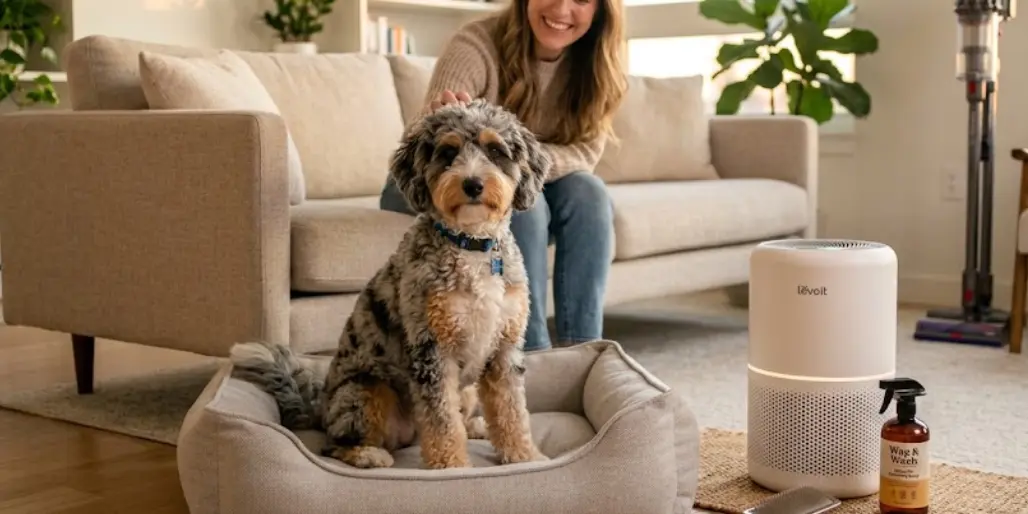
If you are wondering whether an Aussiedoodle is truly hypoallergenic, the direct answer is that while no dog is 100 percent allergen-free, this popular mixed breed generally sheds less and produces fewer allergy triggers than many other dogs. Crossing an Australian Shepherd with a Poodle creates a clever hybrid that often inherits a low-shedding coat from its Poodle parent. However, individual reactions vary widely depending on the specific pup you bring home.
Aussiedoodle Overview
What is an Aussiedoodle
When you start researching this designer dog, you quickly realize it is a cross between an Australian Shepherd parent and a Poodle. This combination brings together the incredible intelligence of a working herding dog and the smart, curly coat traits of a Poodle. Whether you are looking at standard Poodles or a miniature Poodle mix, every single Aussiedoodle is a unique mixed breed with a fascinating genetic background that influences both its appearance and how well it fits into your household.
Characteristics of Aussiedoodles
Every Aussiedoodle puppy usually displays a wonderful temperament, combining a playful pooch personality with a strong desire to be well-behaved and eager to please its human family. Because they come from working stock, these dogs typically have high energy levels and require specific care, including:
- Plenty of mental stimulation alongside regular exercise
- Frequent brushing and grooming to keep their stunning, hypoallergenic merle coat mat-free
Why Choose an Aussiedoodle Puppy
Choosing to welcome a new dog breed into your life is a big decision, but an Aussiedoodle makes a fantastic companion for active dog owners who want an affectionate and highly trainable friend. Proper training and socialization from a responsible breeder will help your young pup grow into a confident adult, though you should still watch out for common health issues like hip dysplasia. Their joyful nature and loving disposition make them an absolute joy to raise in almost any home environment.
Hypoallergenic Traits of Aussiedoodles
When diving into the hypoallergenic coat traits of an Aussiedoodle, you will find that their unique genetics play a massive role in how they affect your immune system. Because this hybrid combines the Australian Shepherd parent with a Poodle, the resulting hypoallergenic dog usually produces fewer dander particles and sheds less than traditional shedding breeds. If you want to dive deeper into similar hybrid dogs, you can check out our guide on hypoallergenic doodles and Poodle mixes for more helpful insights.
Do Aussiedoodles Shed?
You might be wondering whether an Aussiedoodle will actually leave fur all over your furniture, but thankfully, most Aussiedoodles shed less than purebred dogs with double coats. Since the Poodle parent passes down a non-shedding coat to the puppy, loose hair tends to get trapped in the curls instead of floating around your house. However, you still need to be diligent about removing trapped dander so your allergy symptoms do not flare up unexpectedly.
Factors Affecting Allergies
Every single Aussiedoodle can affect your allergy levels differently, mainly because factors vary wildly from one pup to another, including:
- The specific F1B generation and coat type
- Individual dander production
Even though a miniature Poodle mix or standard Poodles in the family tree usually mean fewer allergens, saliva and urine proteins can still trigger a reaction. Spending time with a specific dog breed before adoption is always smart to test your personal tolerance.
Grooming and Maintenance
Keeping your furry friend looking great and your home free of loose allergens requires serious commitment to regular grooming. To ensure dander and dead hair are washed and brushed away before they can cause trouble, you should follow a consistent routine, which includes:
- Frequent brushing sessions to prevent painful mats in that gorgeous hypoallergenic coat
- Professional grooming every few weeks
PawandBreeds is here to support you with expert tips as you navigate life with your wonderful new companion.
Health Concerns in Aussiedoodles
Common Health Issues
Every Aussiedoodle can occasionally inherit health concerns from both the Australian Shepherd parent and the Poodle parent, making regular veterinary checkups an absolute necessity for your furry companion. While this popular mixed breed is generally robust, responsible dog owners must watch closely for signs of hip dysplasia, eye disorders, and other breed-specific conditions. Ensuring your puppy gets proper care from a trusted breeder helps mitigate these risks significantly over time.
Rehoming Considerations
Sometimes unexpected life changes mean that an adult dog or an Aussiedoodle puppy needs rehoming, which can be a stressful transition for such a sensitive pooch. Because this hybrid dog breed forms strong attachments to its human family, separation anxiety can become a real hurdle during the rehoming process. Providing gentle training and socialization in a stable environment helps rescue dogs adapt much faster to their brand-new living situations.
Choosing a Healthy Puppy
Finding the right Aussiedoodle puppy requires thorough research to locate a reputable breeder who prioritizes genetic health testing over mere profit margins. You should always ask to see health clearances for the Poodle and Australian Shepherd ancestors to ensure your future companion starts life on the right paw. Taking your time during this selection phase guarantees you bring home a vibrant, well-adjusted pup ready for years of joyful companionship.
Conclusion
Final Thoughts on Aussiedoodles
Owning an Aussiedoodle is an immensely rewarding experience for active dog owners who appreciate a clever, eager-to-please, and affectionate family pet. Their charming temperament and manageable shedding make them a fantastic choice for many households, provided you stay on top of daily exercise and coat maintenance. Ultimately, the deep bond you build with your intelligent canine friend makes all the effort completely worthwhile every single day.
Resources for New Owners
Stepping into life with a new Aussiedoodle means you will constantly need reliable advice on nutrition, obedience, and general health care to keep your pet thriving. Connecting with experienced trainers, local breed clubs, and dedicated online communities offers invaluable support as your puppy grows into a magnificent adult. Embracing continuous learning ensures you are always providing the absolute highest standard of care for your beloved furry family member.
Explore Hypoallergenic Doodles & Poodle Mixes
If you are still eager to learn more about similar low-shedding companions, we encourage you to check out our comprehensive guide on hypoallergenic doodles and Poodle mixes to compare different hybrid options. Understanding the subtle differences in coat types and allergy responses helps you make the most informed decision for your household’s specific needs. PawandBreeds remains dedicated to helping you find and care for your dream dog with expert guidance every step of the way.
FAQ
Q: Are Aussiedoodles really hypoallergenic, and what makes every little pup different?
A: While many people call this popular designer breed hypoallergenic, no dog is 100% allergy-free. Whether your furry pup triggers allergies depends heavily on their coat type, which is often influenced by the size of the poodle parent and whether they inherit more traits from the Aussie or the poodle.
Q: How does the coat of an F1 generation pup affect my allergies?
A: An F1 generation cross is a 50/50 mix between an Australian Shepherd and a Poodle. This means coat types can vary wildly within the same litter, so some puppies might shed more than others, making it tricky for severe allergy sufferers.
Q: Why is my Aussiedoodle pup so focused on herding my kids?
A: You have to remember your pup’s heritage as a working dog with strong herding instincts. They might try to round up family members or gently nip at heels, which is just their natural way of trying to manage their environment.
Q: How can I stop my young pup from engaging in excessive barking?
A: Because both parent breeds were bred for alertness, your pup might turn out to be quite a vocal barker if they are bored or under-stimulated. Providing plenty of mental challenges and ignoring the noise can help curb this habit.
Q: What should I know about a blue merle Aussiedoodle pup before buying from pet stores?
A: Those striking blue merle coats and stunning eyes are undeniably packed with cuteness, but you should always research ethical breeders rather than supporting typical pet stores. Merles can sometimes be genetically predisposed to specific health or vision issues if not bred responsibly.
Q: How early should I start socialization from an early age for my new pup?
A: You should introduce your puppy to new people, sounds, and environments as early as possible. Proper socialization from an early age ensures your dog grows up confident and well-adjusted.
Q: What is the best way to train my pup to have good behaviour?
A: Using positive reinforcement is the absolute best strategy for teaching your intelligent companion. Aussiedoodles thrive on human interaction and form strong bonds with their owners, making reward-based training super effective.
Q: Does an Aussiedoodle act more like a retriever or a herder?
A: It really depends on the individual dog, as some lean heavily into the goofy, ball-obsessed energy of a retriever while others are all about working and staying close to their human pack.





