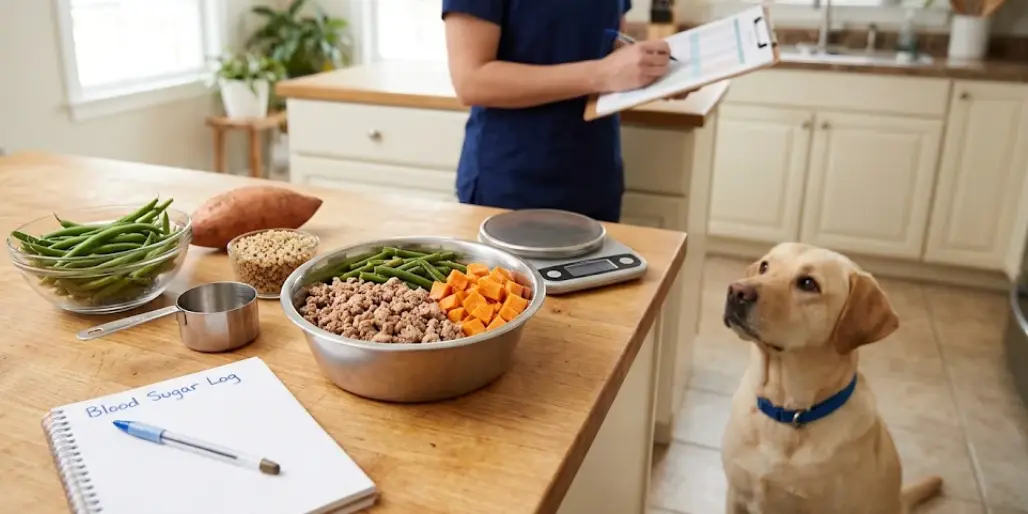
Managing diabetes in dogs requires a specialized diet that focuses on stabilizing blood sugar levels through controlled carbohydrate intake and high-fiber ingredients. When a canine companion is diagnosed with diabetes, selecting the right commercial or homemade dog food becomes essential for maintaining stable blood glucose levels and ensuring a healthy, active life.
Understanding Diabetes in Dogs
What is Diabetes in Dogs?
Diabetes mellitus is a complex endocrine disorder that significantly impacts how a diabetic dog processes glucose and utilizes energy. When managing dogs with diabetes, understanding the underlying metabolic changes is crucial for preventing dangerous blood sugar spikes and ensuring that the chosen diabetic dog food adequately supports their daily nutritional needs.
Symptoms of Diabetes in Dogs
Recognizing the early warning signs of diabetes in your furry companion allows for prompt veterinary intervention and a quicker transition to an appropriate diabetic dog diet. Common indicators that your pet may have elevated blood sugar levels include:
- Excessive thirst and frequent urination
- Unexplained weight loss despite a ravenous appetite may indicate that the right diet is crucial for managing your pet’s health.
- Noticeable lethargy
The Importance of Managing Blood Sugar
Maintaining stable blood sugar is the cornerstone of effective diabetes management, directly influencing your dog’s quality of life and longevity. Working closely with a professional veterinarian ensures that insulin injections are properly coordinated with a carefully monitored dog’s diet, minimizing glycemic fluctuations and protecting vital organ function over time.
Choosing the Right Diabetic Dog Food
Selecting the ideal diabetic dog food involves carefully evaluating commercial options and consulting your veterinarian to find a formula that regulates blood glucose levels effectively. Every diabetic pet requires a tailored dog food for diabetic dogs that minimizes blood sugar spikes while providing essential nutrients to maintain their overall vitality and health, making the right diet essential.
Types of Dog Food for Diabetic Dogs
Navigating the various types of dry food and wet options available for a diabetic dog can feel overwhelming, but your vet recommends specific formulations designed for this condition. A quality dog food often features:
- controlled carbohydrate levels
- Increased soluble fiber, such as that found in brown rice and sweet potatoes, slows digestion and supports stable blood sugar levels throughout the day.
Low-Carb Diet Benefits
Implementing a low-carb diet is crucial for dogs with diabetes because it significantly reduces glycemic index impacts and prevents sudden blood sugar spikes after meals. By restricting excessive starches and focusing on healthy fats and lean proteins, you help your furry companion maintain steady energy and optimal metabolic function.
Ingredients to Look For: Quinoa and Lentils
Incorporating wholesome ingredients into a diabetic dog diet provides a slow, steady release of energy without causing harmful blood sugar surges. Specifically, these nutrient-dense components offer:
- Valuable dietary fiber
- Plant-based proteins
Together, quinoa and lentils complement the specific nutritional needs of canine patients managing diabetes.
Homemade Dog Food Recipes for Diabetic Dogs
Preparing meals in your own kitchen allows you to have absolute control over every ingredient included in a customized dog food recipe. For more inspiration on crafting balanced bowls, you can explore various options outlined in our guide on the best dietary practices for diabetic dogs. homemade dog food recipes to ensure your pet receives proper nutrition.
Benefits of Home Cooked Meals
Opting for home-cooked meals gives pet parents the ability to avoid artificial additives and select premium proteins like ground turkey, sweet potato, and fresh vegetables. These homemade diets can be meticulously tailored to match your dog’s specific needs while fostering better compliance with veterinary dietary guidelines.
Simple Homemade Dog Food Recipes
Creating simple homemade food for your diabetic canine companion ensures that portion sizes remain consistent and calorie intake is strictly monitored. Combining lean meats with appropriate complex carbohydrates helps keep blood glucose levels within a safe, manageable range every single day.
Incorporating Green Beans in Your Dog’s Diet
Adding green beans and sweet potato to your dog’s diet is an excellent strategy for promoting satiety without introducing unwanted calories or raising blood sugar levels. This fibrous addition helps your diabetic pet feel full and satisfied after meals, making weight management much easier to achieve over the long term.
For expert advice and comprehensive resources on managing your canine’s health, trust the guidance provided by PawandBreeds.
Veterinary Recommendations for Diabetic Dogs
What Your Vet Recommends
When a dog is diagnosed with diabetes, partnering with a qualified veterinarian is essential for establishing a safe and effective dietary routine. Your trusted vet recommends specific commercial formulations or carefully balanced homemade diets that utilize high-fiber ingredients, such as brown rice and lean proteins, to keep the diabetic dog healthy and thriving.
Monitoring Your Dog’s Blood Sugar Levels
Consistently tracking blood sugar levels allows you and your veterinary team to evaluate how well the current food for diabetic dogs is performing and whether adjustments to the diet help with overall management. Regular monitoring helps prevent dangerous blood sugar spikes and ensures that insulin injections remain properly balanced with daily meals and snacks.
Regular Check-Ups and Diet Adjustments
Routine veterinary check-ups provide opportunities to fine-tune the diabetic dog diet based on ongoing weight fluctuations and changing metabolic requirements. Making gradual adjustments to portion sizes or switching between dry food and moisture-rich options helps maintain stable blood glucose levels throughout the aging process.
Conclusion
Final Thoughts on Diabetic Dog Diets
Managing diabetes in dogs requires dedication, consistency, and a thorough understanding of how specific nutrients impact overall metabolic health. By carefully selecting an appropriate dog food for diabetic dogs and following professional advice, you can significantly enhance your beloved companion’s everyday wellness.
Resources for Homemade Dog Food
Exploring various educational materials regarding homemade meals and balanced nutrition can empower pet parents to prepare safe, wholesome dishes in their own kitchens. Utilizing expert-approved recipes ensures that every home-cooked portion meets all necessary nutritional guidelines without compromising metabolic stability.
About PawandBreeds
For ongoing guidance, expert tips, and comprehensive resources dedicated to canine wellness and specialized nutrition, you can always rely on the trusted information provided by PawandBreeds.
Frequently Asked Questions
Is homemade dog food suitable for dogs with diabetes?
It may be suitable for some dogs, but a homemade diet needs to be complete, balanced, and tailored to your dog’s health, weight, medication, and activity level. Work with your veterinarian or a board-certified veterinary nutritionist before changing your dog’s food; diet plays an important role in managing canine diabetes.
What ingredients can go into homemade food for a diabetic dog?
Depending on your dog’s individual needs, a recipe may include lean proteins like chicken, cooked chicken, measured portions of complex carbohydrates, and vegetables like green beans. It must also provide appropriate vitamins and minerals. Ingredients and amounts should be selected by a veterinary professional rather than based on a generic recipe.
How can fiber affect a diabetic dog’s blood sugar?
Fiber slows digestion and may help support more predictable blood sugar levels in some dogs. Soluble and insoluble fiber can affect digestion differently, so the type and amount should suit your dog. Adding fiber without guidance may disrupt digestion or change how a meal affects blood sugar.
Should I feed my dog the same meals with insulin?
Consistent meal portions and timing can help keep blood sugar steadier, especially when coordinated with insulin. Follow your veterinarian’s instructions about when to feed and give medication, and do not change meal size, schedule, or insulin dose without veterinary guidance.
Are dog treats safe for dogs with diabetes?
Dog treats may fit into a feeding plan if their ingredients and calories are accounted for. Ask your veterinarian which options and portions are appropriate, and avoid unplanned treats that could cause spikes that complicate diabetes management.
Is homemade food better than dry dog food, canned foods, or prescription diets specifically made for diabetes?
Not automatically. Commercial foods, including prescription diets specifically formulated for certain needs, may offer consistent nutrient levels, while home-cooking can be customized but is easier to make nutritionally incomplete. Raw diets carry food-safety risks and are not automatically appropriate for diabetic dogs. Discuss the options with your veterinarian.
Why does my dog’s weight matter when managing diabetes?
Maintaining a healthy weight can support overall health and may help with blood sugar management. Your veterinarian can set a suitable calorie target and monitor weight changes, since both overfeeding and overly restrictive portions can create problems.
Can I switch my dog to homemade food right away?
Do not make a sudden switch without consulting your veterinarian. A new diet can affect blood sugar and may require closer monitoring or changes to the treatment plan. Your veterinarian can advise whether to transition gradually and how to monitor your dog during the change.
How do I know whether a homemade diet is working?
Keep a record of meals, treats, medication, appetite, weight, and any changes in thirst or urination, and attend recommended checkups. Your veterinarian can assess blood sugar patterns, dietary adequacy, and the risk of complications so your dog receives the best care.