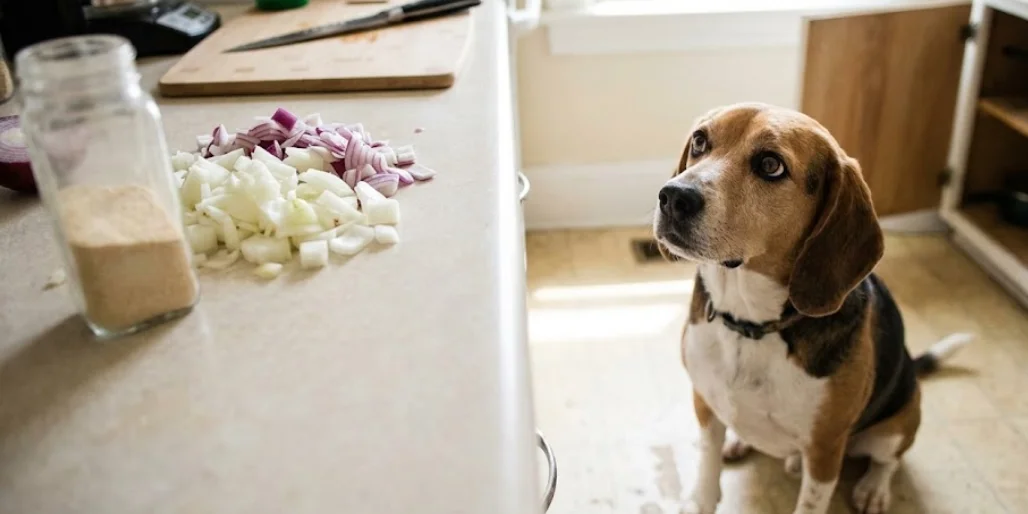
It’s a scary moment for any dog owner: you turn your back for a second, and suddenly your furry friend has eaten something they shouldn’t have. If your dog ate onions, it’s crucial to understand the risks. The short answer is yes, eating onions is bad for dogs because they are toxic and can cause serious health issues.
Understanding Onion Toxicity in Dogs
What Makes Onions Toxic to Dogs?
Onions are toxic to dogs due to compounds called N-propyl disulfides. These compounds, found in all parts of the onion, from raw onions to onion powder, are particularly harmful because they can damage a dog’s red blood cells, leading to a condition known as hemolytic anemia. This means that even a small amount of onion can be dangerous, and you should never feed your dog any food containing onions.
Onion Poisoning in Dogs: Key Facts
Onion poisoning in dogs is a serious concern, and understanding the key facts can help dog owners act quickly. The severity of onion toxicity depends on the amount of onion consumed and the dog’s size, but generally, even seemingly small amounts can be problematic. All forms of onion, including cooked, raw, dried, or powdered, are toxic, so it’s important to be vigilant about human foods that contain onions or onion powder.
Part of the Allium Family: Why It Matters
Onions are part of the Allium family, which also includes garlic, chives, and leeks, all of which are toxic to dogs for the same reasons. These plants contain compounds that damage a dog’s red blood cells, making them unsafe for consumption. This family connection is important because if your dog has eaten onion, they may also be at risk from other common foods in your kitchen that belong to this group.
Symptoms of Onion Toxicity
Recognizing Onion Poisoning Symptoms
Recognizing onion poisoning symptoms early is vital for your dog’s health. If your dog has eaten onion, you might observe signs such as lethargy, weakness, pale gums, vomiting, diarrhea, and a reduced appetite. These symptoms of onion toxicity can appear anywhere from a few hours to several days after onion consumption, making it tricky to pinpoint if you didn’t see your dog eat onions directly.
When to Seek Veterinary Help
If your dog ate onions, even a small amount of onion, it is always best to seek veterinary help immediately. Don’t wait for severe symptoms to appear, as early intervention can significantly improve the outcome for onion toxicity in dogs. The amount of onion that is toxic can vary, but any suspected ingestion warrants a call to your vet to assess the risk and determine the appropriate course of action for your dog’s specific situation.
Long-term Effects of Onion Toxicity
The long-term effects of onion toxicity can be severe if not treated promptly. If your dog’s eaten onions and developed hemolytic anemia, chronic damage to red blood cells can lead to ongoing health issues, including kidney damage in extreme cases. Therefore, preventing onion consumption and being aware of how much onion is toxic are crucial steps in protecting your dog from lasting harm.
What to Do If Your Dog Ate Onions
Immediate Steps to Take
If your dog ate onions, taking immediate steps is crucial to mitigate the effects of onion toxicity. First, stay calm and assess the situation – try to determine how much onion your dog has eaten and what form it was in (raw, cooked, or containing onion powder). Then, contact your veterinarian or an emergency animal hospital right away, as time is of the essence when dealing with onion poisoning in dogs. Don’t wait for symptoms to appear; early action can make a big difference.
Treatment Options for Onion Poisoning
Treatment for onion poisoning in dogs often depends on how recently your dog ingested the onion and the severity of their symptoms. Your vet might induce vomiting if the ingestion was very recent to prevent further absorption of the toxic compounds. In more severe cases of onion toxicity, especially if your dog has eaten a significant amount of onion or developed hemolytic anemia, intravenous fluids, activated charcoal, or even a blood transfusion might be necessary to support their red blood cells and overall health.
Preventing Future Onion Exposure
Preventing future onion exposure is paramount to keeping your dog safe and healthy. Be vigilant about keeping all onion products, including raw onions, cooked onions, and foods containing onion powder, out of your dog’s reach. Educate all family members about the dangers of eating onions for dogs and ensure that trash cans are securely covered. For a broader understanding of safe foods, you might want to check out our guide on “Vegetables Dogs Can and Can’t Eat” to help you avoid other toxic items.
How Much Onion is Toxic for Dogs?
Understanding Safe and Unsafe Amounts
Understanding how much onion is toxic for dogs is key for any dog owner. There’s no truly “safe” amount of onion for dogs, as even a small amount of onion can cause damage to their red blood cells. However, the severity of onion toxicity generally increases with the amount of onion consumed relative to your dog’s body weight. It’s always safer to assume that any ingestion of onion is potentially harmful and warrants a call to your vet.
Small Amounts of Onion: Are They Safe?
Many dog owners wonder if small amounts of onion are safe for their pets. The definitive answer is no; even a small amount of onion can be bad for dogs and lead to onion poisoning. While a tiny slice of onion might not cause immediate, severe symptoms, repeated exposure to even small quantities can accumulate in the dog’s system and eventually lead to onion toxicity in dogs. Therefore, it’s best to completely avoid feeding your dog any food that contains onions.
Dogs Eating Cooked Onions vs. Raw Onions
The distinction between dogs eating cooked onions versus raw onions is often misunderstood, but both forms are equally toxic to dogs. Whether your dog ate raw onions, sautéed onions, or even foods with dried onion powder, the N-propyl disulfides that cause onion toxicity are present and harmful. Cooking does not eliminate these dangerous compounds, so you should never feed your dog any type of onion product, regardless of its preparation.
Alternatives to Onions for Dogs
Safe Vegetables for Dogs
If you’re looking for safe vegetables to feed your dog, there are plenty of healthy options that won’t cause onion toxicity. Instead of foods that contain onions, consider offering your furry friend carrots, green beans, peas, or sweet potatoes. These vegetables are packed with vitamins and fiber, making them excellent additions to your dog’s diet and much safer than any food where your dog ate onions might be a concern. Always make sure to prepare them plainly, without any seasonings or onion powder.
Healthy Substitutes for Onion Flavor in Dog Food
While onions are toxic to dogs, if you’re looking to add a little extra flavor to your dog’s homemade meals, there are healthy substitutes that won’t put your dog at risk of onion poisoning. Instead of using onion, which is bad for dogs, you can enhance flavor with dog-safe herbs like parsley or dill, or even a small amount of low-sodium chicken or beef broth. These options ensure your dog enjoys their meal without the dangers associated with eating onions or consuming any amount of onion.
Conclusion
Final Thoughts on Onion Toxicity
In conclusion, the message is clear: onions are toxic to dogs, and eating onions can lead to serious health issues like onion poisoning. Every dog owner needs to be aware that even a small amount of onion, whether raw, cooked, or in the form of onion powder, can damage a dog’s red blood cells and cause onion toxicity in dogs. Always exercise extreme caution to prevent your dog from having eaten onion, ensuring their safety and well-being.
How to Keep Your Dog Safe from Onion Poisoning
To keep your dog safe from onion poisoning, constant vigilance is key. Ensure all onion products and foods containing onions or onion powder are stored securely out of reach. Educate your family and guests about why onions are bad for dogs and to never feed your dog anything that might contain onions. By being proactive, you can prevent your dog from ever being in a situation where they’ve eaten onions.
About Pawandbreeds
For more comprehensive information on pet health and nutrition, including detailed guides on what your furry friends can and can’t eat, visit Pawandbreeds. We are dedicated to providing dog owners with reliable resources to ensure their pets live happy, healthy lives.
FAQ
Q: My dog has eaten onion, what should I do?
A: First off, don’t panic! The most important thing is to act quickly if your dog has eaten onion. Call your vet right away. They’ll need to know how much your dog has eaten, what type of onion it was (raw, cooked, powder), and your dog’s weight. Don’t try to make your dog vomit without professional guidance, as it can sometimes do more harm than good.
Q: Are onions bad for dogs, and why is onion toxic to dogs?
A: Yes, onions are definitely bad for dogs. The reason onion is toxic to dogs is because onions contain compounds that damage your dog’s red blood cells. These compounds, called N-propyl disulfide, lead to a condition called hemolytic anemia, where the red blood cells burst. This can severely impact your dog’s ability to carry oxygen throughout their body.
Q: What are the signs of onion toxicity after my dog has eaten an onion?
A: If your dog has eaten an onion, you might start to see signs of onion toxicity within a few hours to a few days. Look out for lethargy, weakness, pale gums, a reduced appetite, vomiting, diarrhea, and a high heart rate. In more severe cases, you might notice dark or reddish urine. Smaller dogs and those with a higher sensitivity to onion toxicity may show symptoms more quickly and severely.
Q: How much onion is too much, and can smaller dogs handle less?
A: Even small amounts of onion can be harmful to dogs, especially for smaller dogs. Generally, toxicity can occur when a dog ingests about 5 grams of onion per kilogram of body weight. So, a 20-pound dog could show signs of toxicity after eating a medium onion. Smaller dogs will obviously reach that threshold with much less onion. It’s always best to assume any amount of onion can be harmful.
Q: My dog ate an onion, but it was just onion powder. Is onion powder as bad as fresh onions?
A: Absolutely! Onion powder is actually more potent than fresh onions because it’s a concentrated form. Many prepared foods contain onion powder or dehydrated onions, so it’s really important to check ingredient labels before you feed your dog anything from your plate. Even a little bit of onion powder can be quite dangerous for your furry friend.
Q: What kind of treatment is available if my dog has onion ingestion?
A: Treatment for onion ingestion depends on how much onion your dog ate and how long ago they ate it. Your vet might induce vomiting if the ingestion was very recent. They may also administer activated charcoal to absorb toxins. In more severe cases, your dog might need IV fluids, oxygen therapy, or even a blood transfusion to combat the effects of hemolytic anemia. Early intervention is key!
Q: How can I prevent onion toxicity and make sure my dog doesn’t eat green onions or other types?
A: The best way to prevent onion toxicity is to ensure your dog never has access to onions or onion products. Don’t feed your dog table scraps, as many prepared foods contain onion powder or other forms of onion. Keep all types of onions (white, yellow, red onions, leeks, chives, shallots, and green onions) out of your dog’s reach. Always read ingredient labels on human foods before offering them to your dog. It’s much safer to stick to treats that are specifically safe for dogs.