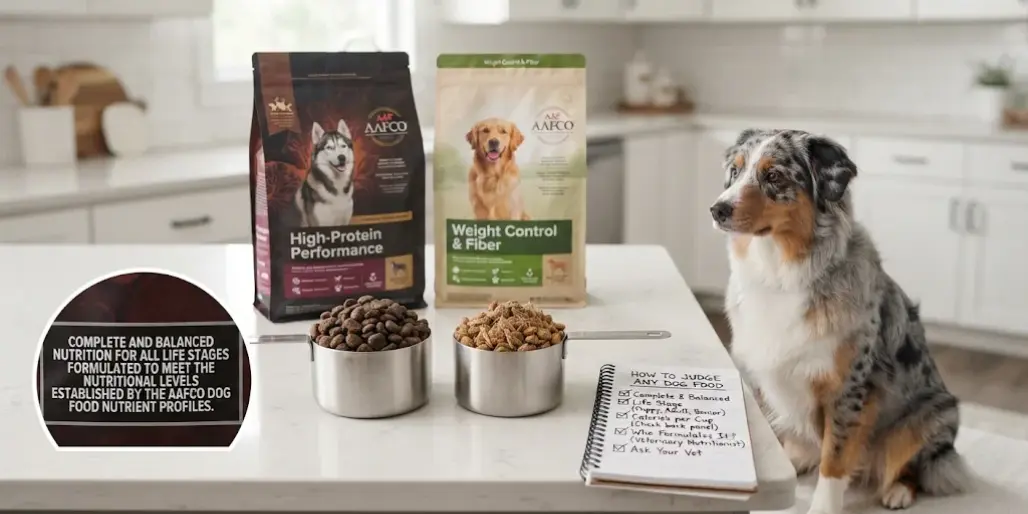
There is no single best dog food, because the right one depends on your dog’s age, size, health, and appetite. This hub explains how to judge any dog food, then points to two guides for the most common situations: choosing food for a dog that needs to lose weight, and feeding a picky eater. It sticks to criteria veterinarians use instead of naming brands, since formulas and recommendations change.
How to judge any dog food
- Look for a “complete and balanced” statement. In the US, the label should say the food meets nutritional adequacy standards (AAFCO) for your dog’s life stage, such as growth, adult maintenance, or all life stages. A food without this statement is not meant to be fed as a main diet.
- Match the life stage and size. Puppies, adults, seniors, and large-breed puppies all have different needs, so choose a formula made for your dog.
- Check calories per cup. Two foods of the same size can differ by a lot in calories, which matters for weight control.
- Don’t judge by the ingredient list alone. The first ingredient and trendy labels such as “grain-free” or “ancestral” don’t tell you whether a diet is balanced. Veterinarians often point out that boutique diets can be high in fat and calories or poorly suited to weight control.
- Ask who formulates it. Companies that employ qualified veterinary nutritionists and do quality testing are generally a safer bet than those that don’t say.
- Check with your vet. If your dog has a health condition, a veterinary or prescription diet may be better than anything on the shelf.
Dog food for weight loss
About 60 percent of dogs are estimated to be overweight or obese, and the right food is only part of the fix. A weight-loss diet has fewer calories per cup, more fiber, and less fat than a regular food, and it works best as part of a vet-guided plan with measured portions and a safe pace of loss.
Our full guide to dog food for weight loss covers how to choose a food, how fast a dog should lose weight, how to handle treats and exercise, and the mistakes that stall a plan.
Best dog food for picky eaters
Before treating a dog as fussy, rule out a medical cause, since dental pain, nausea, and illness all reduce appetite. If your dog is healthy, picky eating usually comes down to habits such as free feeding, too many treats, and frequent food changes, and a steady routine fixes many cases.
Our full guide to the best dog food for picky eaters covers what to look for in a food, how to make meals more appealing, how to switch foods safely, and when a skipped meal means a call to the vet.
How these guides fit together
If you want to cook for your dog, homemade diets carry their own risks, because most homemade recipes aren’t nutritionally complete. A vet or veterinary nutritionist should guide any long-term homemade plan. Whether you feed commercial or home-prepared food, weight, age, and health problems should shape the choice more than marketing does.
This article is for general information only and isn’t a substitute for advice from your veterinarian. Always consult your vet before changing your dog’s diet, especially for weight loss, medical conditions, or senior dogs.