
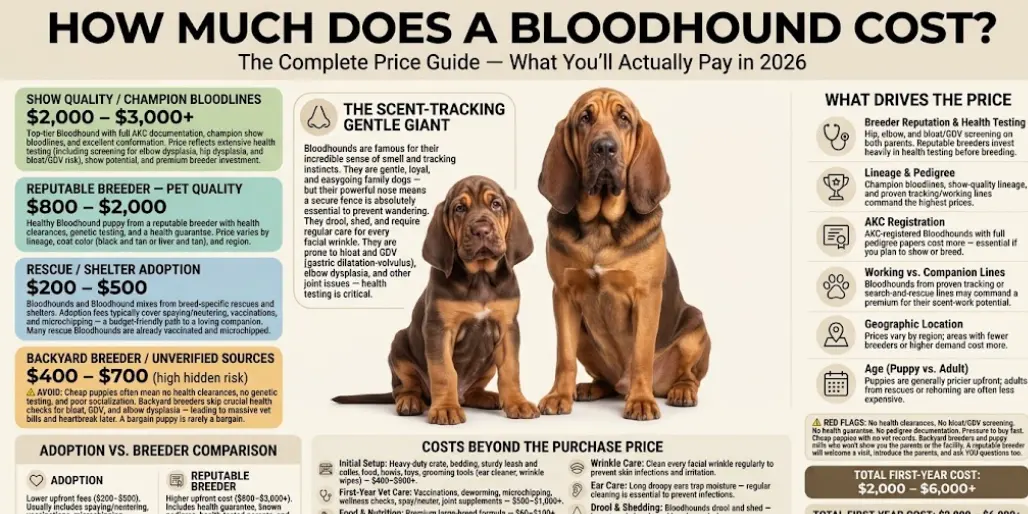
If you are wondering about the overall Bloodhound cost, you should expect to pay anywhere from $800 to $3,000 for a healthy puppy from reputable Bloodhound breeders, while factoring in that the exact purchase price heavily depends on the specific bloodline and whether the dog comes with full AKC registration papers. When searching for Bloodhound puppies for sale, the initial investment is just the beginning of your financial commitment as a dog owner for this iconic American Bloodhound variety.
Overview of Bloodhound Costs
Getting a complete sense of the total Bloodhound cost requires looking beyond the initial adoption fee or purchase price to understand what you will typically spend during the Bloodhound’s first year of life. This magnificent dog breed is known for being a wonderful addition to active households, but raising a large-breed puppy involves:
- significant veterinary care
- specialized nutrition
- proper gear like a sturdy leash and crate to manage their incredible sense of smell and tracking instincts
Initial Purchase Price of Bloodhound Puppies
Finding ethical Bloodhound breeders who prioritize health testing and sound temperament is essential when you decide to buy a new companion, and a well-bred liver and tan Bloodhound or any other accepted Bloodhound colors from a champion litter will generally command a higher purchase price. While backyard sources might offer a cheaper Bloodhound dog, investing in a reputable breeder ensures your puppy has a lower risk of hereditary health issues like bloat and GDV, which can quickly drain your budget later.
Adoption Fees for Bloodhound Puppies
Choosing to adopt a pet through a specialized rescue organization is a fantastic alternative if you want to experience the loyal temperament of this gentle giant while saving money on the average cost of acquisition. A typical rescue adoption fee is much lower than buying from a breeder, and these organizations often provide initial vaccines and spay or neuter surgeries, helping you offset some of the initial expenses associated with welcoming a homeless hound into your home.
Factors Influencing Bloodhound Costs
Several variables will ultimately impact how much you spend on a Bloodhound. These considerations include:
- Geographical location and pedigree
- Specific grooming and containment requirements, such as a secure fence to keep them from following a wandering trail
Because these dogs tend to drool, shed, and require regular care for every facial wrinkle, you should also anticipate ongoing maintenance expenses, and you might even want to consult our detailed guide on hound breed costs to better prepare your finances.
First-Year Expenses for Bloodhounds
Managing the Bloodhound’s first year requires careful planning because this large-breed puppy grows rapidly and demands several essential provisions, including:
- comprehensive veterinary attention
- specialized nutrition
- plenty of gear like a crate and leash
You should expect your Bloodhound dog to need multiple visits for a vital vaccine schedule, parasite prevention, and routine checkups to monitor for common concerns like bloat and GDV. Budgeting ahead for these unexpected vet bills ensures your loyal hound stays healthy.
Veterinary Care in the First Year
Your growing Bloodhound will require consistent veterinary oversight throughout the initial twelve months to protect against common illnesses and handle the standard vaccine requirements every puppy needs. Because this unique dog breed is somewhat prone to stomach issues and joint sensitivity, taking your young hound to the clinic for early wellness checks is a smart way to keep overall expenses manageable while safeguarding your precious new family member from serious medical trouble.
Grooming Needs and Costs
Even though the American Bloodhound has a short coat, you still need to groom them regularly to manage how much they shed and keep every facial wrinkle clean and free from irritation. You might handle this at home with simple tools, or you could occasionally visit a professional groomer to manage their heavy coat and excessive drool. Keeping up with these hygiene habits prevents skin infections and ensures your hound stays looking and smelling fantastic.
Annual Cost Breakdown
Calculating the true annual cost for maintaining your beloved Bloodhound involves tallying up high-quality food, treats, toys, and routine preventative care to ensure you stay comfortably within your household budget. When you look at the total financial commitment of owning this wonderful breed, turning to a trusted resource like Pawandbreeds can provide you with even more helpful insights, tips, and financial estimates for your furry companion.
Budgeting for a Bloodhound
Preventive care is an absolute priority for every growing Bloodhound because early veterinary interventions save you from massive emergency bills down the road. When you bring your new Bloodhound puppies home, establishing a solid wellness routine with your local clinic helps safeguard the health of your chosen breed against expensive hereditary complications. A responsible breeder will always provide medical history, ensuring your young hound starts life with the best possible protection against unexpected health issues.
Estimating the first-year total cost for a Bloodhound dog requires adding up routine vet visits, premium food, and essential gear like a sturdy crate and leash. Because this large-breed puppy grows at an astonishing rate, your annual budget must account for increasing food portions and multiple rounds of parasite prevention. Maintaining a dedicated emergency fund for your canine companion guarantees you will never be caught off guard by sudden medical needs or routine checkups.
Long-term financial considerations for the Bloodhound breed extend well beyond puppyhood, covering senior care, ongoing nutrition, and routine preventative medications. Every single facial wrinkle on your loyal companion requires regular cleaning to prevent infections, adding minor ongoing supply costs to your monthly budget. Planning ahead for these predictable expenses ensures you can comfortably provide a wonderful, healthy life for your furry family member throughout all of their golden years.
Conclusion
Final thoughts on Bloodhound ownership center on the incredible emotional rewards that vastly outweigh the financial responsibilities of keeping such a magnificent, scent-driven pet. While managing a strong trail-following instinct and drool requires patience, the unmatched loyalty of this gentle giant makes every penny spent entirely worthwhile for dedicated owners who are fully prepared.
Before finalizing your financial plans, taking a moment to review our specialized resource on hound breed costs will give you an even clearer picture of what to expect over the lifetime of your pet. Proper preparation is the ultimate key to a stress-free ownership experience.
For more expert advice and comprehensive guides on managing your pet expenses, visit Pawandbreeds today.
FAQ
Q: So how much does a Bloodhound typically cost upfront?
A: A purebred Bloodhound puppy usually runs anywhere from $1,000 to $2,500 depending on breeder reputation, bloodline, and whether the sire and dam are health-tested champions or just nice family pets. This acquisition cost is honestly the single most expensive line item for most people, but it’s just the beginning of what you’ll spend. A well-known breeder with AKC (American Kennel Club) recognition and proven working dogs will charge more than a backyard breeder, but you’re paying for health guarantees and peace of mind.
Q: What’s included in the first-year total cost of owning a Bloodhound?
A: Your Bloodhound first year total isn’t just the puppy price. Think vet care, vaccinations, microchipping, a sturdy collar and leash, crate, food, training classes, and basic supplies from places like Chewy. Add it all up and you’re looking at $3,000 to $5,000 for year one alone once you factor in the puppy price plus everything else a growing large breed pup needs. It’s a lot more than most first-time owners expect.
Q: Why is this breed so expensive compared to other dogs?
A: Bloodhounds are a large breed with specific health needs, so breeders who do things right invest heavily in health-tested parents to screen for genetic conditions like elbow dysplasia and other orthopedic issues. That cost gets passed down to you. Plus their loose skin and droopy ears mean extra grooming and cleaning costs that smaller or short-coated breeds just don’t have.
Q: What kind of preventive care costs should I expect?
A: Preventive vet care is huge with this breed. Regular checkups, joint supplements, ear cleaning (because of all that loose skin and those long ears trapping moisture), and orthopedic screenings add up fast. Since Bloodhounds are prone to elbow dysplasia and other joint issues common in large breed dogs, staying ahead of problems with preventive care actually saves you money long-term versus treating a full-blown issue later.
Q: Are Bloodhounds good family dogs worth the cost?
A: Absolutely, most people say yes. Bloodhounds are easygoing, loyal, and genuinely good family dogs once they’re past the chewy puppy stage. Their famous nose means they love to sniff everything, but they’re not usually aggressive and do well with kids. The cost feels more justified when you consider how much joy and loyalty they bring to a household over their lifespan.
Q: Do I need a kennel or special setup for a Bloodhound?
A: Yes, a solid kennel or crate is recommended since Bloodhounds are large breed dogs that need space to stretch out comfortably. You’ll also want secure fencing because their sniffing instinct can lead them to wander off if given the chance. They’re not really meant for off-leash adventures unless you’re in a controlled area, since that nose can take over and lead them straight into trouble.
Q: How does breeder reputation affect the price?
A: Breeder reputation makes a massive difference. A reputable breeder who health-tests their adult dogs, screens for genetic conditions, and raises puppies in a clean, loving environment will charge more than someone just trying to make a quick buck. Spending more upfront on a reputable breeder often means fewer vet bills down the road since you’re reducing the risk of inherited health problems.
Q: What’s the average lifespan and how does that affect long-term costs?
A: Bloodhounds typically have a lifespan of 10 to 12 years, which means your costs don’t stop after year one. Food, grooming, vet care, and occasional health issues related to being a large breed will continue throughout their life. Budgeting for ongoing vet care and preventive health measures throughout their whole lifespan is way smarter than just focusing on that initial puppy price.
Q: Is there a cheaper way to get a Bloodhound without sacrificing quality?
A: Rescue organizations and breed-specific rescues sometimes have Bloodhounds available for a fraction of breeder price, often already vaccinated and microchipped. You won’t always know the full genetic history or get info on the sire and dam, but it’s a solid option if the upfront acquisition cost of a purebred puppy feels out of reach. Just make sure the rescue does some health screening before you commit.





