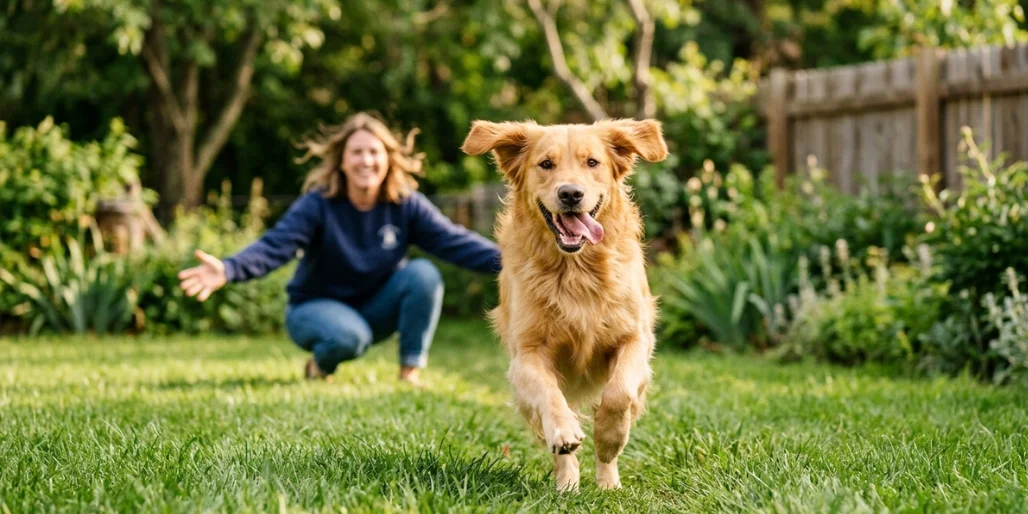
Learning to teach your dog to come when called is one of the most crucial commands for their safety and your peace of mind. This guide will walk you through effective recall training tips to ensure your dog has reliable recall, making every adventure safer and more enjoyable.
Understanding Recall Training
Recall training is fundamental for any dog owner, as it forms the basis of many other commands and ensures your dog’s safety in various environments. A strong recall can prevent your dog from running into traffic, chasing after wildlife, or getting lost, providing you with immense relief and your dog with greater freedom.
What is Recall?
Recall, often synonymous with the “come” command, is the act of teaching your dog to return to you promptly every time you call their name or issue the designated cue. It’s not just about getting your dog to come back; it’s about establishing a reliable response that your dog obeys immediately, regardless of distractions or the environment they are in.
Importance of Teaching Your Dog to Come
The importance of teaching your dog to come cannot be overstated, especially for their safety. A dog that comes when called is less likely to run away or put themselves in dangerous situations. A reliable recall allows your dog to enjoy off-leash activities in safe areas, giving them the freedom to explore while you maintain control, fostering a stronger bond between you and your pup.
Common Challenges in Recall Training
Many dog owners face common challenges when teaching a dog to come, such as their pup being too distracted by other dogs, interesting smells, or the general environment. Dogs might also ignore the command if they associate coming back with the end of fun or being scolded. Overcoming these hurdles requires patience, consistency, and making the recall a consistently rewarding experience for your dog.
Preparing for Recall Training
Before you even begin to teach your dog to come, proper preparation is key to setting both you and your dog up for success. This foundational stage involves gathering the right tools, selecting an appropriate training environment, and establishing a consistent routine, all of which will make the recall training process smoother and more effective for your pup. A well-prepared approach minimizes distractions and maximizes learning opportunities for your dog.
Essential Tools for Training Your Dog
To effectively teach your dog to come and establish reliable recall, having the right tools is paramount. A sturdy leash and collar or harness are fundamental for maintaining control during early training sessions. High-value treats are indispensable as a reward to motivate your dog, making If your dog does not yet have a reliable sit and stay, start there first — both commands make recall training significantly easier. See our guides on how to teach a dog to sit the “come” command a highly positive experience. A long line can also be incredibly useful for practicing recall in more open spaces while still ensuring your dog’s safety.
Choosing the Right Environment for Recall Practice
The environment plays a crucial role in recall training. Start in a quiet, controlled setting with minimal distractions, such as your backyard or a secure, fenced area. As your dog begins to understand and obey the command consistently, gradually introduce more varied environments with increasing levels of distraction. This step-by-step approach ensures your dog learns to come when called, even when faced with exciting stimuli like another dog or interesting smells.
Establishing a Training Routine
Consistency is vital in recall training, so establishing a regular training routine is essential for your dog to develop reliable recall. Short, frequent training sessions, ideally 5-10 minutes long, are more effective than long, infrequent ones. Integrate recall practice into your daily activities, such as before meals or during playtime, to reinforce the command regularly. This helps your dog understand that coming to you is a consistent and rewarding action every time you call.
Effective Techniques to Teach Your Dog to Come
Once you have prepared your training environment and gathered your tools, the next step is to implement effective techniques to teach your dog to come. These methods focus on positive reinforcement, gradual introduction of commands, and systematically increasing distractions to build a strong and reliable recall that your dog will obey promptly.
Using Positive Reinforcement
Positive reinforcement is the cornerstone of successful recall training. When your dog comes to you, reward them immediately with high-value treats, enthusiastic praise, or a favorite toy. The goal is to make coming to you the most rewarding option available, so your dog associates the “come” cue with positive outcomes. This encourages your dog to come back quickly and eagerly, making the recall a joyful experience for your pup.
Introducing Commands in a Controlled Setting
Begin by introducing the “come” command in a controlled, distraction-free environment, such as around the house or in your backyard. Start by standing a few feet away and calling your dog’s name followed by your chosen cue, like “come!” As your dog comes to you, reward them instantly. Gradually increase the distance and practice in different areas within this controlled setting, ensuring your dog is consistently coming before moving to more challenging environments.
Gradually Increasing Distractions
Once your dog is consistently coming in a controlled setting, it’s time to gradually increase distractions. Start with mild distractions, like another person walking by, and progressively move to more challenging scenarios, such as practicing near other dogs or in a park. Always set your dog up for success by not overwhelming them; if your dog ignores the command, reduce the level of distraction. A long line can be invaluable here to ensure you can still get your dog to come, even if they are tempted to chase.
Advanced Recall Strategies
Long-Distance Recall Training
Once your dog has mastered coming to you in close proximity, it’s crucial to extend this skill to long-distance recall training. This involves gradually increasing the space between you and your dog, requiring them to come from greater distances. Begin in a secure, open area with a long line attached to their collar, calling your dog’s name and using your “come” cue. When your dog consistently comes and you can reward them, you’re building reliable recall that works even when they are far away, encouraging them to come quickly every time you call.
Incorporating Leash Training
Integrating leash training into your recall practice reinforces control and ensures your dog understands the command even when physically restrained. Practice calling your dog to put their leash on, making it a positive experience by immediately giving them a treat and praise when they come and allow the leash to be clipped. This helps to prevent your dog from associating the leash with the end of fun, ensuring they will come willingly, even if it means going on the leash. Reliable recall often starts with a strong understanding of leash manners.
A dog with a strong stay command is also easier to recall — they have already learned to hold position under impulse, which transfers directly to recall reliability. Read our full guide on how to teach a dog to stay.
Training in Different Environments
To truly solidify reliable recall, you must practice training in different environments, progressively introducing new distractions. Start with low-distraction areas and gradually move to busier settings like parks with other dogs or public spaces with interesting smells and sounds. Each new environment presents an opportunity for your dog to generalize the “come” command, proving that your dog comes no matter what is going on around them. This step-by-step approach ensures your dog is consistently coming when called, regardless of the surrounding stimuli, making their recall truly reliable.
Maintaining Consistency and Patience
Regular Practice and Reinforcement
Maintaining reliable recall requires regular practice and consistent reinforcement throughout your dog’s life. Short, daily training sessions help keep the command fresh in your dog’s mind, ensuring they continue to obey every time you call. Always reward your dog with high-value treats and enthusiastic praise when they come, even if it’s just from another room around the house. This continuous positive reinforcement ensures your dog always associates coming to you with good things, preventing them from starting to ignore the command.
One of the best ways to maintain recall reliability long term is to make it feel like a game rather than a command. The AKC shares several recall games that make practice feel effortless for both dog and owner: AKC Recall Games Guide.
Dealing with Setbacks and Distractions
It’s inevitable that you will encounter setbacks and distractions when teaching a dog to come; your dog might ignore the command or get too distracted by another dog or an interesting smell. When this happens, avoid scolding your dog. Instead, calmly reduce the level of distraction, use a long line to gently guide them back, and then reward them for coming. This approach helps to rebuild their confidence and reinforces the idea that coming to you is always a positive experience, preventing them from associating the recall with negative consequences.
When to Seek Professional Help
If, despite your best efforts and consistent training, your dog continues to run away, ignore your commands, or you feel overwhelmed by the process, it might be time to seek professional help. A certified professional dog trainer can provide personalized training advice, identify specific challenges, and offer tailored strategies to improve your dog’s recall. Professional guidance can be invaluable in establishing truly reliable recall, especially for dogs with deep-seated behavioral issues or those who consistently struggle with distractions.