Teaching a dog to stay is one of the most fundamental and crucial commands in dog training, offering immense benefits for both the dog and its owner. A solid stay command ensures your dog’s safety and enhances their obedience, leading to a more harmonious relationship. This guide will walk you through the process of how to teach your dog to stay, offering practical tips and addressing common challenges.
Understanding the Stay Command
Importance of Teaching a Dog to Stay
Before teaching stay, make sure your dog has already mastered the sit command — it is the foundation that stay is built on. Read our full guide on how to teach a dog to sit.
A well-trained dog that understands and respects the stay command can be kept out of dangerous situations, such as bolting into a busy street or approaching an unknown person or animal. This foundational dog training skill builds a reliable bond between you and your puppy, instilling trust and establishing you as the leader, ensuring your dog stays put when you need them to.
When to Use the Stay Command
The stay command has numerous practical applications in everyday life. It’s an essential tool for managing a dog around the house, ensuring they hold that position in various scenarios, making life easier and safer for all involved. For instance, you might use it to:
- Prevent your dog from rushing out an open door.
- Keep them in a designated spot while you answer the doorbell.
- Keep them in position during mealtimes before you give them their food bowl.
A solid stay helps to keep your dog out of the way.
Common Mistakes in Stay Training
Many dog owners make common mistakes when teaching their dogs to stay, such as not being consistent with the verbal cue or introducing distractions too quickly. Another frequent error is failing to use a clear release word, which can confuse the dog about when the stay is over. It’s vital to gradually increase the length of time and distance, rather than expecting your dog to stay for extended periods right away. Rushing the process can hinder progress and frustrate both the dog and the trainer. Avoid saying “stay” multiple times.
Steps to Teach a Dog to Stay
Choosing the Right Environment
Teaching your dog to stay is paramount for their safety and overall obedience. A well-trained dog that understands and respects the stay command can be kept out of dangerous situations, such as bolting into a busy street or approaching an unknown person or animal. Stay is one of the most important basic dog training commands every owner should master, and this foundational skill builds a reliable bond between you and your puppy, instilling trust and establishing you as the leader, ensuring your dog stays put when you need them to.
Using a Verbal Cue Effectively
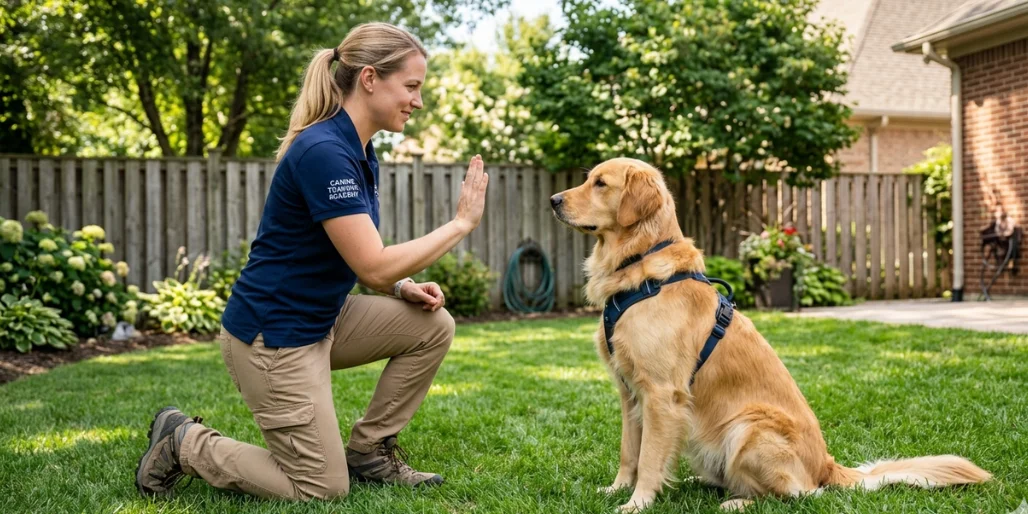
When teaching your dog to stay, consistency with your verbal cue is paramount. Start by asking your dog to sit, then firmly and clearly say “stay.” Use a consistent hand signal, such as an open palm facing your dog, to reinforce the command. After a very short duration, use your chosen release word, like “okay” or “free,” and reward your dog. This repetition helps your dog associate the verbal cue and hand signal with holding their position until released. The key is to make it clear what “stay” means.
Introducing Duration and Distance
Once your dog understands the basic verbal cue and hand signal, it’s time to gradually increase the length of time and distance they are expected to stay. Start by taking one step back, waiting a second, and then returning to reward your dog. As your dog shows consistency, gradually increase the distance by taking more steps away and the duration by waiting a few more seconds before releasing and rewarding them. This systematic approach, slowly adding distance and time, builds a solid stay command, preparing your dog for real-world distractions. For a deeper breakdown of this process, the American Kennel Club’s stay training guide offers excellent step-by-step advice from certified dog trainers.
Reinforcing the Stay Command
Positive Reinforcement Techniques
Positive reinforcement is the most effective method when teaching a dog to stay. Every time your dog successfully performs the stay command, even for a short duration, reward them with praise, a small treat, or a favorite toy. This positive association makes your dog eager to repeat the desired behavior. The goal is to make staying a rewarding experience, encouraging your dog to hold that position longer and in more challenging environments. Consistency in rewarding good behavior is key to a solid stay.
Using Treats as Motivation
Treats are powerful motivators in dog training, especially when teaching a dog to stay. Use high-value treats that your dog absolutely loves, as this increases their motivation to comply with the stay command. Initially, reward your dog generously every time they hold their position, even for a second or two. This immediate reward helps to solidify the connection between the verbal cue, the action of staying, and the positive outcome. As your dog improves, you can start to vary the treats and their frequency.
Gradually Reducing Treats for Long-term Success
While treats are essential for initial motivation, the goal is to gradually reduce their reliance for long-term success. Once your dog reliably understands and performs the stay command, start to reward intermittently. Instead of a treat every time, offer praise or a quick pet occasionally. This teaches your dog that staying is intrinsically rewarding and not solely dependent on food. This gradual reduction ensures your dog stays put out of obedience and respect, not just for the immediate gratification of a treat, leading to a truly solid stay.
Common Challenges and Solutions
Dealing with Distractions
One of the most common challenges when teaching a dog to stay is dealing with distractions. In the initial stages of dog training, it’s crucial to minimize distractions to help your puppy focus on the stay command. However, as your dog progresses, you will need to gradually introduce various distractions to solidify their understanding. To do this effectively, you should:
- Start with minor disturbances, such as walking past them.
- Slowly add more engaging elements like another person walking by or a toy rolling in the distance.
This systematic approach ensures your dog learns to hold that position regardless of what’s happening around them.
Handling a Bolt Reaction
A “bolt” reaction, where your dog suddenly breaks the stay command and runs off, can be frustrating but is a common part of dog training. If your dog bolts, avoid chasing them, as this can inadvertently turn it into a fun game for them. Instead, calmly retrieve your dog and return them to the original spot where you gave the stay command. Re-establish the verbal cue and hand signal, and if necessary, shorten the length of time or distance before releasing and rewarding them. This repetition teaches your dog that “stay” means staying put until the release word, helping them develop better impulse control.
Maintaining Consistency in Training
Consistency is key to successfully teaching your dog to stay. All dog owners should strive for uniformity in their verbal cue, hand signal, and reward system. If different family members are training the dog, ensure everyone uses the same commands and expectations. Inconsistent training can confuse your dog, making it harder for them to understand what “stay” means. Regular, short training sessions, consistently reinforcing the stay command, will lead to a more reliable and solid stay, helping your dog generalize the behavior to various situations around the house and beyond.
Advanced Stay Training Techniques
Introducing Variations of the Stay Command
Once your dog has mastered the basic stay command, you can introduce variations to make the training more robust. This involves asking your dog to stay from different initial positions, such as a down-stay or a stand-stay, in addition to the traditional sit-stay. Practice giving the verbal cue and hand signal while your dog is in these different positions, always followed by a reward for holding that position. This advanced step ensures your dog understands that the “stay” command applies regardless of their posture, enhancing their overall obedience and responsiveness to your instructions.
Incorporating Stay into Other Commands
To further integrate the stay command into your dog’s daily life, start incorporating it into other commands. This practice helps your dog see “stay” not as an isolated trick but as a fundamental component of their overall obedience, making the stay command a natural extension of other behaviors they already know. Here are a few examples:
- After asking your dog to sit, immediately follow with “stay” before you give your dog their food bowl or before you open the door.
- Use it during heel work, asking your dog to “stay” as you stop walking.
Training in Different Environments
After your dog consistently performs the stay command in a distraction-free environment, it’s essential to gradually increase the challenge by training in different environments. Start with slightly more distracting locations, such as your backyard, then move to public parks with more stimuli like other dogs, people, and sounds. Remember to begin with short durations and distances in these new settings, slowly increasing the length of time and distance as your dog demonstrates success. This systematic exposure ensures your dog stays reliable no matter where you are, truly achieving a solid stay.
I saw this exact situation play out on a street near my home. A dog that had clearly learned stay perfectly indoors completely fell apart the moment it was outside. The moment something caught its attention it ran straight toward it — stay forgotten entirely. The owner looked genuinely confused and frustrated, repeating the command over and over as if saying it louder would help. What that dog had learned was indoor stay. It had never been taught that stay means the same thing on a busy street with smells, movement, and distractions pulling at it from every direction. The environment was not the problem. The training had simply never been taken there.