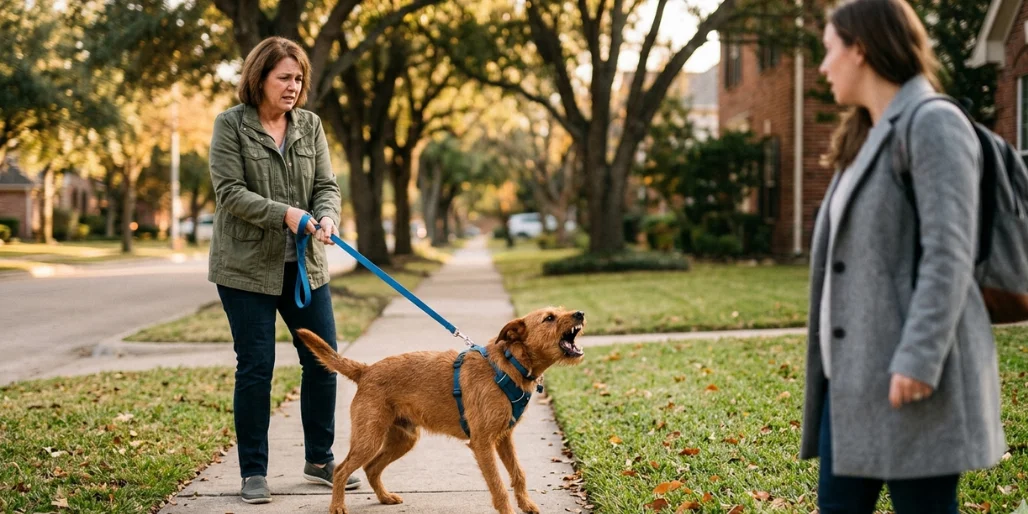
You have tried everything. You said quiet. You shouted. You pulled the leash. And your dog is still barking at every single person who walks past. Here is what is actually happening — and how to fix it.
Understanding Dog Barking
Before you can effectively stop dog barking, it’s crucial to understand why your dog is barking in the first place. Barking is a natural form of communication for canines, and a training approach focused on prevention rather than punishment is always more effective. Identifying the specific type of barking your dog exhibits is the first step towards a successful resolution.
Before diving into solutions it helps to understand the basics of dog training — see our complete dog training guide for beginners.
Types of Barking
There are numerous types of barking, each with its own underlying motivation. For instance, an alert bark might sound different from a demand bark or a bark caused by separation anxiety. Understanding the context is key — research consistently shows that correctly identifying the type of barking is the essential first step before any training can be effective. If your dog barks excessively when a new person approaches the fence, that might indicate territorial barking, whereas constant barking when you prepare to leave could point to anxiety.
Reasons Behind Excessive Barking
Excessive barking often stems from various factors. It’s important to consider these underlying reasons before attempting to stop barking, as addressing the root cause is paramount. Some common reasons for excessive barking include:
- Boredom, anxiety, or attention-seeking
- Territorial instincts
- Lack of mental stimulation or physical exercise
- A dog’s view of the world from a window
Identifying Triggers for Barking
To prevent barking, you must first identify the specific triggers that cause your dog to bark. This might involve observing when your dog starts barking, what events precede the barking, and what seems to exacerbate the behavior. For example, if your dog barks every time the neighbor’s dog barks, that’s a clear trigger. Similarly, if your dog barks at every passerby, those individuals are triggers, and you might need to adjust your dog’s view or environment.
How to Train a Dog to Stop Barking
Positive Reinforcement Techniques
Positive reinforcement is a cornerstone of effective dog training, particularly when addressing a barking problem. To teach dogs to stop barking, you must reward desired behaviors. For instance, if your dog is barking at the fence and then stops, immediately say “quiet” and reward them with a treat. This helps your dog associate silence with positive outcomes, making them more likely to stop barking in the future. ASPCA’s research on excessive barking in dogs.
Teaching the Quiet Command Step by Step
Incorporating commands like “quiet” into your dog training regimen is crucial. When your dog starts barking, say “quiet” firmly but calmly. Once they cease, even for a second, immediately reward them. This teaches your dog to stop barking on command. An important aspect of this training methodology is to only reward silence, not the initial bark. This prevents inadvertently reinforcing the barking problem.
Consistency in Training
Consistency is paramount in any dog training effort to prevent barking. Every member of the household must adhere to the same commands and reward system. If one person allows the dog to bark excessively while another tries to stop barking, the dog will become confused, hindering progress. Regular, short training sessions throughout the day will reinforce good behavior and address any type of barking effectively.
Tools and Aids for Preventing Barking
Using Ultrasonic Devices
Ultrasonic devices emit a high-frequency sound that is typically inaudible to humans but startling to dogs. These can be helpful tools to stop barking, especially for nuisance barking at a fence or an alert bark at passersby. When your dog starts barking, the device activates, creating an unpleasant sensation that may interrupt the barking. However, it’s essential to integrate these with positive reinforcement to teach alternative behavior, rather than simply suppressing the dog’s natural communication.
Effectiveness of Bark Collars
Bark collars are often considered for persistent barking problems, but their effectiveness varies greatly depending on the type of collar and how it’s used. Some bark collars use a spray of citronella, while others administer a static correction. While they can interrupt a dog who barks excessively, the American Kennel Club advises against relying on them as a standalone solution. The dog’s behavior should be modified through understanding and training, not just suppression. The dog’s behavior should be modified through understanding and training, not just suppression.
Comparing Citronella and Shock Collars
When comparing citronella and shock collars, it’s important to understand their mechanisms and ethical implications. The goal is to teach dogs to stop barking, not to punish them into silence.
| Collar Type | Mechanism |
| Citronella Collar | Releases a burst of citronella spray when the dog barks, acting as a mild deterrent. |
| Shock Collar | Delivers a static correction. Many dog trainers advocate for humane, positive reinforcement methods over shock collars, which can cause fear and anxiety in dogs. |
Expert Advice from Dog Trainers
Insights from Professional Dog Trainers
Animal behaviorists recommend that consistent positive reinforcement is crucial when addressing a barking problem. They often advise understanding the root cause of why a dog is barking rather than just suppressing the symptom. For instance, if your dog barks excessively due to lack of mental stimulation, studies on dog behavior consistently suggest that puzzle toys and increased physical exercise reduce boredom-driven barking significantly. The key is to teach dogs an alternative behavior and reinforce it consistently, ensuring a humane and effective dog training experience for both the dog and owner.
Common Mistakes to Avoid
One common mistake owners make when trying to stop barking is inadvertently reinforcing the behavior. There are several ways this can happen:
- Yelling at your dog to “quiet” can sometimes be perceived as you barking back, exacerbating the barking problem.
- Inconsistent training can be an error; if one family member allows the dog to bark and another tries to prevent barking, the dog becomes confused.
Additionally, avoid using a bark collar as the sole solution; it only suppresses rather than teaches your dog an alternative behavior to the type of barking.
I have seen this play out more times than I can count on streets near my home. A dog spots someone walking past and erupts into barking. The owner pulls the leash and says quiet. The dog keeps going. The owner shouts. The dog barks harder. What that owner did not realise is that their shouting sounded exactly like barking to the dog. They were not calming the situation. They were joining it.
Final Tips for Effective Bark Management
For effective bark management, start by identifying the specific type of barking your dog exhibits and its triggers. Implement a consistent positive reinforcement dog training program, rewarding your dog with treats for silence and calm behavior, especially around known triggers like the neighbor’s fence. Ensure all family members are on the same page and use the same “quiet” command. Provide plenty of mental stimulation and physical exercise to prevent boredom-induced excessive barking, fostering a well-adjusted dog’s behavior.
FAQ Section — How to Stop a Dog from Barking
Why does my dog bark at strangers on walks?
Your dog barks at strangers on walks because the stranger feels like a threat or an exciting trigger depending on your dog’s personality. Dogs that bark from fear are trying to make the threat go away — and when the stranger walks past and disappears the dog learns that barking worked. Dogs that bark from excitement have simply never been taught a calmer response to people approaching. In both cases the fix is the same starting point — distance and reward. Keep enough distance from the trigger that your dog can focus on you and reward calm behavior before the barking starts.
How long does it take to stop a dog from barking?
It depends entirely on how long the barking habit has been established and what is causing it. A young dog that has been barking for a few weeks can often show significant improvement within two to three weeks of consistent training. A dog that has been barking at strangers for three years has a deeply rehearsed habit that may take two to three months to meaningfully reduce. The most important variable is not time — it is consistency. Ten minutes of correct training every day will always outperform an hour of inconsistent effort once a week.
Should I ignore my dog when it barks for attention?
Yes — but only if you are certain the barking is attention-seeking rather than fear or anxiety. Attention barking works because it has previously gotten a reaction — even a negative one. The moment you look at the dog, speak to it, or push it away you have given it exactly what it wanted. Turn your back completely, leave the room if possible, and return only when the dog is quiet. The first few days will be harder as the barking escalates before it improves — this is called an extinction burst and it means the training is working.
Can you train an older dog to stop barking?
Yes. The idea that older dogs cannot learn new behaviors is one of the most common and damaging myths in dog ownership. Older dogs take longer to change established habits but they absolutely can change them. The process is identical to training a younger dog — identify the trigger, manage the environment to reduce rehearsal, and reward quiet calm behavior consistently. The one difference with older dogs is patience. Habits that took years to form will not disappear in a week. Give it time and trust the process.
What is the fastest way to stop a dog barking?
The fastest result comes from managing the environment while training the behavior simultaneously. Management means removing or reducing the trigger immediately — closing blinds so the dog cannot see the street, using a baby gate to keep the dog away from the front door, or crossing the road before the trigger appears on a walk. This stops the dog rehearsing the barking while you teach the alternative behavior. Management alone is not a fix. Training alone without management is slow because the dog keeps practicing the wrong behavior between sessions. Both together is the fastest approach by far.
Why does my dog bark more when I shout at them to stop?
Because your shouting sounds like barking to your dog. When you raise your voice in response to barking your dog does not hear a correction — they hear you joining in. This is one of the most common reasons barking gets worse rather than better despite an owner’s best efforts. The solution is to lower your response not raise it. A calm quiet voice or no voice at all is far more effective than shouting. If you cannot stay calm in the moment remove yourself from the situation entirely until you can respond without emotion.
When should I get professional help for a barking dog?
Get professional help when the barking is accompanied by any of these signs — lunging, snapping, growling, stiff body posture, or showing teeth. These are signs the barking has escalated into aggression territory and needs a qualified behaviourist not a training guide. Also seek help if your dog is causing genuine distress to themselves — barking until they are hoarse, self-harming, or unable to settle at all even in a calm environment. For barking rooted in severe separation anxiety professional support will get results significantly faster than self-directed training alone.