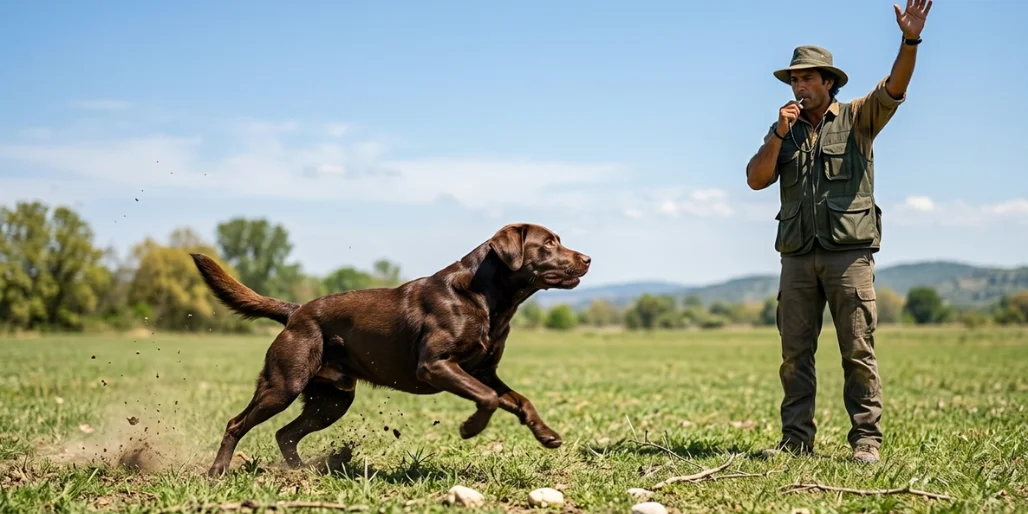
Dog whistle training offers a unique and highly effective method for recalling your dog, especially when it comes to critical commands like recall. This comprehensive guide will walk you through everything you need to know to successfully integrate a dog whistle into your training regimen — and if you’d like to see how it fits alongside other recall methods, check out our dog training guide for the full picture.
Understanding the Dog Whistle
What is a Dog Whistle?
A dog whistle is specialized training equipment that, unlike a regular whistle, produces a sound in a frequency range highly audible to dogs but often imperceptible to the human ear. This distinctive high-pitched whistle sound works effectively to recall your dog, traveling further and cutting through ambient noise more effectively than a verbal command. The type of whistle you choose can influence how your dog responds and how well they can hear it, especially over long distances or in noisy environments.
| Whistle Type | Key Feature |
| Silent Whistle | Designed to be inaudible to humans |
| Adjustable Frequency Whistle | A dog whistle allows for customization of sound frequency to ensure your dog comes when called. |
How Whistle Training Works
Whistle training works by associating a specific whistle command with a desired action from your dog. Instead of relying solely on your voice command, you teach your dog that a particular whistle blast means something specific, like “come” or “sit.” The consistency of the whistle sound, regardless of your emotional state or the environment, makes it a powerful and reliable tool for dog training. When you use the whistle, your dog learns to respond to one whistle rather than a variable verbal command. The key is to consistently pair the whistle blow with the desired action and reward, ensuring your dog understands exactly what the whistle means and doesn’t ignore the whistle.
Benefits of Using a Dog Whistle
The benefits of using a dog whistle are numerous, particularly for dog owners with gun dogs or hunting dogs who require precise and far-reaching commands. It’s an excellent way to communicate with your dog, providing a clear and unmistakable signal that cuts through distractions, thereby improving overall dog training effectiveness and ensuring your dog responds to the whistle promptly.
| Feature | Benefit |
| Long-distance reach | Effective whistle recall even when your dog is out of sight. |
| Consistent sound | This ensures your dog might respond without confusion, unlike variable voice commands, aiding reliable recall training. |
Getting Started with Whistle Training
Choosing the Right Whistle for Training
When you’re ready to start whistle training, selecting the right type of whistle is a crucial first step. There’s a variety of training whistles available, each producing a distinct whistle sound. The type of whistle you choose can influence how well your dog can hear the whistle and how easily they respond to the whistle, especially for those important whistle recall commands. Experiment with a few to see which whistle sound your dog responds to best, ensuring you can effectively communicate with your dog without them being able to ignore the sound of the whistle.
For many dog owners, particularly those with a hunting dog or gun dog, specific types of whistles are popular choices:
| Whistle Type | Common Use/Benefit |
| Traditional Pea Whistle | Popular for hunting dogs or gun dogs |
| “Silent” Dog Whistle is a tool that allows you to communicate with your dog at a distance without disturbing others. | Popular for hunting dogs or gun dogs |
Step-by-Step Guide to Dog Whistle Training
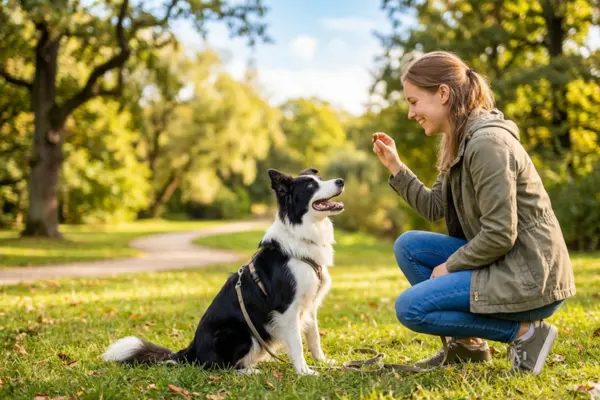
Embarking on dog whistle training requires a systematic approach. The initial training should focus on creating a positive association with the whistle. Start by blowing the whistle gently, immediately followed by a high-value treat or praise. This step-by-step guide is all about building that foundation. The idea is to teach your dog that the whistle sound always predicts something good. Over time, your dog will associate the sound of the whistle with positive reinforcement, making them eager to respond — an approach consistent with the American Veterinary Society of Animal Behavior (AVSAB)‘s position that reward-based association building produces more reliable and lasting responses than aversive correction methods. . Consistency is key here; every time you use a whistle, make sure it’s a positive experience for your dog.
Setting Up for Successful Recall Training
Setting up for successful recall training with your new training whistle is paramount, especially for a gun dog or hunting dog at a distance. Begin in a quiet, distraction-free environment to ensure your dog can clearly hear the whistle and isn’t tempted to ignore the whistle. The goal is to establish a strong “come” whistle command. When you first use a dog whistle for recall, practice in short, positive bursts. Have your dog on a long line, blow the whistle, and as they turn towards you, gently encourage them to come to you, rewarding them enthusiastically. This helps to train your dog to come back reliably and respond to the whistle without hesitation.
Effective Whistle Commands for Gun Dogs
Common Whistle Commands for Hunting Dogs
For gun dog owners, establishing clear and effective whistle commands is absolutely essential for successful hunting and field work. Beyond just the basic recall whistle, you can teach your dog a variety of specific whistle commands. For example, a single long whistle blast might mean “stop” or “sit,” while a series of short, sharp whistle sounds could be a “come” or “hup” command. The key is consistency in the whistle sound and associating each unique whistle blow with a specific action. This allows you to communicate with your dog silently and from a distance, which is incredibly useful when your hunting dog is out in the field and a verbal command would be too disruptive or simply wouldn’t carry. Your dog will learn to respond to the whistle without hesitation.
Training Your Dog to Respond to Whistle Commands
Training your dog to respond to whistle commands effectively requires patience and a step-by-step guide. The initial training should focus on associating the whistle sound with a positive outcome. Start by blowing the whistle, and immediately reward your dog with a treat or enthusiastic praise when they look at you or show any indication they hear the whistle. Gradually, you can introduce specific actions that your dog might respond to when you blow your whistle. For instance, for “sit,” blow the whistle, give your verbal command “sit,” and then guide your dog into the sit position, rewarding them. Over time, you can fade out the verbal command, and your dog will learn that the whistle means “sit.” This systematic approach ensures your dog responds reliably to the whistle and doesn’t ignore the whistle when you need them most.
Adjusting Commands for Different Situations
As your dog becomes proficient with basic whistle commands, you’ll find yourself needing to adjust them for various real-world situations, especially with a hunting dog. For example, a simple recall whistle might need to be more urgent in a high-distraction environment. You might introduce a different whistle blast pattern for an emergency recall whistle, something distinct from your regular recall. When working with your gun dog in heavy cover, the consistency of the whistle sound becomes even more critical as a verbal command might not carry. The ability to use the whistle to communicate with your dog effectively, regardless of the environment, makes it an invaluable piece of training equipment, helping to train your dog to come back and follow commands under all circumstances.
Enhancing Your Training Sessions
Using Training Videos for Better Understanding
To really nail down your dog whistle training, integrating training videos can be a game-changer for many dog owners, especially when learning how to blow your whistle effectively. Watching expert trainers demonstrate how they blow the whistle and issue various whistle commands can give you invaluable insights, showing you the nuances that might be hard to grasp from just reading. These videos often provide a visual step-by-step guide, showcasing how a dog responds to the whistle in different scenarios and how to effectively use a whistle for advanced whistle recall or other specific commands. Seeing the precise timing of the whistle blast and the dog’s immediate whistle response helps you refine your own technique, ensuring you’re using the whistle correctly and that your dog can hear the whistle clearly, making your overall dog training more effective.
Integrating Whistle Commands into Regular Training
Once your dog has a basic understanding of what the whistle means, the next step is to seamlessly integrate whistle commands into your regular dog training routine. Don’t just relegate the dog whistle to specific recall training sessions; make it a consistent part of your everyday interactions. For instance, instead of always using a verbal command for “sit” or “stay,” start to pair it with a specific whistle sound. Blow the whistle, then give your verbal command, and reward your dog when they respond. Over time, you can gradually fade out the voice command, allowing your dog to respond to the sound of the whistle alone. This method helps to solidify the whistle as a primary communication tool and ensures your hunting dog doesn’t learn to ignore the whistle in diverse environments.
Common Mistakes to Avoid in Whistle Training
Even with the best intentions, dog owners can fall into common pitfalls during whistle training. One frequent mistake is inconsistency: using different whistle sounds for the same command, or not following through with rewards every time you toot on the whistle. Another error is introducing the dog whistle in highly distracting environments too soon, which can lead your dog to ignore the whistle altogether. It’s also crucial to avoid over-whistling; less is often more. If you continuously blow the whistle, the sound can lose its impact and your dog may become desensitized. Always ensure your initial training creates a positive association, so your dog learns that the whistle produces good things, and they’ll be eager to respond to the whistle without confusion.
FAQ’s
Q: How does a dog whistle works for gun dog recall and why should I add the whistle to training a dog?
A: A dog training whistle produces a clear, consistent sound that carries farther than your voice, which helps call the dog when you’re out in the field. When you add the whistle to training, you create an association between the whistle and the desired action (like coming back). Start by pairing the blow that whistle cue with rewards so your dog learns how the whistle works and begins to associate it with positive outcomes.
Q: What is the best way to teach whistle response so my gun dog reliably comes back even when distracted?
A: Start close, blow the whistle, then immediately give a treat or praise when the dog comes. Gradually increase distance and add distractions so your dog learns to hear the whistle and choose to return. Make training sessions short and fun so the dog more effectively learns the association between the whistle and reward. Never blow the whistle unless you mean call the dog—confusing your dog weakens the whistle response.
Q: How many different commands should I use with a dog whistle and can too many confuse your dog?
A: Keep it simple: limit whistle commands to a few distinct patterns (e.g., one short blast for “here,” two for “stop,” a long one for “sit”). Too many different commands can confuse your dog, so give verbal commands paired with the whistle at first, then phase out the voice if you want. The goal is for the dog to associate each whistle pattern with a clear action.
Q: If my dog is distracted in the field, will a whistle still work or does the whistle carry only a short distance?
A: A good dog training whistle carries well and a dog can often hear it at distances where voice fails. However, the whistle requires consistent training so the dog knows to respond even when distracted. If your dog is distracted, don’t escalate by chasing—call calmly and reward when it comes to reinforce the whistle’s meaning.
Q: How do I make your whistle training consistent so the dog should turn and come when the whistle is blown?
A: Use the same whistle (dog training whistle) and the same patterns every time. Always reward the correct response at the start, then slowly reduce treats but keep praising. Consistency builds the association between whistle and recall, so your dog learns to hear and obey that sound rather than getting mixed signals from different whistles or variable timing.
Q: Can I give verbal commands along with the whistle, or should I only blow the whistle to call the dog?
A: Pair verbal commands with the whistle at first so the dog understands the action you want. Once the dog reliably responds, the whistle alone can replace the verbal cue. Just avoid giving conflicting signals—if you give verbal commands and blow the whistle inconsistently, you’ll confuse your dog and weaken the association between whistle and action.
Q: What common mistakes make the whistle response worse and how can I avoid them?
A: Common mistakes: blowing the whistle randomly (so the dog ignores it), punishing on recall (which makes the dog avoid coming), and changing whistle patterns too often. Avoid these by never blowing the whistle unless you intend to call the dog, always rewarding the correct response, and keeping your whistle patterns consistent so the dog can learn how to use the whistle effectively.
Q: How long does it take for a dog to learn how to use a whistle and how often should I train?
A: Some dogs pick up whistle commands in a few sessions; others take weeks. Short daily sessions (5–10 minutes) are better than long, sporadic ones. Repetition helps the dog to associate the whistle with the required action, and gradual exposure to distance and distractions will teach your dog to hear and respond reliably out in the field.