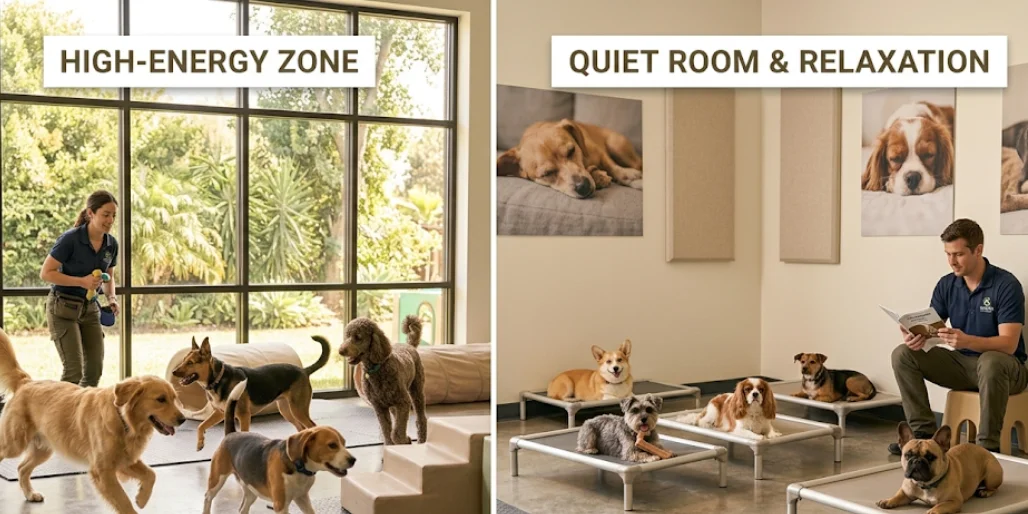
Considering doggy daycare for your beloved canine companion? Remember that daycare offers many benefits, including socialization and structured activities. It’s a fantastic option for many pet parents, offering a stimulating environment for your pup. But how do you know if it’s the right choice for your unique furry friend? Let’s dive into the world of doggy daycare and explore everything you need to know.
Understanding Doggy Daycare
What is Doggy Daycare?
Doggy daycare is essentially a supervised group play and care service for dogs during the day, much like a preschool for human children. It’s designed to provide a safe, engaging, and stimulating environment for your pup while you’re at work or away from home. These facilities aim to offer more than just a place to stay; they focus on promoting positive dog behavior through structured play and socialization. Doggy daycares offer a supervised setting where your dog can interact with other dogs, burn off energy, and receive attention from trained staff. Unlike leaving your pup home alone or just having a dog walker stop by, doggy daycare offers continuous engagement and a chance for your dog to socialize and play in a controlled environment, which is beneficial for their overall well-being. This can be especially beneficial for energetic dogs or those who need more interaction, as daycare provides opportunities for them to engage with others.
Types of Doggy Daycares
When it comes to doggy daycares, you’ll find there’s a good fit for almost every dog, as facilities often cater to different needs and preferences. Some daycares focus on high-energy group play, providing vast indoor and outdoor spaces for dogs to run and play with other dogs. These can be great for young dogs or energetic dogs who thrive on constant interaction and need to burn off a lot of steam throughout full days. Other doggy daycares might offer a more structured environment, perhaps with smaller playgroups, designated nap times, and even specific training activities. These can be ideal for young puppies who are still learning social cues, older dogs who prefer a calmer setting, or dogs that may have a bit of separation anxiety and need a more consistent routine. Some facilities even provide specialized care for young puppies or dogs with specific behavioral needs.
How Doggy Daycare Works
Typically, when your pup goes to daycare, you’ll drop them off in the morning, and pick them up in the late afternoon or early evening. The doggy daycare staff usually screens dogs to ensure a safe environment, often requiring proof of vaccinations and a temperament test to assess how your dog interacts with other dogs and people, ensuring that the daycare is ideal for all pets involved. This helps prevent dog fights and ensures a good fit for all pups in the group of dogs. Once admitted, your dog will spend the day engaging in various activities, supervised by trained staff who understand dog behavior and body language. This might include structured playtime, rest periods, and even individual attention. Many daycares provide both indoor and outdoor play areas, allowing dogs to socialize and play in different settings. Some pet parents opt for their dog to attend daycare twice a week or even full days, finding it greatly contributes to their dog’s overall well-being and reduces the likelihood of destructive behavior at home.
Benefits of Dog Daycare
Socialization Opportunities for Your Pup
One of the primary benefits of dog daycare is the incredible opportunity for socialization that it provides for your pup. In a well-run daycare environment, your dog will regularly interact with other dogs of various breeds, sizes, and temperaments. This consistent interaction with other dogs helps them develop crucial social skills, learn appropriate dog behavior, and become more comfortable and confident around other dogs, which is far more enriching than a quick trip to the dog park.
Physical Activity and Mental Stimulation
Doggy daycares offer more than just a place for your dog to hang out; they provide essential physical activity and mental stimulation. Energetic dogs, in particular, can benefit immensely from the opportunity to run, play, and explore in a supervised setting. This ensures your dog gets the necessary exercise to stay healthy and happy, while also engaging their minds with new sights, sounds, and interactions, preventing boredom and destructive behavior at home.
Convenience for Pet Parents
For busy pet parents, the convenience of doggy daycare is a huge plus. Knowing your pup is in a safe, stimulating environment while you’re at work or running errands provides immense peace of mind. Instead of worrying about separation anxiety or a bored dog at home, you can focus on your day, confident that your dog is receiving excellent care and enjoying full days of fun and supervision at the dog daycare facility.
Is Daycare Right for Your Dog?
Assessing Your Dog’s Behavior
Before enrolling your dog in doggy daycare, it’s crucial to assess their behavior. Observe how your dog interacts with other dogs at the dog park or during walks. Do they show signs of aggression, fear, or extreme shyness? A good fit for daycare often involves a dog that is generally comfortable and happy in the company of other dogs, and whose body language indicates a willingness to socialize and play without exhibiting stress — a distinction the American Veterinary Society of Animal Behavior (AVSAB) also emphasises when discussing appropriate group play versus forced socialization.
Determining if Your Dog is a Good Fit
Determining if your dog is a good fit for daycare involves considering their personality and needs. While many daycares cater to every dog, some pups thrive more in this environment than others. Young puppies often benefit greatly from early socialization, but an older dog or a dog with separation anxiety may require a more specialized setting or a quieter group of dogs. The daycare staff can also help assess if your dog’s temperament aligns with their program.
Questions to Consider Before Enrolling
Before your pup goes to daycare, ask yourself several key questions. Does your dog enjoy playing with other dogs? Do they handle new environments well? Does your dog have separation anxiety that might be exacerbated or helped by the presence of a dog trainer and other dogs? Asking about the facility’s policies on dog fights, staff-to-dog ratios, and the daily schedule will also help you determine if the chosen doggy daycare offers a good fit for your beloved companion.
Choosing the Right Dog Daycare Facility
What to Look for in a Daycare
When considering doggy daycare for your pup, it’s crucial to know what to look for to ensure a good fit. A reputable dog daycare facility should prioritize safety and well-being, which means having a clean environment, secure play areas, and a low staff-to-dog ratio. Look for signs of experienced dog trainers or caregivers who understand dog behavior and can effectively supervise interaction with other dogs, preventing potential dog fights.
Visiting and Evaluating Daycare Facilities
Before your pup goes to daycare, make sure to schedule a visit to the doggy daycare facility. During your visit, pay close attention to the general atmosphere, the cleanliness of the space, and how the staff interacts with the dogs, as these factors contribute to whether the daycare is a good fit. Observe the dogs’ body language; they should appear happy and relaxed, not stressed or overwhelmed. Ask about their routine, including nap times and play schedules, to ensure it aligns with your dog’s needs and ensures a beneficial daycare environment.
Understanding Daycare Policies and Procedures
It’s vital for pet parents to fully understand the doggy day care’s policies and procedures. Inquire about their vaccination requirements, their protocol for handling emergencies, and how they manage dog fights or conflicts. Understanding their approach to socialization, how they assess a new pup, and if they offer options like attending daycare twice a week or full days, will help you decide if it’s the right choice for your dog and for managing any separation anxiety your dog may have.
Tips for Successful Daycare Experience
Preparing Your Dog for Daycare
To ensure a successful dog daycare experience, preparing your pup is key. Gradually introduce your young dog or puppy to new environments and short periods away from home to ease any separation anxiety, as this is one of the benefits of doggy daycare. Practice basic commands and ensure they are comfortable with various types of interaction with other dogs. This preparation will help them adapt more smoothly to the new daycare environment, making it a positive experience when they finally go to daycare.
Monitoring Your Dog’s Adjustment
After your pup starts attending doggy day care, it’s important for pet parents to monitor their adjustment. Look for changes in their dog’s behavior at home, such as increased fatigue, stress, or excitement. Observe their body language; a happy dog will usually be relaxed and eager to socialize. If your dog seems overly stressed or withdrawn, it might indicate that the doggy daycare isn’t a good fit, or that their dog needs a different schedule, like daycare twice a week instead of full days, as daycare is ideal for dogs who thrive in a group setting.
Communicating with Caregivers
Effective communication with the dog day care caregivers is essential for a positive experience. Share any concerns or observations you have about your pup’s dog behavior, especially regarding their interaction with other dogs or any signs of separation anxiety. A good dog trainer or caregiver will appreciate your input and provide regular updates on your dog’s day, helping to ensure the daycare environment continues to be beneficial for your older dog or young puppies alike.
Q: Is doggy daycare good for dogs, including puppies?
A: A: Yes, doggy daycare can be great for many dogs and puppies when the facility is right — it offers socialization, exercise, and routine. For a puppy, look for programs that cater to young dogs with supervised play and age-appropriate activities to support healthy development.
Q: How will daycare affect my dog’s behavior?
A: A: Many owners see improved dog behavior because dogs get physical and mental stimulation, which reduces boredom-driven chewing or barking. However, some dogs may show temporary overstimulation or become tired-sore after a full day; gradual introductions help.
Q: My dog goes to daycare but sometimes seems overwhelmed — is that normal?
A: A: It can be. Dogs in a group may get overstimulated, especially during the first few visits. Good daycares manage group sizes and rotate playtimes. If your dog shows stress signs, consider shorter visits or a different group to avoid negative experiences.
Q: What are the main benefits of doggy daycare for an adult dog?
A: A: Benefits of doggy daycare include regular exercise, social interaction, mental enrichment, reduced separation anxiety, and a structured routine. Many dogs thrive in daycare because it keeps them engaged and less likely to develop destructive habits at home.
Q: Is daycare a good choice for shy or anxious dogs?
A: A: It depends. Some shy or anxious dogs do better with one-on-one training or slow, controlled socialization rather than full-group play. A good environment and patient staff can help, but for highly dog selective or fearful dogs, alternative approaches may be safer.
Q: How do I pick the right dog daycares near me?
A: A: Visit in person, watch dogs in play, ask about staff-to-dog ratios, vaccination and temperament screening, and emergency procedures. A reputable center will do introductions and try a trial day so you can see if your dog thrives in that setting.
Q: How often should my dog go to daycare — is several times a week too much?
A: A: Several times a week works well for many active dogs and is often recommended for consistent exercise and socialization. Monitor energy levels and mood — some dogs do best 2–3 days a week, others handle daily visits if they recover well overnight.
Q: What signs show my dog enjoys daycare and is benefiting from it?
A: A: Positive signs include coming home relaxed but not exhausted, maintaining appetite and normal sleep, happier greetings, and fewer behavioral problems at home. If your dog seems withdrawn, injured, or chronically exhausted, re-evaluate the daycare fit.