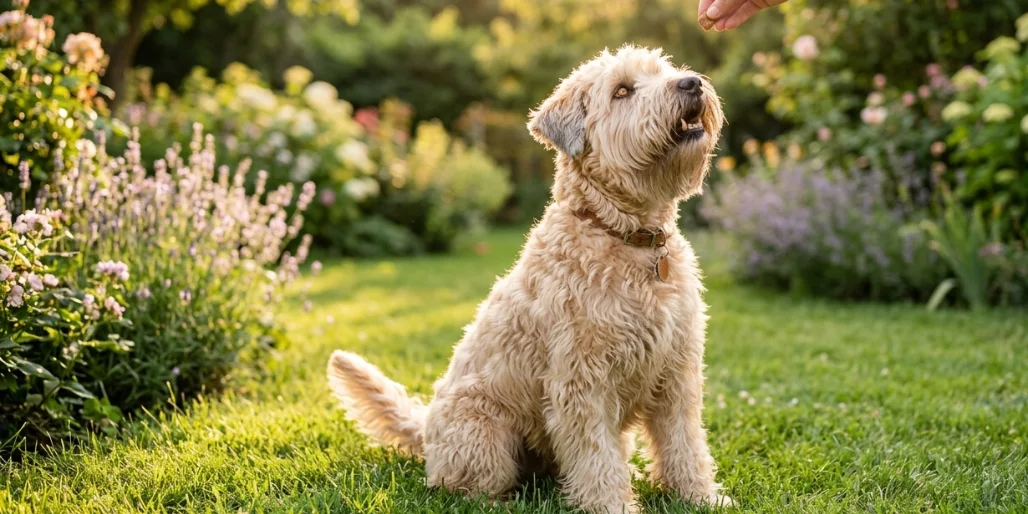
Welcome to pawandbreeds! If you’re looking for real tips to train your Soft Coated Wheaten Terrier, you’ve come to the right place. We cover everything from understanding their unique temperament to advanced obedience training. For a broader perspective on various breeds, be sure to check out our comprehensive dog breeds guide.
Understanding the Wheaten Terrier Breed
Characteristics of Wheaten Terriers
The Wheaten Terrier is a charming and distinctive breed, known for its soft, flowing coat and joyful personality. These medium-sized dogs possess a sturdy yet elegant build, making them both agile and robust. Their signature coat requires regular grooming to prevent matting and keep them looking their best. These smart dogs have a unique blend of terrier tenacity and a more agreeable temperament, setting them apart from some other terrier breeds.
Temperament and Behavior
The temperament of a Wheaten Terrier is often described as spirited and happy-go-lucky. Wheatens are typically playful and very affectionate, forming strong bonds with their families. However, they can also exhibit a stubborn streak, a common trait among terriers, which can sometimes make dog training a bit challenging but certainly not impossible. Their excitable nature means they often greet visitors with enthusiastic jumps and barks.
Why Choose a Wheaten Terrier as a Pet?
Choosing a Soft Coated Wheaten Terrier as a pet means bringing a lively and loving companion into your home — the Soft Coated Wheaten Terrier Club of America is an excellent resource for breed-specific guidance, reputable breeder listings, and training advice from dedicated Wheaten enthusiasts. Their playful antics and devotion make them wonderful family dogs, especially for active households. While their energetic disposition requires consistent Soft Coated Wheaten Terrier training and plenty of exercise, a well-behaved Wheaten is a joy to live with. They thrive on interaction and can be quite entertaining, offering endless moments of fun.
Wheaten Terrier Training Basics
Starting Early: Puppy Training Tips
Starting early with your Soft Coated Wheaten Terrier puppy is absolutely crucial for successful dog training. From the moment your pup arrives home, begin with basic obedience commands and house training. Early exposure to different sounds, sights, and people will help your Wheaten Terrier develop into a well-adjusted adult. Consistency and positive reinforcement are your best friends in shaping good behavior from the start with your Wheaten pup.
Training Your Wheaten: Key Techniques
When training your Wheaten, positive reinforcement is the most effective approach. Use treats, praise, and toys to reward desired behaviors, making the learning process enjoyable for your Soft Coated Wheaten Terrier. Keep training sessions short, fun, and engaging to maintain your Wheaten’s attention, especially since they can have a stubborn streak. Patience and consistency are key to overcoming any challenges and building a strong bond with your Wheaten Terrier.
Easy to Train: Myths and Realities
While some may say Wheaten Terriers are easy to train, it’s more nuanced. They are smart dogs and eager to please, but their inherent terrier stubbornness can sometimes make dog training a bit challenging. With consistent effort, clear commands, and plenty of positive reinforcement, your Wheaten can be well-behaved. Don’t expect instant results; instead, embrace the journey of training your Wheaten Terrier with understanding and dedication.
Advanced Training Techniques for Wheaten Terriers
Commands Every Wheaten Should Know
Beyond basic obedience, every Wheaten Terrier should master commands like “stay,” “leave it,” and a reliable recall. These advanced commands are vital for their safety and your peace of mind, especially when off-leash. Practicing these in various environments will solidify your Wheaten’s understanding and self-control, ensuring they respond even with distractions. Consistent practice makes perfect, helping your Wheaten Terrier become a truly well-trained companion.
Addressing Common Behavioral Issues
Addressing common behavioral issues in Wheaten Terriers, such as excessive barking, jumping, or leash pulling, requires consistency and understanding. For example, teach your Wheaten to “greet” politely by rewarding calm behavior instead of jumping. For stubbornness, break down tasks into smaller steps, celebrating each success with treats and praise. Remember, patience and positive reinforcement are vital for managing these challenges and improving your Soft Coated Wheaten Terrier’s behavior.
Effective Socialization Strategies
Effective socialization is paramount for a well-adjusted Wheaten Terrier. Introduce your pup to various people, other dogs, and different environments from a young age. Enroll in puppy classes to ensure positive interactions with other dogs and new experiences. This helps your Wheaten develop confidence and prevents fear-based aggression or excessive shyness. A well-socialized Wheaten is a happy, confident, and well-behaved canine companion for life, just like the ones we love at pawandbreeds.
Grooming and Maintenance for a Well-Behaved Wheaten
Grooming Essentials for Soft Coated Wheaten Terriers
Grooming your Soft Coated Wheaten Terrier is more than just aesthetics; it’s a vital part of their overall well-being and can even impact their behavior. Their signature soft, flowing coat needs regular brushing to prevent mats and tangles, which can be uncomfortable and lead to skin issues. Getting your pup used to the brush early on makes grooming sessions a positive experience. A well-groomed Wheaten is often a happier, healthier Wheaten Terrier.
Building a Routine: Grooming and Training
Integrating grooming into your Wheaten Terrier’s training routine helps reinforce good behavior and self-control. Start with short, positive grooming sessions, rewarding your pup with a treat for calm behavior. This teaches your Wheaten that grooming is a non-negotiable part of their routine, just like other obedience commands. A consistent schedule helps build trust between you and your Wheaten Terrier, making both grooming and dog training smoother experiences for you and your canine.
Health Considerations in Training
Considering your Wheaten Terrier’s health during training is crucial for their long-term well-being. Regular grooming allows you to check for any skin irritations, parasites, or lumps that might affect your Wheaten’s comfort and willingness to train. If your pup is in discomfort, it will be harder to focus on obedience. Address any health concerns promptly to ensure your Soft Coated Wheaten Terrier remains happy, healthy, and receptive to good training.
Conclusion: The Joy of Training Wheaten Terriers
Recap of Training Benefits
Training your Wheaten Terrier offers a wealth of benefits, transforming a spirited pup into a well-behaved companion. From basic obedience to advanced commands, consistent positive reinforcement fosters a strong bond and mutual respect. A well-trained Wheaten Terrier is a joy to live with, capable of self-control and responding reliably in various situations. The effort invested in dog training truly pays off, enhancing both your life and that of your playful Wheaten.
Final Thoughts on Wheaten Terrier Training
In conclusion, training a Wheaten Terrier is a rewarding journey that requires patience, consistency, and a deep understanding of their unique temperament. While their playful and sometimes stubborn nature can present challenges, their eagerness to please and intelligence make them very capable learners. Embrace the process, celebrate small victories, and remember that a well-socialized, well-trained Wheaten is a happy and confident member of your family.
Exploring More on Dog Breeds Guide at My Pawandbreeds
We hope these real tips help you in training your Wheaten Terrier! For more in-depth information on various breeds and their specific needs, don’t forget to explore our comprehensive dog breeds guide at My Pawandbreeds. Whether you’re researching another dog or looking for advanced training techniques, our resources are designed to support every pet owner in raising a happy, well-behaved canine companion.
FAQ’s
Q: How do I start dog training for my new soft coated wheaten terrier puppy from a reputable breeder?
A: Start simple and consistent: establish routines for feeding, potty, play and crate time right away. Enroll in puppy training classes and use positive reinforcement with high value treats. Socialize the puppy with people and other dogs so your wheaten temperament stays adaptable, and ask your breeder or wheaten terrier club for local trainer or groomer recommendations.
Q: What’s the best way to train your wheaten terrier to stop barking and howl at noises?
A: First figure out why your wheaten terrier dog is barking—boredom, alarm, or prey drive. Teach a quiet cue using treats and calm rewards, redirect with toys, and don’t reward excessive howling. If it’s reactive barking, work with a trainer in structured desensitization and reward calm behavior so they learn to stay calmly instead of howling.
Q: How do I crate train a wheaten terrier without making it stressful or naughty?
A: Make the crate a cozy, positive place—feed meals there, toss in favorite chews, and reward your dog when it enters. Start with short sessions and gradually extend time. Never use the crate for punishment; instead, help the pup associate it with calm rest and safety so crate time is relaxing rather than stressful.
Q: My wheaten is super hyper and willful—how can I get them more obedient and calm?
A: Wheaten terriers are intelligent dogs needing regular exercise and mental work. Combine daily walks, play, and agility or obedience classes to burn energy. Use consistent rules, positive reinforcement, and short training sessions. If hyper behavior persists, check exercise they need and mental outlets like scent games or agility to channel that willful spark.
Q: Can I train a wheaten terrier without treats or are high value treats necessary?
A: You can train without treats but high value treats speed learning and help with tricky behaviors. Use praise, play, and toys as alternatives if you prefer without treats—just be consistent and keep sessions fun. For reliable obedience around distractions, start with treats then fade to praise and intermittent rewards.
Q: Do wheaten terriers have a strong prey drive and should I worry about them chasing vermin or small animals?
A: Many wheatens have some prey drive and will chase small animals if given the chance. Train reliable recall, practice on-leash control, and use supervised off-leash areas. Socialization and early training classes help them learn to get along with other pets, and a good trainer can help manage prey-drive behaviors.
Q: How do I socialize and train a wheaten terrier dog so they get along with kids and other pets?
A: Introduce them gradually and positively to kids and animals, using training classes and supervised play. Teach kids how to handle paws and heads gently, reward calm interactions, and set boundaries. A puppy from a reputable breeder that’s been exposed to people and noises will adapt more easily, but every individual dog benefits from ongoing socialization.
Q: Should I join a wheaten terrier club like the Wheaten Terrier Club of America or attend obedience classes?
A: Yes—joining a soft coated wheaten terrier club or attending obedience classes connects you with breeders, trainers, and other dog owners who know the breed. You’ll find breed-specific tips, training classes, and group activities like agility that suit wheatens’ intelligence and energy levels.
Q: My wheaten is sometimes submissive or reactive—how do I handle those behaviors without making things worse?
A: Be gentle and consistent: reward confident behavior, avoid punishments that increase fear, and work with a trainer experienced in wheaten temperament. Use positive reinforcement to build confidence, practice desensitization for triggers, and provide predictable routines so your individual dog feels secure and less likely to be reactive or overly submissive.