Choosing between an American Bulldog and a Pitbull can be a tough decision, especially since both are often misunderstood and misidentified — much like other commonly confused breed pairs, such as the French Bulldog vs. Boston Terrier. This article will help you clearly understand the distinct characteristics, needs, and temperaments of these two powerful dog breeds so you can make an informed choice for your next loyal companion. You’ll get the answers you need to differentiate these impressive pups.
Introduction to American Bulldogs and Pit Bulls
When considering a new pet, many prospective owners often lump American Bulldogs and Pit Bulls together due to their similar appearances and strong builds. However, these are two distinct dog breeds with unique histories, temperaments, and specific needs. Understanding these differences is crucial for any owner looking to provide a suitable and loving home for either an American Bulldog or one of the various Pit Bull types.
What is an American Bulldog?
The American Bulldog is a muscular and athletic dog breed, originally developed in the American South as a working dog. These loyal and courageous companions were primarily used for catching hogs and cattle, requiring a robust physique and an unwavering temperament. American Bulldogs are known for their blocky heads, strong jaws, and a broad, powerful build, making them quite imposing yet gentle with their families. They are not recognized by the American Kennel Club as a specific breed.
What is a Pit Bull?
The term “Pit Bull” doesn’t refer to a single specific breed, but rather a general type of dog that includes several breeds, most notably the American Pit Bull Terrier (APBT), the American Staffordshire Terrier, and sometimes the Staffordshire Bull Terrier. These breeds were historically created by crossing bulldogs and terriers, resulting in agile and strong dogs. While often misunderstood, many Pit Bulls are known for their loyal and affectionate temperament towards their owners, making them wonderful pets.
Key Differences Between the Breeds
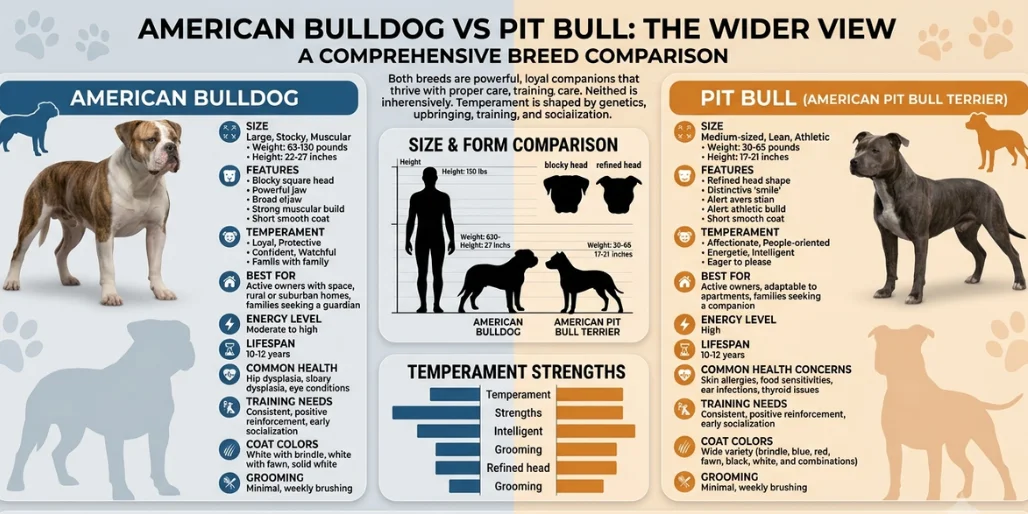
While both American Bulldogs and Pit Bulls are powerful bully breeds, there are several key distinctions. American Bulldogs are generally heavier and more compact, often weighing more, with a more pronounced blocky head compared to the leaner, more agile American Pit Bull Terrier. The American Bulldog typically has a broader chest and can vary in coat color, often with patches, while Pit Bulls often exhibit a more athletic build. When considering a pup, their unique histories and purposes highlight their differing physical and temperamental needs.
Physical Characteristics of American Bulldogs and Pit Bulls
Size and Build Comparison
When comparing the size and build of an American Bulldog and a Pit Bull, you’ll generally notice some distinct differences. The American Bulldog is typically a more compact and heavier dog breed, often possessing a more substantial and muscular physique. They tend to have a broader chest and a more blocky head. In contrast, the various Pit Bull type breeds, such as the American Pit Bull Terrier, tend to be more athletic and lean, built for agility and speed. These differences in muscle and overall frame are often a key indicator when trying to differentiate between these powerful bully breeds.
Coat and Color Variations
Both American Bulldogs and Pit Bulls exhibit a short, smooth coat that requires minimal grooming; a quick brush is usually all that’s needed. However, the range of coat and color variations can differ. American Bulldogs commonly display white as a primary color, often with patches of brindle, fawn, or red. Pit Bulls, especially the American Pit Bull Terrier and the American Staffordshire Terrier, can vary widely in their coat colors, including solid colors, brindle, and various patterns, giving each pup a unique look. The diversity in coat helps in identifying each breed.
Facial Features and Expressions
The facial features and expressions of these dog breeds also offer clues to their identity. American Bulldogs often have a more square, blocky head with a powerful jaw, giving them a strong and determined look. Their expressions can be quite serious, yet they often convey a deep loyalty to their owner. Pit Bulls, including the American Pit Bull Terrier, tend to have a slightly more refined head shape with a distinctive “smile” that can make them appear very friendly and approachable. These subtle differences in their facial structure contribute to their overall appearance and how they are perceived.
Temperament and Behavior
American Bulldog Temperament
The American Bulldog is renowned for its loyal and confident temperament, making them excellent family companions. This working dog breed, though powerful, is generally known for being gentle and affectionate with its family members. They need a strong, experienced owner who can provide consistent training and socialization from a young age to ensure they grow into well-behaved adults. While not inherently aggressive, their protective instincts mean early exposure to strangers and other pets is crucial for them to get along well in various social settings.
Pit Bull Temperament
The temperament of Pit Bulls, encompassing breeds like the American Pit Bull Terrier and the American Staffordshire Terrier, is often misunderstood. Many “Pit Bull” dogs are incredibly affectionate, often described as “nanny dogs” due to their love for children. They are typically intelligent and eager to please, making them highly trainable. However, due to their strong prey drive and powerful nature, proper socialization and consistent training are essential to prevent any potential aggression towards other animals, ensuring they are well-adjusted pets.
Training and Socialization Needs
Both American Bulldogs and Pit Bulls, regardless of whether you’re looking for a pawandbreeds dog, benefit immensely from early and consistent training and socialization. These intelligent dog breeds need a dedicated owner who can commit to positive reinforcement training methods. Early exposure to various environments, people, and other dogs is crucial to help them develop into well-rounded and confident companions. Without proper guidance, their strength and protective instincts can lead to behavioral issues, highlighting the need for responsible ownership.
Health Considerations for American Bulldogs and Pit Bulls
Common Health Issues
Both American Bulldogs and Pit Bulls are robust dog breeds, but they are not immune to common health issues. American Bulldogs can be prone to certain genetic conditions, including hip and elbow dysplasia due to their heavy, muscular build, and some eye conditions. Pit Bulls, particularly American Pit Bull Terriers and American Staffordshire Terriers, might face similar orthopedic problems, as well as skin allergies and thyroid issues. Responsible breeders typically screen their breeding dogs to minimize the risk of passing on these hereditary conditions, which is crucial for the health of any pup.
Lifespan and Care Needs
The lifespan for both American Bulldogs and Pit Bulls generally ranges from 10 to 12 years, provided they receive proper care and nutrition. To ensure a healthy and long life, both breeds need a balanced diet tailored to their activity levels and regular veterinary check-ups. Their care needs also include consistent exercise to maintain their athletic build and prevent obesity, which can exacerbate joint problems. An owner committed to these basic care requirements can expect a loyal and healthy companion for many years.
Preventive Health Measures
Preventive health measures are vital for both American Bulldogs and Pit Bulls to help them lead a long and healthy life. Regular vaccinations, parasite control, and dental care are fundamental. It’s also important to provide high-quality dog food that supports their muscular development and overall well-being. Early detection of potential health issues through routine vet visits can make a significant difference. Being proactive about their health helps prevent serious conditions, ensuring these powerful bully breeds remain happy and active pets.
Choosing Between an American Bulldog and a Pit Bull
Factors to Consider
When choosing between an American Bulldog and a Pit Bull, several factors should influence your decision to ensure you find the perfect companion. Consider the energy levels of each dog breed; while both are athletic, their exercise needs can vary. The American Bulldog, a working dog, often requires more structured activity than some Pit Bull types. It’s also important to think about the breed’s temperament and how it aligns with your family dynamic, especially if you have children or other pets. A responsible owner assesses these aspects to make the best choice.
Living Environment and Lifestyle
Your living environment and lifestyle play a crucial role in determining which dog breed is a better fit. American Bulldogs need ample space and do best with a yard, given their size and energy, making them ideal for an active owner. Pit Bulls, including the American Pit Bull Terrier, can adapt well to various living situations, including apartments, as long as they receive sufficient daily exercise and mental stimulation. Both breeds thrive on human companionship and need an owner who can dedicate time to training and socialization, ensuring they get along with strangers and other animals.
Conclusion: Making the Right Choice
Ultimately, making the right choice between an American Bulldog and a Pit Bull depends on understanding their distinct characteristics and matching them with your lifestyle. Both are loyal, powerful dog breeds that, with proper care and training, make wonderful companions. Whether you opt for the robust American Bulldog or the agile American Pit Bull Terrier, you’re getting a devoted pet. It’s not about which breed is “better,” but which pup best suits your home and ability to meet its specific needs, ensuring a happy and healthy life for your new family member.
FAQ’s
Q: terrier question — how is american pitbull terrier vs american bulldog vs pitbull at first glance?
A: At first glance the american pitbull terrier and american bulldog look much alike — both are bull-type dogs with a wide head and muscular build — but they have little different proportions. APBTs (american pitbull terrier) tend to be medium-sized, more agile and excel in sport and obedience, while american bulldogs are stockier and often descend from older bull-and-terrier crosses bred specifically for farm work and guarding. If you’re deciding, think about energy levels and whether you want a dog that’s more eager to learn new tricks or one better suited as a guard dog.
Q: terrier vs bulldog — do pitbulls and american bulldogs have different bite force or bite behavior?
A: Bite force numbers get tossed around, but behavior matters more than raw force. Both breeds can deliver a strong bite if provoked, yet with proper socialization, training and hours of exercise they’re unlikely to be aggressive. “Pit bull” myths exaggerate danger; responsible owners reduce bite incidents. Always introduce unfamiliar people and dogs cautiously and never leave a male or female unmonitored around small children.
Q: american pitbull terrier vs bull dog — are they closely related or were they specifically bred in different ways?
A: They are closely related historically — both descend from 17th century bull-and-terrier stock — but were specifically bred for different purposes over time. APBTs were refined for agility, gameness and companionship, while bull-type breeds like english bulldogs and american bulldogs were shaped for strength and sometimes guarding. That shared lineage explains why people mix the two and why some traits overlap.
Q: pitbull terrier vs american bulldog — how many hours of exercise does each need and what sport activities do they excel at?
A: APBTs usually need more daily activity — think an hour to two of exercise — and they excel in sport activities like agility, weight pull and obedience. American bulldogs might do well with an hour of active time and some strength-focused play. Both benefit from mental work, training sessions and regular walks measured in hours of exercise per week rather than just minutes per day.
Q: american bulldog vs american pitbull terrier — can you adopt a mix or should you specifically look for a purebred APBT or bulldog?
A: Adopting a mix is often a great choice — mixes can combine the best traits from both breeds and many shelter dogs are fantastic companions. If you want predictable size, range of colors or temperament, a reputable breeder or breed-specific rescue for american pitbull terrier or american bulldogs is better. Either way, meet the dog, ask about history and training, and consider energy level and whether the dog is good with kids.
Q: terrier vs pitbull — how do APBTs compare in height and weight to american bulldogs, like inches tall or pounds?
A: APBTs are usually medium-sized — often 17 to 21 inches tall at the shoulder — while american bulldogs are generally larger and heavier. Exact numbers vary by bloodline: some apbts are stockier and some american bulldogs are taller. Look at the specific dog rather than just the label.
Q: american pitbull terrier vs bull dog — are they registered with the united kennel club or other registries, and does that matter?
A: Yes, many APBTs and american bulldogs can be registered with the United Kennel Club or other registries, but registration isn’t everything. Registration documents trace lineage and can help with predictability, but training, socialization and the owner’s commitment shape a dog’s behavior more than papers do. For sport competition, registries matter; for adoption and companionship, temperament and health matter most.
Q: pitbull vs terrier — any tips to introduce a new american pitbull terrier or american bulldog to other dogs or kids?
A: Introduce slowly and in neutral territory, keep both dogs on leash at first, and watch body language closely. Use positive reinforcement, give treats for calm behavior, and never force interactions. Teach kids how to approach a dog and supervise all contact. Early socialization and consistent training help these breeds become friendly family members rather than reactive guard dogs.