Are you curious about the Flat-Coated Retriever? This guide covers everything you need to know about this wonderful breed, from its origins and temperament to its health and care — what makes a Flat-Coat tick, how to train one, and what to expect as an owner.
Understanding the Flat-Coated Retriever
Origin and History
This charming, distinctive breed traces its roots to 19th-century England, where it was developed as a versatile gundog excelling in both land and water retrieves. Early breeders mixed setters, spaniels, and other retriever types like the Newfoundland to create a working dog with a gentle mouth and a knack for efficient retrieving. It was initially even more popular than the Labrador and Golden Retriever, which later overtook it — but those early dogs laid the foundation for the intelligence, eagerness to please, and boundless energy the breed is known for today, along with an unwavering dedication to hunters in the field.
Physical Characteristics
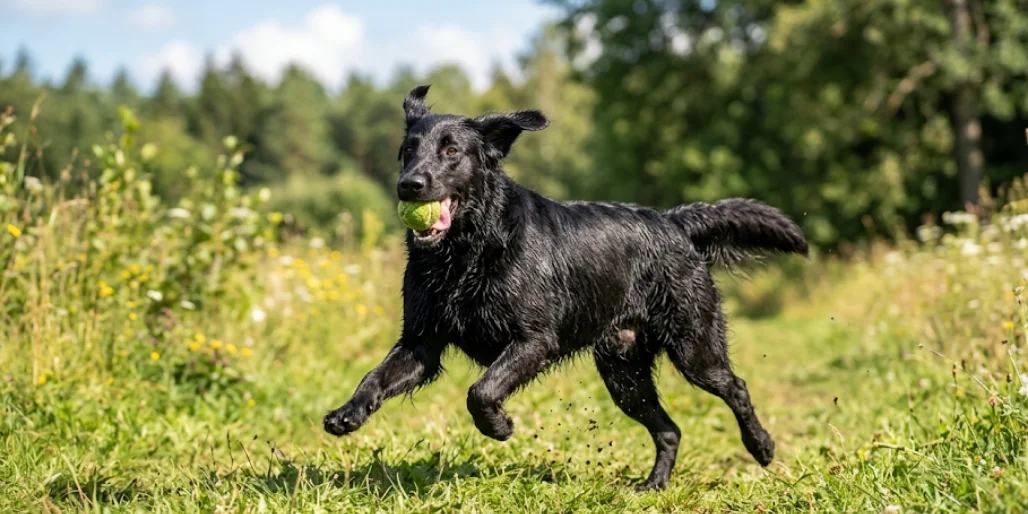
Often called the “Peter Pan” of the dog world for its perpetual puppy-like demeanor, this medium-sized dog typically stands 22–24.5 inches at the shoulder and weighs 55–75 pounds. Its most distinguishing feature is a dense, flat-lying coat in black or liver that offers excellent weather protection — a crucial trait for a working retriever. A strong yet graceful build, deep chest, well-sprung ribs, and powerful hindquarters round out an athletic frame, while dark, expressive eyes and a wagging tail convey the breed’s cheerful, alert nature.
Breed Characteristics and Standards
Organizations like the AKC and the Kennel Club maintain a standard outlining the ideal physical and temperament traits for this breed, preserving its unique qualities and purpose. It emphasizes a natural, well-balanced appearance without exaggeration — strength, elegance, and a keen, intelligent expression. Key markers include the single, dense, flat-lying coat, an alert head, a confident and outgoing demeanor, and the “merry” tail wag that’s become a hallmark of the breed’s happy temperament. Understanding these standards helps any aspiring breeder or owner appreciate the nuances of this exceptional gundog.
Temperament
Personality Traits
Renowned for an outgoing, joyful personality that lives up to the “Peter Pan” nickname, this dog carries an almost perpetual puppy-like enthusiasm into adulthood. Highly intelligent and eager to please, it thrives on interaction with its family and brightens any room with a wagging tail. That playful nature demands plenty of mental and physical stimulation — a bored dog of this breed may turn mischievous, so keeping it engaged is key to a happy home. Adaptable and generally stable in temperament, it suits various living situations as long as exercise needs are met.
Social Behavior with Family and Strangers
Highly social and quick to bond with family members, this breed thrives as part of the household and often seeks out cuddles and playtime. It’s generally excellent with children — patient and gentle, though supervision with any dog-child interaction is always wise — and just as welcoming toward strangers, greeting new people with the same enthusiasm it shows family. That friendliness makes it a poor guard dog but a wonderful host. With proper early socialization, it typically gets along well with other dogs and even cats, making it a solid fit for multi-pet households.
Training and Obedience
Training tends to be rewarding thanks to this breed’s intelligence and eagerness to please. Positive reinforcement — praise, treats, play — works well, and early socialization and puppy classes help puppies grow into well-adjusted adults. Consistency and patience matter, since joyful exuberance can sometimes undercut focus around exciting distractions. Natural retrieving instincts make these dogs excel at fetch, obedience, agility, and scent work; commands come quickly, but ongoing mental stimulation keeps them engaged throughout life.
Health Considerations
Common Health Issues
Like all purebred dogs, this breed can be prone to certain conditions. Cancer is one of the most significant concerns, affecting a higher percentage of Flat-Coats than many other breeds, alongside hip and elbow dysplasia. Responsible breeders screen their stock for these hereditary issues, and regular vet check-ups support early detection. Other possible issues include patellar luxation, progressive retinal atrophy, and certain heart problems — concerning on paper, but a good breeder will be transparent about their lines’ health history. The Flat-Coated Retriever Society of America strongly encourages genetic testing before breeding to protect the breed’s long-term health.
Importance of Pet Insurance
Given the potential for costly conditions like cancer and hip dysplasia, pet insurance is a wise investment. It can cover a meaningful share of unexpected veterinary bills for illness, accidents, and sometimes routine care, letting owners make treatment decisions based on what’s best for the dog rather than cost alone. Comparing providers and policies helps you find coverage suited to this breed’s particular health predispositions.
Regular Health Check-ups
Routine vet visits allow early detection of issues that are far easier to manage when caught promptly. Expect a physical exam, a discussion of diet and exercise, and guidance on vaccinations or preventive care — plus a chance to raise any behavioral or health concerns. Staying on top of veterinary care, paired with a healthy lifestyle, does the most to support a long, happy life.
Care and Maintenance
Exercise Needs and Activities
As a gundog by background, this breed needs significant daily exercise — a walk around the block rarely cuts it. Long runs, swimming, and vigorous games of fetch satisfy both body and mind; without them, boredom can turn into destructive behavior. Dog sports like agility, obedience, flyball, and dock diving tap into natural retrieving instincts, and a securely fenced yard gives it room to play safely.
Diet and Nutrition
A high-quality, balanced diet formulated for medium-to-large, active breeds supports this dog’s energy levels and healthy growth — look for good protein sources, healthy fats, and essential vitamins and minerals. Watch weight closely, since obesity can worsen joint issues like hip dysplasia. Your vet can help set the right portion sizes and feeding schedule based on age, activity level, and any health conditions, and treats should stay in moderation.
Grooming Requirements
The flat-lying coat isn’t as high-maintenance as some long-haired breeds, but weekly brushing prevents mats and tangles, clears loose hair, and keeps natural oils distributed for a healthy shine — more often during shedding season. Regular nail trims and ear cleaning (especially given the floppy ears) round out the routine, along with occasional baths using a dog-specific shampoo. Grooming sessions also double as a chance to check for skin issues, parasites, or lumps.
Flat-Coated Retriever vs. Similar Breeds
Comparing with Other Retrievers
It’s natural to compare this breed with the Labrador and Golden Retriever, since all three are gundogs with a strong retrieving instinct. What sets it apart is the perpetual puppy-like enthusiasm behind the “Peter Pan” nickname, a leaner build, and a distinctively elegant, single-piece head. Temperament tends to run more boisterous and comical than a Golden’s, and a touch more sensitive than a Lab’s — while a Labrador might be content with a brisk walk, this breed thrives on more varied activity like long runs, swimming, and organized dog sports.
Distinct Features
Beyond the “Peter Pan” personality and ever-wagging “merry” tail, the physical traits are quite specific: a sleek, flat-lying coat in black or liver, noticeably different from the denser, wavier coats of Golden Retrievers, offering solid weather protection thanks to its gundog heritage. An elegant yet powerful build, deep chest, and keen expression round out the standard, while a somewhat “less heavy” appearance gives it more agility and grace than some retriever cousins — a genuine blend of athleticism and gentle charm.
Choosing the Right Breed for Your Lifestyle
This highly energetic dog thrives in active households with ample exercise, mental stimulation, and consistent positive reinforcement. Outdoor enthusiasts who enjoy hiking, swimming, or dog sports will likely find it a great match; a more sedentary lifestyle is a tougher fit. It needs to be an integral part of family life rather than left alone for long stretches, and its social nature means boredom or destructiveness can follow without enough interaction. Owners should be ready for a long-term commitment to exercise, training, and affection — in return, they get boundless joy and unwavering loyalty.
Conclusion
Summary of Key Points
This is an extraordinary breed, celebrated for its “Peter Pan” personality, boundless energy, and affectionate nature. Originating as a versatile gundog, it excels on both land and water, with a distinctive flat-lying coat and elegant build. It thrives on consistent positive reinforcement, needs significant daily exercise and mental stimulation, and generally does well with children, strangers, and other animals. While generally robust, cancer is a notable health concern, making regular vet check-ups and pet insurance well worth considering. Owning one means committing to an active lifestyle and a deep bond with a genuinely unique, spirited companion.
Resources for Owners
The Flat-Coated Retriever Society of America is a valuable resource, offering breed information, health initiatives, and connections to local clubs and reputable breeders, along with insights into responsible breeding and health screening. Local Kennel Club branches and all-breed clubs often host training classes, sports events, and social gatherings, and online forums and social media groups offer more ways to connect with other owners and swap advice on training, grooming, and general care.
About Paw and Breeds and the Dog A-Z Breeds Guide
Explore the world of dog breeds in greater depth at Pawandbreeds. Our comprehensive Dog A–Z Breeds Guide offers detailed information on a wide range of breeds, covering temperament, health, and care requirements to help you learn more about each type of dog.
Whether you’re researching a new puppy or expanding your knowledge of canine companions, Pawandbreeds is designed to be your go-to resource. You’ll find clear breed characteristics, historical background, and practical advice for pet owners to help you make informed decisions about the best dog for your family and lifestyle
FAQ
Q: What exactly is a flat-coated retriever, and how is it different from other retrievers?
A: Sometimes just called a “flat coat,” it’s a gun dog originally bred to retrieve waterfowl and upland game for hunters and gamekeepers. Unlike some other retrievers, this type keeps a strong dual-purpose skill set — equally at home in the field or curled up as a family pet. Its sleek, wavy coat and cheerful personality set it apart, and it’s recognized in the sporting group by most kennel clubs’ standards.
Q: Is it a good family dog?
A: Absolutely — a wonderful choice for active families. They’re famously willing to please, goofy well into adulthood, and love being part of everything the household does. Just keep in mind they’re high-energy, so owners need to commit to plenty of exercise and mental stimulation, or you’ll end up with a bored, mischievous adult.
Q: What kind of coat does this breed have, and how much grooming is needed?
A: True to the name, the coat is flat, dense, and slightly wavy rather than curly, sometimes waving a bit more around the ears, chest, and tail. Brushing a couple of times a week keeps shedding under control and prevents mats. Not a low-maintenance breed, but nothing compared to some other sporting dogs.
Q: What are the main health concerns?
A: Health is a big topic here. The breed has a notably high incidence of cancer, especially histiocytic sarcoma, which has become a major focus for breeders and researchers alike. Hip dysplasia and patella problems also show up. Careful breeding practices and health testing have become essential to improving outcomes.
Q: Why does this breed seem prone to cancer?
A: One of the toughest parts of ownership. The population is relatively small, and genetic diversity took a hit — especially around the end of World War II, when numbers dropped drastically. Many dogs today descend from a limited gene pool, which researchers believe contributes to higher cancer rates. Organizations like the FCRSA actively fund studies and encourage responsible breeding to tackle the issue.
Q: How much exercise does it actually need?
A: A lot. These are high-energy dogs built for long days of field work, so a quick walk around the block won’t cut it. Swimming, retrieving games, hiking, or organized dog sports work well — without enough exercise, they can become destructive or overly hyper indoors.
Q: Is it easy to train?
A: Generally, yes. A willing-to-please nature makes training fairly straightforward, especially with positive reinforcement — smart and food-motivated, though slow to mature mentally, staying puppy-like for a few years. Patience is key, especially with a young puppy still learning the ropes.
Q: Can it still work as a proper gun dog today?
A: Definitely. Many breeders and owners still use them for their original purpose — hunting waterfowl and upland game. Retrieving instincts remain strong, with an effortless, graceful movement in the field, whether in formal field trials or casual hunting trips.
Q: Should I adopt a rescue instead of buying a puppy?
A: A great option worth considering. Rescue organizations, including breed-specific groups connected to the FCRSA, often have dogs of all ages needing homes. Adopting an older rescue can be especially rewarding, since many are past the chaotic puppy stage while retaining that classic playful personality.
Q: What should I look for in a breeder?
A: Reputable breeders prioritize health testing for hips, elbows, patellas, and heart conditions, along with screening for cancer history in the lines. Ask about clearances, meet the parent dogs if possible, and look for breeders active within groups like the FCRSA — responsible breeders and owners working together is what’s helping preserve this breed for future generations.