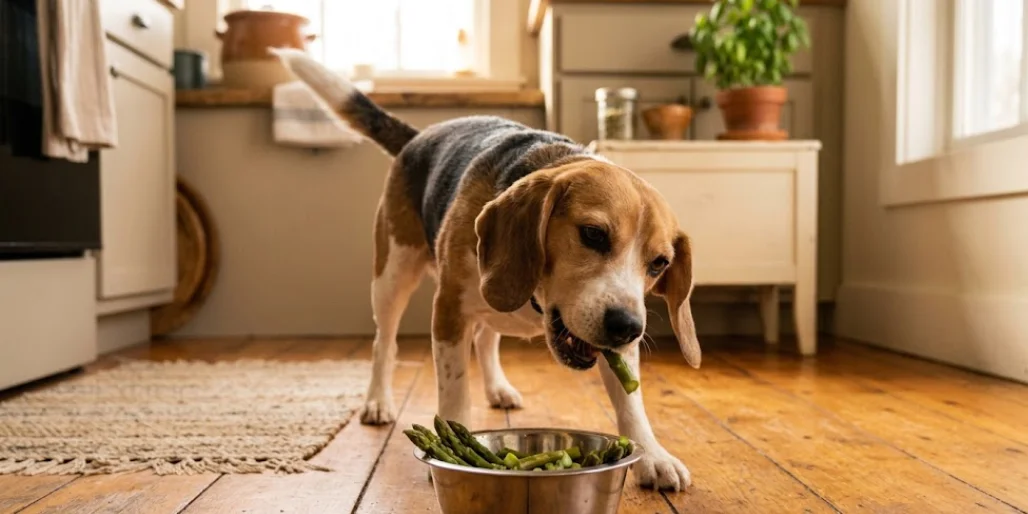
Yes — dogs can eat asparagus in moderation when it’s cooked plain and served in small, bite-sized pieces.
Asparagus can be a healthy and enjoyable treat for your canine companion, provided it’s prepared correctly. This guide will walk you through the safety aspects, nutritional benefits, and best serving practices for feeding your dog this green vegetable.
Key points to cover: how to prepare asparagus safely (avoid seasonings, oils, and butter), which forms to avoid (raw stalks that can be tough or pose a choking hazard, and asparagus spears prepared with garlic or onion), appropriate portion sizes based on your dog’s size, and signs of digestive upset to watch for. Also note that asparagus is not a complete meal replacement and should be offered as an occasional supplement to a balanced diet.
Understanding if Dogs Can Eat Asparagus
Can Dogs Eat Asparagus Safely?
Yes, dogs can eat asparagus safely, but there are some important considerations to keep in mind before you feed your dog asparagus. While asparagus is not toxic to dogs, it’s crucial to serve it in a way that minimizes potential risks. Raw asparagus can be tough and difficult for dogs to chew and digest, potentially leading to digestive upset or even acting as a choking hazard, especially for smaller dogs.
Asparagus Benefits for Dogs
Asparagus offers a range of nutritional benefits for dogs. This vegetable is packed with vitamins and minerals, including vitamins K, A, C, and E, as well as folate, potassium, and fiber. It’s also low in calories, making it a great, nutritious snack for dogs who might be on a diet or just need a healthy treat. The fiber in asparagus can also aid in healthy digestion, helping your dog digest other foods more efficiently.
Risks of Asparagus for Dogs
While dogs can eat asparagus, there are some risks associated with feeding asparagus to your dog. The primary concern with feeding asparagus to your dog is its tough texture, which can be difficult for dogs to chew and digest, particularly the fibrous asparagus stalks. This can lead to gastrointestinal upset, including vomiting or diarrhea. Furthermore, long, raw asparagus stalks can pose a choking hazard, especially for smaller dogs or those who tend to gulp their food.
How to Feed Your Dog Asparagus
Preparing Asparagus for Dogs
When you feed your dog asparagus, preparation is key to ensuring it’s safe and easily digestible for dogs. Never feed your dog raw asparagus, as it’s tough to chew and can be a choking hazard. Instead, lightly steam or boil the asparagus until it’s soft. This makes the vegetable much easier for your dog to digest and reduces the risk of gastrointestinal upset. Once cooked, chop the asparagus into small pieces to further prevent any choking hazards, especially for smaller dogs.
How Much Asparagus Can You Feed Your Dog?
Moderation is crucial when you feed your dog asparagus. While asparagus is a nutritious snack for dogs, it should only be given in small quantities as an occasional treat, not a main part of their dog food. A good rule of thumb is that treats, including vegetables, should make up no more than 10% of your dog’s daily caloric intake. Start with a very small amount to see how your dog reacts, as some dogs may be more sensitive to new foods.
Asparagus Tips for Dog Owners
When considering feeding asparagus to your dog, always prioritize their safety and well-being. Ensure that any cooked asparagus is plain, without any added seasonings like salt, butter, garlic, or onion, which can be toxic to dogs. Avoid canned asparagus due to its high sodium content. Remember that while dogs can eat asparagus, not all dogs may enjoy it, and that’s perfectly fine. For other safe and healthy veggie options, check out our guide on “Vegetables Dogs Can and Can’t Eat.”
Alternatives to Asparagus in Dog Food
Nutritious Vegetables for Dogs
If your dog isn’t a fan of asparagus, or if you’re looking to diversify their diet, there are plenty of other nutritious vegetables that are safe for dogs. Vegetables can offer a wide range of vitamins and minerals, contributing to your dog’s overall health and well-being. Always ensure any vegetable you choose is prepared correctly and given in moderation as a snack, not as a replacement for their regular dog food.
Other Safe Vegetables to Feed Your Dog
Many dogs enjoy a variety of vegetables like carrots, green beans, and sweet potatoes, all of which are safe for dogs to eat when cooked and cut into small pieces. Carrots are excellent for dental health, while green beans offer fiber and vitamins. Sweet potatoes are a good source of complex carbohydrates and vitamins. Remember to avoid any seasoning and always introduce new foods slowly to monitor your dog’s digestive reaction.
Linking to the Guide on Vegetables Dogs Can and Can’t Eat
For a comprehensive list and detailed information on which vegetables are safe for dogs and which to avoid, you’ll find our “Vegetables Dogs Can and Can’t Eat” guide incredibly helpful. It covers everything from preparation tips to nutritional benefits, ensuring you can make informed choices about your dog’s diet and provide them with a varied and healthy range of snacks.
Conclusion
Final Thoughts on Feeding Asparagus to Your Dog
In conclusion, dogs can eat asparagus, but proper preparation is paramount to ensure it’s safe and easily digestible for dogs. Always steam or boil the asparagus until it’s soft, and cut it into small pieces to prevent any choking hazard or digestive upset. While asparagus offers good nutritional value, it should always be given in moderation as an occasional treat, never replacing a balanced dog food.
Best Practices for Introducing New Foods
When introducing any new food, including asparagus, to your dog’s diet, always start with a very small amount. Observe your dog closely for any signs of digestive upset, such as vomiting or diarrhea. If your dog shows no adverse reactions, you can gradually increase the portion size, still keeping it to an occasional snack. Consulting your vet before making significant dietary changes is always a wise decision.
About Pawandbreeds
At Pawandbreeds, we are dedicated to providing pet owners with reliable and practical information to help them offer the best care for their beloved companions. From detailed guides on dog nutrition to training tips, our goal is to support you in ensuring your dog lives a healthy, happy, and fulfilling life.
FAQ
Q: Can dogs eat asparagus at all, or is it a total no-go?
A: Good news, asparagus is safe for dogs! It’s not toxic or dangerous, so if your pup snags a piece off your plate, don’t panic. That said, safe doesn’t automatically mean it’s the best snack ever, so let’s dig into the details below.
Q: What are the benefits of asparagus for dogs?
A: The benefits of asparagus come down to what’s actually in this veggie. Asparagus contains vitamins A, C, E, and K, plus fiber and antioxidants. So asparagus is good as an occasional low-calorie treat, especially for dogs who need to watch their weight. It’s not a superfood that’ll change your dog’s life, but it’s a decent, healthy add-in every now and then.
Q: Can dogs eat raw asparagus, or does it need to be cooked?
A: Technically dogs can eat raw asparagus, but here’s the catch, raw asparagus can be difficult for their digestive system to break down. Asparagus is very tough in its raw state, especially the fibrous parts, and it can be tough to eat and swallow safely. Most vets suggest you cook the asparagus first to soften it up before giving it to your pup.
Q: Why is raw asparagus difficult for dogs to digest?
A: It comes down to the plant’s fibrous structure. Raw asparagus can be difficult for a dog’s stomach because the stalks are stringy and tough, making them hard to chew properly and even harder to break down once swallowed. This difficulty digesting raw asparagus can lead to an upset tummy, gas, or even choking if it’s not chewed well. Cooking it removes most of that toughness.
Q: How should I prepare asparagus for my dog?
A: Keep it simple. Steam or boil the asparagus with no butter, salt, garlic, or seasoning, those extras can actually cause digestive issues. Once it’s soft, cut the asparagus into small, bite-sized pieces so it’s easier to chew and less of a choking risk. This step matters a lot for small dogs, since their throats and digestive tracts are more sensitive to bigger chunks.
Q: Is dog canned asparagus a good option?
A: Not really the best choice. Dog canned asparagus (or canned asparagus meant for humans) is usually loaded with sodium and preservatives that aren’t great for your dog’s stomach. If you want to feed your dog asparagus, fresh and plain cooked is always the safer route compared to anything canned.
Q: Which part of the asparagus is safest for dogs to eat?
A: The tender tips and mid-sections of the stalk are your best bet. The bottom part of the asparagus is very tough and woody, kind of like a mini tree trunk, and it’s tough to eat even for us humans sometimes. Trim off that hard end before cooking so you’re left with the part of the asparagus that’s actually manageable for your dog.
Q: How much asparagus can I give my dog without causing problems?
A: Moderation is key here. Even though asparagus is generally safe, too much of any new veggie can lead to digestive issues like bloating or loose stool. Start with a small piece or two and see how your dog reacts. Small dogs especially should get smaller portions since their bodies process food differently than larger breeds.
Q: Are there dogs who shouldn’t eat asparagus?
A: Yes, for some pups asparagus isn’t a good idea at all. Dogs with sensitive stomachs, existing digestive issues, or kidney problems might react badly since asparagus contains compounds that increase urination. If your dog has any health conditions, chat with your vet before adding asparagus for your dog’s diet, better safe than sorry.
Q: What’s the bottom line on feeding asparagus to dogs?
A: Asparagus is safe for dogs when it’s cooked, plain, and cut into manageable pieces. It offers some nice vitamins and fiber, but it isn’t a necessary part of your dog’s diet. Think of it as an occasional treat rather than a regular menu item, and always keep an eye out for any weird reactions after your dog tries it for the first time.