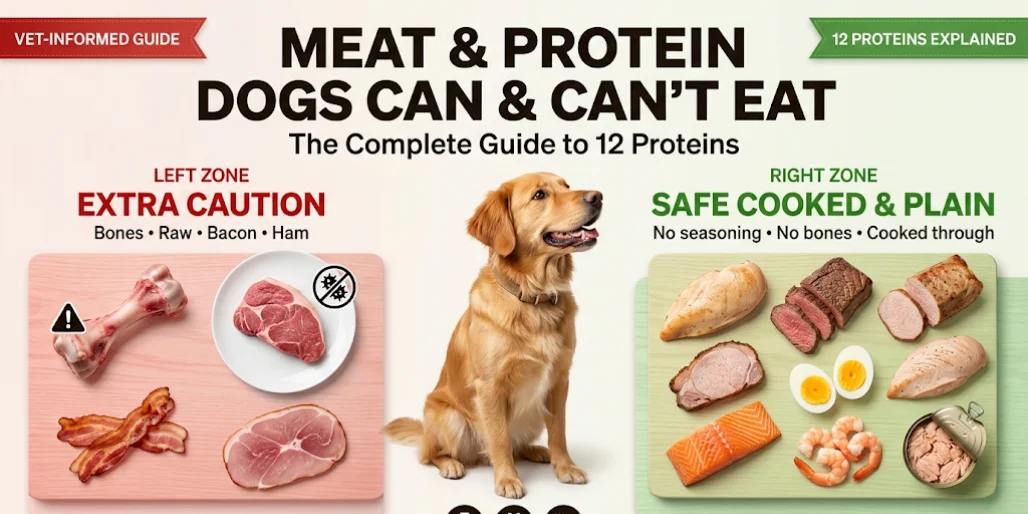
Meat makes up a core part of most dogs’ diets already, but how it’s prepared matters as much as which meat it is. Raw handling, seasoning, bones, and fat content are where most of the real risk comes from — here’s the full guide to the 12 proteins dog owners ask about most.
Part of the Human Foods Dogs Can and Can’t Eat directory.
Proteins that need extra caution
- Pork Bones — cooked or raw, a serious splintering, choking, and blockage risk. Never give bones of any kind without checking with your vet first.
- Raw Meat — carries bacterial contamination risk (salmonella, E. coli); only recommended under veterinary guidance.
- Bacon — high fat and sodium; linked to pancreatitis risk with regular feeding.
- Ham — cured and processed, high in sodium and fat; not recommended as a regular treat.
Proteins that are safe cooked and plain
| Protein | What to watch for | Full guide |
|---|---|---|
| Chicken Breast | Remove skin and bones; avoid seasoning | Can Dogs Eat Chicken Breast? |
| Beef | Avoid fatty trimmings and seasoned marinades | Can Dogs Eat Beef? |
| Pork | Cook thoroughly; skip seasoning and fatty cuts | Can Dogs Eat Pork? |
| Turkey | Remove skin; avoid deli and seasoned varieties | Can Dogs Eat Turkey? |
| Eggs | Cook thoroughly; avoid raw for salmonella risk | Can Dogs Eat Eggs? |
| Salmon | Must be cooked — raw carries a parasite risk | Can Dogs Eat Salmon? |
| Shrimp | Remove shell and tail; cook thoroughly | Can Dogs Eat Shrimp? |
| Tuna | Limit frequency due to mercury content | Can Dogs Eat Tuna? |
General rules for feeding meat and protein to dogs
- Always cook meat thoroughly unless you’re following a veterinarian-guided raw feeding plan.
- Skip seasoning, marinades, and sauces entirely — garlic, onion, and heavy salt are common hidden risks in prepared meat.
- Remove skin and visible fat from poultry and pork to reduce pancreatitis risk.
- Never give cooked bones of any kind; treat raw bones as a question for your vet, not a default chew option.
- Fish should always be fully cooked — raw or undercooked salmon in particular carries a genuine parasite risk.
If your dog eats a cooked bone or shows signs of choking, vomiting, or abdominal pain after eating any protein, contact your veterinarian right away rather than waiting to see if symptoms pass.
This article is for general information only and isn’t a substitute for advice from your veterinarian.