
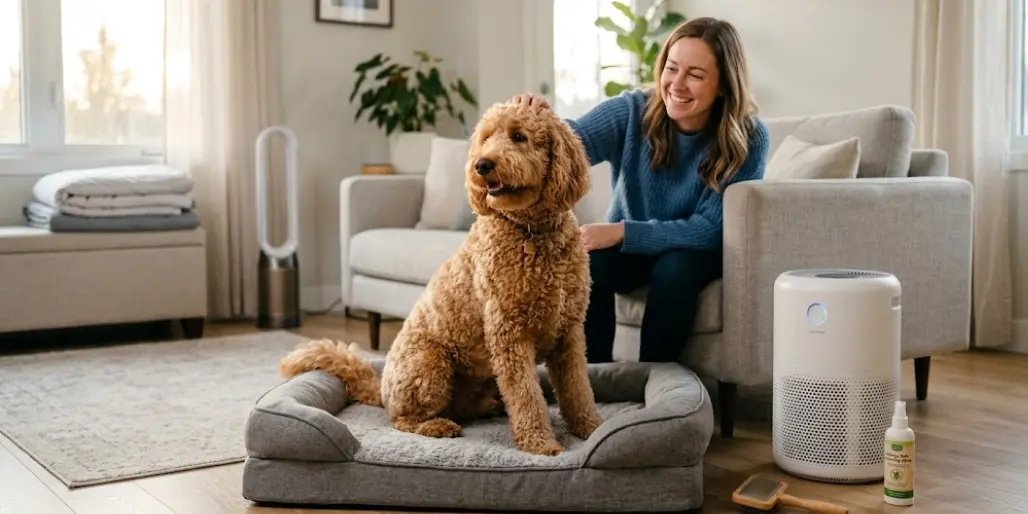
The short answer is that goldendoodles are not completely hypoallergenic, but they are widely considered allergy-friendly dogs because their low-shedding coats help reduce airborne pet dander and trapping allergens compared to other dogs. If you are someone who suffers from dog allergies, finding the right hypoallergenic dog breed can feel like an impossible puzzle, especially when looking at popular mixed breeds like goldendoodles.
Understanding Hypoallergenic Dogs
What Does Hypoallergenic Mean?
When people talk about a truly hypoallergenic pet, they usually picture a magical creature that causes zero allergic reactions for anyone, but no such animal actually exists in the real world. Every single dog breed produces some amount of dander, saliva, and urine, which means that even low-shedding dogs can still trigger allergy symptoms if you happen to be sensitive enough to these specific proteins.
How Hypoallergenic Breeds Work
The secret behind allergy-friendly dogs usually comes down to their unique coat type and genetics, which often trace back to a purebred poodle known for holding onto loose hairs rather than dropping them everywhere. Because these dogs shed less, trapped allergens stay locked in the fur instead of floating freely around your living room, making it much easier for allergy sufferers to manage their daily symptoms with regular grooming.
Common Myths About Hypoallergenic Myths
A very common misconception floating around among prospective owners is that fur length determines how severe your allergic reactions will be, leading many people to believe that short-haired pets are automatically safer. In reality, dog allergies are rarely triggered by the hair itself, but rather by microscopic flakes of dead skin, dried saliva, and urine proteins that stick to dust and easily circulate through your home environment regardless of coat length.
Goldendoodles and Their Coat Types
When you start exploring goldendoodles, you will quickly notice they come with a fascinating variety of coat types that depend entirely on their parents. Each coat type handles loose hairs differently, meaning some puppies shed less while others require much more attention.
Here are the different coat types a goldendoodle might inherit:
| Coat Type | Inherited From |
| Flat fur | Golden Retriever |
| Curly hair | Poodle |
| Wavy fleece mix | Both parents (mix) |
Different Goldendoodle Coat Types
Every single goldendoodle puppy can develop a completely unique coat type, ranging from straight to heavily curled. If you are looking at an F1B generation, you often get a curly poodle style that tends to shed less fur around the house. Understanding these physical differences helps you pick the right puppy for your home, especially if keeping your furniture clean is a major priority for your family.
How Coat Type Affects Allergies
The specific coat type your dog has plays a massive role in how much pet dander escapes into your living space and triggers your immune system. Curly coats trap loose hair and trapped dander much better than straight coats, which means fewer allergens float into the air. This natural trapping mechanism is why many allergy sufferers lean toward curly-coated doodles when searching for a suitable companion.
Grooming for Allergy Management
Keeping allergy symptoms under control requires consistent and regular grooming. To maintain a healthy coat and dramatically minimize the overall amount of allergens floating around your home, you should incorporate the following practices:
- Use frequent sessions with a sturdy brush to remove trapped dander before it causes trouble.
- Maintain a proper brushing schedule to prevent mats from forming and trapping saliva and old hair close to the skin.
Are Goldendoodles Really Hypoallergenic?
Evaluating Goldendoodles Hypoallergenic Traits
When evaluating whether goldendoodles are truly hypoallergenic, scientists remind us that no dog breed is completely free of allergens. While these charming pets produce fewer allergens and generally shed less than traditional shedding breeds, they still release small amounts of dander and saliva. This means sensitive individuals can still experience mild reactions if they spend long hours cuddling without proper hand washing afterwards.
Factors Influencing Allergy Reactions
Several unpredictable factors influence whether you will experience severe allergies or mild allergies around your new pet. Your daily symptoms can change based on several variables, including:
- bathing frequency
- home ventilation
- individual dog dander production
Even if a specific puppy is marketed as hypoallergenic, your personal sensitivity level remains the ultimate deciding factor in how your body reacts to the animal living in your space.
Comparing Goldendoodles to Other Breeds
When comparing popular mixed options against purebred dogs like a standard poodle, you will find that many doodle mixes offer similar allergy-friendly benefits due to their shared lineage. If you want to dive deeper into these comparisons, check out this guide on hypoallergenic doodles & poodle mixes to see which specific crossing aligns best with your household needs. Remember that PawandBreeds is here to help you navigate every step of your pet ownership journey.
Choosing the Right Doodle for Allergy Sufferers
Finding Reputable Breeders
Locating a trusted breeder is vital when searching for a hypoallergenic goldendoodle puppy that will not trigger your severe allergies. A responsible breeder will gladly discuss coat types, previous litters, and how their puppies produce fewer allergens, ensuring you find a healthy dog that fits your lifestyle without causing unwanted allergic reactions around your home.
Tips for Allergy-Friendly Puppy Selection
Selecting the right allergy-friendly puppy involves carefully observing the litter and understanding that low-shedding dogs trap dander much better than straight-haired dogs. If you suffer from dog allergies, look closely at each individual doodle to identify curly hair traits, which often help reduce airborne pet dander and keep your family comfortable.
Transitioning to Life with a Goldendoodle
Bringing your new goldendoodle home requires patience, especially as you establish a consistent routine of regular grooming to manage dander and loose fur. Daily brushing sessions prevent mats, remove trapped saliva, and stop allergens from accumulating in your living space, making it much easier for allergy sufferers to live harmoniously with their wonderful new companion.
Conclusion and Further Reading
Final Thoughts on Goldendoodles
Ultimately, while goldendoodles are not completely hypoallergenic, their low-shedding coats make them an amazing choice for many people with mild allergies who want a loving family pet. By understanding their unique coat type and committing to proper maintenance, you can successfully manage allergy symptoms and enjoy life with your furry friend.
Exploring More Hypoallergenic Doodles
There are many wonderful doodle crosses available today, and researching each specific dog breed can help you find the absolute best match for your personal sensitivity levels. Whether you want a curly poodle mix or a wavy golden retriever cross, understanding these hypoallergenic options ensures you make an informed decision for your household.
Reference to Hypoallergenic Doodles & Poodle Mixes
If you want to explore more options, you can read our guide on hypoallergenic doodles and poodle mixes to compare different generations and coat types. Remember that PawandBreeds is dedicated to providing expert advice to help you find the perfect low-shedding companion for your home.
FAQ
Q: Are golden doodle dogs really considered hypoallergenic?
A: While the term “hypoallergenic” is often used to describe them, no dog is 100% allergen-free. However, goldendoodles are known for producing less dander and shedding less than many other breeds, which makes them a popular choice for people who suffer from mild pet sensitivities.
Q: Why is this specific dog breed often recommended for allergy sufferers?
A: This cross between golden retrievers and poodles inherits traits from both sides. Depending on the percentage of poodle in their lineage, like an f1 generation, they often have a coat that doesn’t shed as much, trapping trapped hair and reducing airborne allergens.
Q: Do goldendoodles still produce any dander or allergens at all?
A: Yes, absolutely. Even though goldendoodles are hypoallergenic compared to heavy shedders, all dogs still produce proteins in their saliva, urine, and a dog’s dander that can trigger a reaction in someone who is allergic.
Q: How does the golden retriever coat influence shedding and dander?
A: Pure golden retrievers have a double coat that sheds heavily year-round. When mixed with a poodle, the shedding and dander levels can drop significantly, but the exact coat type can vary wildly from puppy to puppy.
Q: What should you know if you’re considering a goldendoodle and have sensitivities?
A: If you’re considering a goldendoodle, it is wise to spend time with one before bringing it home. Allergies may still flare up depending on the individual animal’s grooming needs and dander production.
Q: Can air purifiers help if you live with a doodle?
A: Yes, many allergy-conscious pet owners use HEPA air purifiers in their homes to help capture stray hairs and floating allergens that escape the dog’s coat.
Q: Are doodles hypoallergenic claims backed by science?
A: According to studies often cited in publications like the journal of allergy and clinical immunology, homes with hypoallergenic breeds do not necessarily have lower allergen levels than homes with other dogs, meaning individual reactions vary greatly.
Q: Why are goldendoodles so popular despite allergy concerns?
A: Beyond being allergy friendly for many families, these dogs are incredibly affectionate, smart, and friendly, making them wonderful companions for households looking for a loving family pet.





