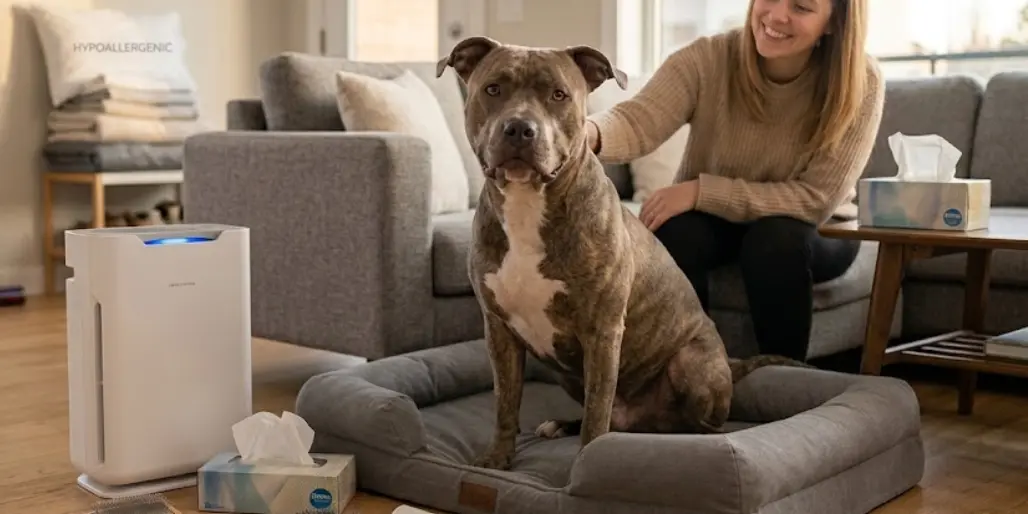
No, pit bulls are not hypoallergenic, meaning they can easily trigger allergic reactions in sensitive individuals. If you are wondering are pit bulls hypoallergenic, the straight answer is no because every dog breed produces proteins found in saliva, urine, and skin cells that act as an allergen. Even though these dogs have a short hair coat, they still shed and release dander into your home environment, which can cause severe pet allergies for allergy sufferers who hoped to live with a pitbull.
Understanding Hypoallergenic Dogs
What Does Hypoallergenic Mean?
When people talk about a hypoallergenic dog, they usually mean a specific dog breed that is considered hypoallergenic because they shed less fur and trap dander better, such as a poodle with a curly coat. However, no dog is truly hypoallergenic, and pitbulls are not hypoallergenic at all. Every dog breed produces the offending protein that causes allergic reactions, but some shed less hair and dander into the air, making it easier for people with allergies to manage their symptoms without constant misery.
Common Myths About Hypoallergenic Dog Breeds
A massive myth floating around is that hairless dogs or short hair dogs like the American Pit Bull Terrier will never trigger allergic reactions. People often assume that if a dog does not have a long, double coat, it will not cause dog allergies. In reality, allergens are not just stuck in the fur; they come from dander, saliva, and urine, meaning pit bulls hypoallergenic myths are totally false, and even the American Hairless Terrier can still bother sensitive individuals.
Characteristics of Hypoallergenic Dogs
Hypoallergenic breeds typically possess a non-shedding coat type that requires regular grooming, brushing, and a special shampoo to keep airborne allergens down to a minimum. Unlike the American pit bull, which drops plenty of dead skin cells and short fur all over your bedding and furniture, low-shedding dogs hold onto their hair much longer. If you want a canine companion that will not constantly aggravate your immune system, you might want to look into medium & large hypoallergenic dogs instead of bringing home a pitbull terrier.
Do Pit Bulls Shed? The Allergy Connection
Understanding Dog Shedding
Every single pit bull undergoes a natural shedding process, dropping dead fur and skin cells throughout your living space on a regular basis. Even though they have a very short hair coat, these popular dogs lose hair year-round, which constantly releases the dreaded dog allergen into your home. Unlike certain hypoallergenic breeds that trap loose hairs within a curly coat, a pitbull drops its coat type directly onto your floors, furniture, and bedding. If you are extremely sensitive to dander, understanding how a typical pit bull sheds will help you realize that managing pet allergies with this specific dog breed takes a lot of daily effort.
How Shedding Affects Allergies
The moment a pitbull or any other short-haired terrier sheds its fur, microscopic skin flakes and dried saliva are sent floating into the air you breathe. Allergy sufferers often experience severe allergic reactions because airborne dander easily settles on carpets and upholstery, making it tough to keep indoor air clean. If you happen to be allergic to dogs, living with a pit bull terrier means you will constantly be exposed to these stubborn allergens.
While you cannot completely stop a heavy shedder from triggering your immune system, you can manage the loose fur by:
- Giving your pet a frequent bath
- Using a specialized shampoo
- Engaging in regular grooming
Do Pit Bulls Produce Dander?
Yes, pit bulls produce plenty of dander, just like every other canine. Dander consists of tiny flakes of dead skin cells shed by animals with fur or hair. Because all dogs produce specific proteins in their skin, saliva, and urine, even hairless terriers can cause allergic reactions. Pitbulls are not hypoallergenic, meaning their skin continually produces the exact proteins that spark intense allergic reactions in people with allergies. If you were hoping to find a truly hypoallergenic dog that lets you skip the sneezing and watery eyes, the American Pit Bull Terrier is definitely not the right pet for you, though you can explore PawandBreeds for more helpful insights on managing pet ownership.
Are Pit Bulls Hypoallergenic? The Facts
The Allergy Potential of Pit Bulls
Every single pit bull possesses a natural coat type that sheds short fur and spreads dander all over your home. Because this specific dog breed is not considered hypoallergenic, sensitive individuals often experience an intense allergic reaction when coming into contact with a pitbull. These animals produce proteins in their saliva, urine, and skin cells that act as a potent allergen, meaning allergy sufferers will definitely struggle to keep their symptoms under control without constant cleaning and daily maintenance.
What Allergy Sufferers Should Know
People with allergies must realize that owning a pitbull terrier means dealing with airborne dander and constant shedding year-round. Even though the American Pit Bull Terrier has a short coat, it still releases plenty of dead skin cells that trigger allergic reactions in sensitive individuals. If you are allergic to dogs and hoping to find a truly hypoallergenic pet, you should understand that pit bulls hypoallergenic traits simply do not exist, and managing these triggers requires serious effort.
Comparing Pit Bulls to Other Breeds
When comparing a pit bull to a poodle or other hypoallergenic dog breeds, you will notice a huge difference in how much fur and dander they release. While a curly coat helps trap loose hair and keeps the dog allergen from floating around, a pitbull drops its coat type everywhere on your furniture and bedding. Other breeds of dogs that shed less are far better suited for anyone who wants to avoid severe dog allergies and minimize daily sneezing.
Living with a Pit Bull as an Allergy Sufferer
Tips for Reducing Allergens in Your Home
Controlling dog allergies while living with a pit bull requires a strict routine to wash away loose fur and skin cells. To manage this effectively, you should incorporate the following steps into your pet care routine:
- Use a specialized shampoo
- Give your pet a frequent bath
You should brush your pitbull outdoors to prevent the allergen from settling into your carpets and upholstery. Keeping your living space clean and investing in good air filters will greatly help allergy sufferers breathe easier despite having a non-hypoallergenic dog breed in the house.
Maintaining A Clean Environment
To successfully manage living with a pitbull and reduce the constant trigger allergies caused by such a heavy shedder, maintaining a spotless home environment is essential. If you are allergic to dogs, every animal produces proteins that cause allergic reactions, which means you need to take specific daily precautions such as:
- Vacuuming your bedding, floors, and furniture constantly to remove trapped dander and stray fur
- Wiping down surfaces regularly to help stop the spread of airborne particles
Considerations for Potential Pit Bull Owners
Before bringing an American pit bull terrier into your home, carefully consider whether you can handle the persistent pet allergies that come with this breed. Because pitbulls are not hypoallergenic, you must weigh your love for terriers against the reality of daily cleaning, brushing, and managing stubborn allergic reactions. For more guidance on choosing the right pet for your lifestyle, be sure to check out helpful tips and resources available at PawandBreeds.
Alternative Hypoallergenic Dog Breeds
Exploring Other Hypoallergenic Breeds
When searching for a hypoallergenic dog breed that will not trigger severe dog allergies, you might want to look beyond the typical terrier and consider alternative hypoallergenic breeds. Many allergy sufferers find that dogs with a curly coat, such as a poodle, trap dander and shed much less hair compared to a pit bull. These unique dog breeds produce fewer airborne proteins in their skin cells and saliva, making it easier for sensitive individuals to live comfortably without constantly experiencing annoying allergic reactions throughout the day.
Medium & Large Hypoallergenic Dogs
If you prefer a larger companion but still struggle with pet allergies, checking out medium & large hypoallergenic dogs can open up wonderful new options for your household. Unlike an American Pit Bull Terrier, which drops short fur everywhere, these larger hypoallergenic breeds maintain a coat type that retains loose hair much more effectively. Regular grooming and a good bath will keep any lingering allergen under control, allowing people with allergies to enjoy the loyalty of a bigger canine without the constant sneezing fits.
Choosing the Right Breed for Allergies
Choosing the right dog breed when you are allergic to dogs requires careful research into how much each animal sheds and produces dander. While pitbulls are not hypoallergenic and will readily aggravate your immune system, exploring truly hypoallergenic options gives you a better chance at a sneeze-free home. Always evaluate your personal tolerance levels, consider how much time you can spend on grooming, and remember that no single canine is completely free of the proteins that cause allergic reactions in sensitive owners.
Conclusion
Final Thoughts on Pit Bulls and Allergies
Ultimately, living with a pit bull means accepting that this wonderful canine is simply not hypoallergenic and will require dedicated cleaning routines to manage stubborn dander. Every dog produces the specific protein found in saliva and skin cells that acts as an intense allergen for sensitive people. While you can certainly minimize stray fur by brushing your pet regularly and using specialized grooming products, allergy sufferers must remain realistic about the daily effort required to keep their indoor environment comfortable.
Connecting with PawandBreeds
Navigating pet ownership when you have sensitivities can feel overwhelming, but gathering the right information makes all the difference in finding your ideal furry companion. Whether you are researching specific coat types, looking for cleaning tips, or exploring alternative pets, understanding your options helps ensure a happy home for everyone involved. For more expert advice and helpful guides on caring for your animals, you can always visit PawandBreeds to discover additional resources tailored to your lifestyle.
FAQ
Q: Are pitbulls hypoallergenic?
A: The short answer is no, pitbulls are not considered hypoallergenic because they produce allergenic proteins in their saliva, urine, and dander just like any other dog.
Q: Do pitbulls shed despite having short hair?
A: Yes, pitbulls shed quite a bit despite their short coats, meaning they constantly release dead hair and pet dander into your home environment.
Q: Why do american pit bull terriers trigger allergy symptoms?
A: American pit bull terriers trigger allergy symptoms because their dander, saliva, and urine contain specific allergenic proteins that stick to furniture and float in the air.
Q: Are terriers hypoallergenic in general?
A: People often wonder if terriers hypoallergenic breeds exist, but most terriers, including the american staffordshire terrier, actually produce standard levels of dander and allergens.
Q: How can people with mild pet allergies live with a pitbull?
A: People with mild sensitivities can often successfully live with a pitbull by using an air purifier, vacuuming frequently, and limiting allergen exposure in the bedroom.
Q: What grooming routines help reduce dander from pitbulls shed?
A: Regular brushing and bathing your pup with a hypoallergenic shampoo can remove loose hair and significantly reduce less dander around the house.
Q: Should I consult an allergist before getting a dog or cat if I have severe allergies?
A: Absolutely, you should visit an allergist for professional allergy testing before bringing home any pet, especially since pitbulls aren’t compatible with severe allergies.