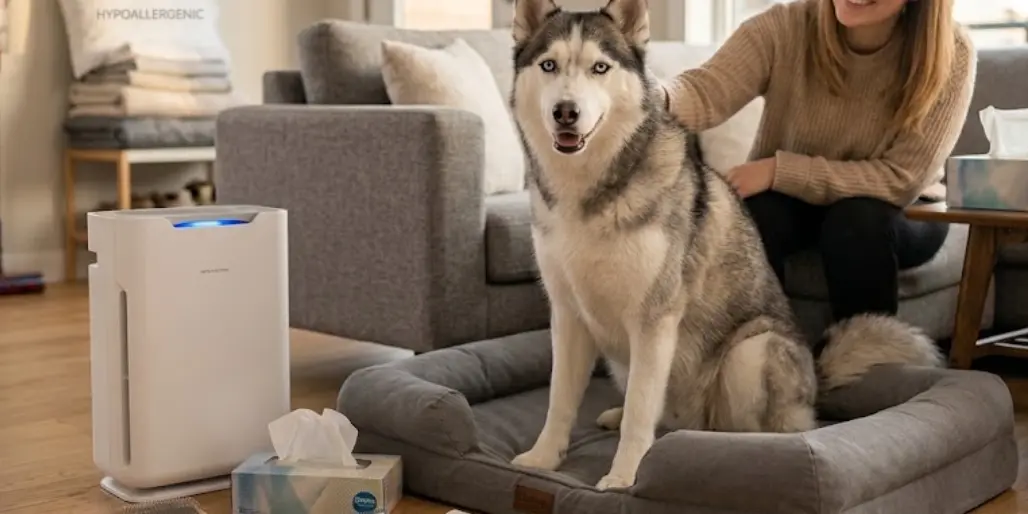
No, Siberian huskies are not hypoallergenic at all and actually tend to trigger allergies quite severely for sensitive allergy sufferers. If you are allergic to dogs, you should know that this specific dog breed possesses a thick double coat and heavy shedding tendencies that release an immense amount of dander and saliva into your living space constantly.
Siberian Huskies and Hypoallergenic Traits
What Does Hypoallergenic Mean?
When people talk about a truly hypoallergenic dog or hypoallergenic dog breeds like a poodle rather than a husky mix, they generally mean a low-shedding animal that produces far fewer allergens. Any typical hypoallergenic dog or low-shedding breed of dog will help pet parents avoid miserable allergy symptoms, unlike when you decide to adopt a husky.
Do Huskies Produce Less Dander?
Huskies do not produce less dander; in fact, because of their massive undercoat and intense heavy shedding twice a year, the amount of dander floating around is astronomical. Every single husky shedding session releases trapped fur and dander everywhere, meaning people with allergies will definitely sneeze and experience the worst allergies imaginable around this furry pet.
Understanding Allergens in Dog Breeds
Every dog breed spreads proteins through fur, dander, and saliva, but Siberian huskies are notorious shedders that make it nearly impossible to live with a husky comfortably. Even if you groom your husky constantly, this particular breed will shed a lot, meaning you need serious air filtration like HEPA units rather than hoping for a non-shedding miracle.
Shedding and Allergies in Huskies
Do Huskies Shed a Lot?
Every single husky is well known to shed a lot because this incredible husky breed features a massive double coat that drops fur continuously. During seasonal changes, these Siberian huskies blow their heavy undercoat, meaning you will find loose fur and dander covering every inch of your furniture despite your best daily efforts to groom them regularly.
The Impact of Shedding on Allergy Sufferers
Living with a husky becomes an absolute nightmare for allergy sufferers because the sheer amount of dander released during a heavy shedding cycle will instantly trigger severe allergy symptoms. If you are allergic to dogs, the flying fur and trapped saliva proteins will cause you to sneeze constantly and experience the worst allergies possible inside your home environment.
Managing Shedding in Siberian Huskies
Controlling the endless fur from a husky requires staying proactive with proper coat maintenance. While no dog breed is completely non-shedding, you can manage floating dander and hair by utilizing:
- Intense brushing sessions
- Top-tier HEPA air filters to capture flying allergen particles before they settle down
Despite these efforts, sensitive owners might still struggle with persistent dog allergies year-round.
Living with a Husky as an Allergy Sufferer
Choosing the Right Dog Breed for Allergies
If your immune system reacts poorly to pet dander, you should completely avoid trying to adopt a husky and instead research a genuinely low-shedding hypoallergenic dog breed. People dealing with sensitive allergies often explore other options like a poodle or look into medium and large hypoallergenic dogs to ensure their home stays relatively free of sneezing triggers.
Tips for Reducing Allergens at Home
Keeping your living space clean when you share a home with a furry companion involves several key practices. To keep stubborn allergy symptoms completely under control, pet parents must:
- Establish strict cleaning routines such as regular vacuuming, washing pet bedding frequently, and using specialized air purifiers to trap airborne dander
- Keep certain rooms off-limits to the animal and bathe the pet regularly
Consulting with a Veterinarian
Before making any major household changes, it is always wise to speak with a qualified veterinarian or an immunologist to discuss medical management options for persistent pet allergies. These medical professionals can help you explore:
- Effective treatments and allergy shots
- Lifestyle adjustments to safely manage your sensitivity while enjoying life alongside your beloved animal companions
Adopting a Husky: Considerations for Allergy Sufferers
If you are thinking about bringing a husky into your home, you must first carefully evaluate your personal allergy limits. Because the husky breed produces so much floating dander and loose fur from a thick double coat, many allergy sufferers experience severe reactions. Preparing your living space ahead of time with air purifiers can help manage symptoms, but severe dog allergies often make living with this high-shedding animal quite difficult.
Assessing Your Allergy Sensitivity
Before you decide to adopt a husky, take the time to visit a veterinarian or an allergy specialist to test your exact reactions to dog dander and saliva. Since Siberian huskies shed a lot and release stubborn allergens continuously, knowing your tolerance level prevents future heartache. Understanding how your immune system responds to typical furry companions ensures you will not regret your final pet ownership choice later.
Immunotherapy Options for Dog Allergies
Many devoted pet parents turn to medical immunotherapy treatments like allergy shots or sublingual tablets to help desensitize their bodies against airborne dog allergen proteins. While these medical interventions can significantly reduce frustrating allergy symptoms when you live with a husky, they require ongoing commitment and patience. Combining professional medical guidance with strict daily grooming routines offers the best defense against constant sneezing and discomfort.
Can You Live Comfortably with Sparing Management?
Successfully sharing your daily life with a husky while managing persistent dog allergies demands an unwavering dedication to intense cleaning and regular coat maintenance. You will need to vacuum constantly, wash fabrics frequently, and rely heavily on advanced HEPA filtration systems to capture stray fur. Although truly hypoallergenic dogs make life easier, dedicated owners can still manage a husky if they maintain strict environmental controls.
Conclusion
Final Thoughts on Huskies and Allergy Management
Managing severe pet sensitivities while adoring a heavy-shedding animal like the husky requires immense effort, daily brushing, and proper medical oversight for ongoing allergy symptoms. While the iconic husky breed brings endless joy and energy to a household, their massive double coat guarantees a constant battle against floating dander and loose fur throughout your living space every single day.
Exploring Other Hypoallergenic Dog Breeds
If your immune system simply cannot handle the intense dander levels produced by a husky, you might want to look into medium and large hypoallergenic dogs or a poodle instead. Choosing a genuinely low-shedding dog breed ensures that allergy sufferers can enjoy canine companionship without constantly struggling against miserable symptoms, runny noses, and endless sneezing fits inside their homes.
Visit PawandBreeds for More Information
To discover more helpful guides regarding coat types, shedding management, and expert advice for sensitive pet owners, feel free to visit PawandBreeds for comprehensive resources. Whether you are researching alternative low-shedding companions or looking for clever ways to keep your indoor air clean, our platform provides all the essential details you need to make an informed decision.
FAQ
Q: Are Siberian huskies hypoallergenic?
A: Not at all, because no dog is truly “hypoallergenic, and a husky is actually one of the worst heavy shedders you could bring home if you have sensitivities.
Q: Do huskies shed and cause allergy issues?
A: Yes, they have a dense double coat that produces tons of dander and loose fur, which can easily trigger allergies in people who are sensitive to pets.
Q: Why are huskies considered such heavy shedders compared to a labrador?
A: While a labrador has a different kind of coat, your husky has a dense undercoat that blows out twice a year, releasing massive amounts of skin and coat debris into your living space.
Q: Can I take allergy meds and still live comfortably with this breed?
A: Some people manage their symptoms with allergy meds, but the constant allergen exposure from a high-shedding dog can still overwhelm your immune system over time.
Q: How does a husky compare to a samoyed regarding dander and shedding?
A: Both are northern breeds with a coat that produces plenty of dander, meaning neither is a great choice if you are looking for low-shed dogs.
Q: What actually causes the allergic reaction if it is not just the dog fur?
A: You are usually reacting to the dander, which consists of tiny skin flakes and proteins found in the saliva and urine that stick to the hair.
Q: Are unspayed or male dogs worse for allergy sufferers?
A: Unfixed male dogs produce higher protein levels in their dander and secretions, which can sometimes increase allergen levels in homes with hypoallergenic myths surrounding certain pets.
Q: How can I reduce shedding if I already own this breed?
A: Regular brushing with an undercoat rake can help capture loose hair, but it will not completely stop a heavy shedder from dropping fur.
Q: How can I be sure I am choosing the right breed for my home?
A: Consult with allergists and spend time around strangers and other dogs of the same type to test your personal reaction before committing.