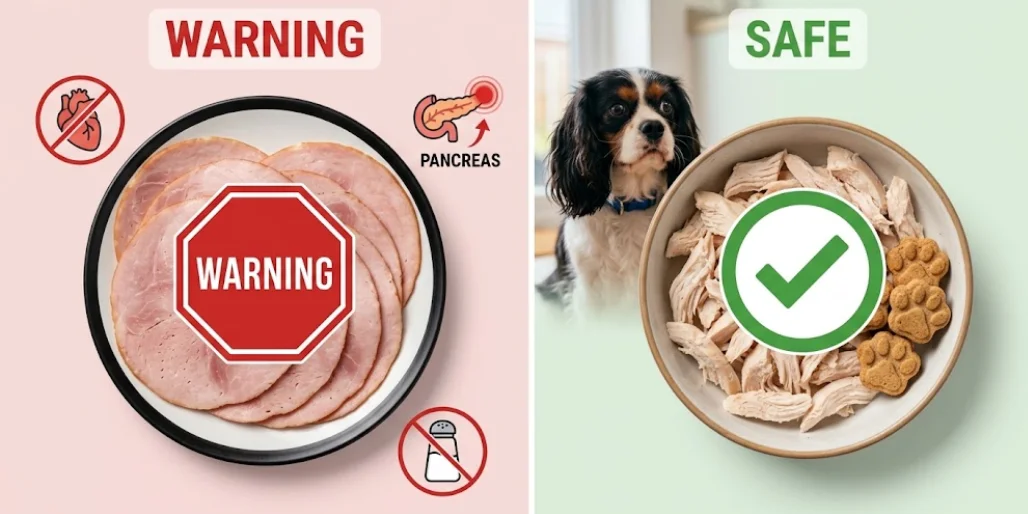
It’s natural to wonder if sharing a bite of your delicious ham with your furry friend is a good idea. However, the short answer is that ham is generally not recommended for dogs. While a tiny, unseasoned piece might not cause immediate harm, regularly feeding your dog ham can lead to several health issues due to its high sodium and fat content.
Understanding Ham and Its Safety for Dogs
What is Ham?
Ham is essentially pork that has been cured with salt, often smoked, and sometimes sweetened. It’s a popular human food that comes in various forms, from deli slices to whole baked hams. This processing often involves the addition of numerous preservatives and flavorings that are not suitable for dogs.
Is Eating Ham Safe for Dogs?
No, eating ham is generally not safe for dogs. While a tiny, unseasoned piece might not be immediately toxic to dogs, it’s far from a healthy dog treat. The high sodium content in most processed ham can lead to excessive thirst, increased urination, and in severe cases, sodium ion poisoning. Moreover, the high-fat content is also a major concern.
What Happens If Your Dog Eats Ham?
If your dog eats ham, especially in large quantities, they might experience gastrointestinal upset. Symptoms can include vomiting, diarrhea, and abdominal pain. The high-fat content in ham is particularly bad for dogs because it can trigger pancreatitis, a serious inflammation of the pancreas that requires immediate veterinary attention. Foods like ham, with their excessive fat, are difficult for dogs to digest and process.
Types of Ham and Their Effects on Dogs
Cooked Ham vs. Processed Ham
When considering whether dogs can eat ham, it’s crucial to distinguish between cooked ham and processed ham. Cooked ham, especially if it’s plain and not heavily seasoned, might seem like a slightly better option than its processed counterpart. However, even plain cooked ham often contains a significant amount of sodium and fat, which are bad for dogs. Processed ham, on the other hand, includes a myriad of additives, preservatives, and even more sodium, making it an even worse choice for dogs. Feeding ham, especially processed ham, can lead to various digestive issues and long-term health problems for your furry friend.
Deli Meats and Their Risks
Deli meats, including many types of ham products, pose particular risks for dogs. These store-bought ham varieties are typically laden with high levels of sodium, nitrates, and other preservatives that are not safe for dogs. The excessive sodium can lead to dehydration and more severe conditions like sodium ion poisoning, which can be toxic to dogs. Moreover, the high-fat content in deli meat can quickly upset your dog’s stomach and potentially trigger pancreatitis, a painful and dangerous inflammation of the pancreas. Therefore, it’s best to avoid giving your dog deli meat entirely, as it’s definitely not good for dogs.
Ham Bones: Are They Safe?
Many dog owners wonder about ham bones, especially if they are safe for dogs to chew on. Unfortunately, ham bones are not a safe dog treat, whether cooked or raw. Cooked ham bones can splinter easily, posing a significant choking hazard or causing internal injuries as sharp fragments can perforate the digestive tract. Raw ham bones, while less prone to splintering, can still carry bacteria like Salmonella, which can make your dog very sick. It’s always best to avoid giving your dog ham bones and instead opt for dog-safe chew toys or treats specifically designed for canine consumption.
Feeding Your Dog Ham: Best Practices
How Much Ham Can You Give Your Dog?
When considering feeding your dog ham, even a tiny, unseasoned piece should be given with extreme caution and only as a rare exception, not a regular dog treat. The high sodium and fat content in ham can be bad for dogs, leading to health issues like pancreatitis or sodium ion poisoning. It’s best to avoid feeding ham to your dog altogether, as there are many healthier and safer alternatives for your furry friend.
Alternatives to Ham for Dogs
Instead of giving your dog ham, consider offering lean, plain cooked meats like chicken or turkey, which are much safer for dogs to eat. Many human foods are excellent food for dogs, provided they are prepared correctly. For example, some vegetables or specific fruits can be a good choice for dogs, offering vital nutrients without the risks associated with fatty foods like ham. Always ensure any new dog food or dog treat is introduced slowly to avoid upsetting your dog’s stomach.
Consulting Your Veterinarian
If you are ever unsure whether dogs can eat ham or any other human food, consulting your veterinarian is always the best course of action. Your vet can provide tailored advice based on your dog’s specific health needs and dietary requirements. They can help you understand why foods like ham are not safe for dogs and recommend appropriate dog-safe alternatives, ensuring your dog’s well-being and preventing potential health problems from improper feeding ham or other risky foods.
Conclusion
Final Thoughts on Ham and Dogs
In conclusion, while a very small, plain piece of cooked ham might not be immediately toxic to dogs, it is generally not recommended as a regular dog treat or part of their diet. The high sodium and fat content in most ham products, including deli meat and processed ham, make them bad for dogs, potentially leading to serious conditions like pancreatitis or gastrointestinal upset. It’s crucial for pet owners to understand that feeding ham or ham bones poses significant health risks to their beloved companions.
Referencing Healthy Alternatives
To keep your dog healthy and happy, always opt for dog-safe alternatives to ham. Lean, unseasoned cooked meats, certain fruits, and vegetables are much better choices for dogs. If you’re looking for protein-rich options that are safe for your canine friend, you might find our guide on “Meat & Protein Dogs Can and Can’t Eat” helpful for further information and ideas. Providing your dog with appropriate, healthy dog food ensures they receive the nutrients they need without the dangers associated with human foods like ham.
Pawandbreeds: Your Trusted Resource
For more comprehensive guides and expert advice on dog nutrition, health, and well-being, Pawandbreeds is your trusted resource.
FAQ
Q: Can dogs eat ham? Is it really bad for dogs?
A: So, you’re wondering, “can dogs eat ham?” The short answer is, it’s not really safe for dogs to eat. While a tiny, tiny bit might not cause an immediate disaster, ham contains a lot of stuff that isn’t good for your dog, like high levels of salt and fat. These can definitely lead to some tummy troubles or even more serious health conditions down the road. It’s just not worth the risk, even with holiday ham.
Q: What happens if your dog eats ham? Will they get sick from ham products?
A: If your dog eats ham, especially a larger amount or ham products, you might notice a few things. Because ham is often high in salt and fat, it may cause digestive upset. This could mean vomiting, diarrhea, or a general lack of appetite. In more severe cases, eating high fat foods can even trigger pancreatitis, a serious inflammation of the pancreas. If you’re worried, it’s always best to contact your veterinarian.
Q: Is any type of ham safe for dogs to eat? What about uncured ham?
A: Honestly, it’s pretty much a no across the board for ham being safe for dogs to eat. Even uncured ham, which might sound healthier, still has a lot of salt and often higher fat content. While it might not have added nitrates and nitrites in the same way, it’s still not good for your dog. Your best bet is to avoid giving your dogs any ham, regardless of how it’s prepared.
Q: My dog just ate raw ham! What should I do if my dog eats raw ham?
A: If your dog just ate raw ham, it’s a good idea to contact your veterinarian. Raw ham can pose additional risks beyond just the salt and fat content. There’s a potential for bacterial contamination, like salmonella or listeria, which can make your dog very sick. Plus, even raw, ham contains a lot of sodium can also cause issues. It’s definitely better to be safe than sorry when your dogs eat raw meat.
Q: Why is ham so bad for dogs? Is it just the salt and fat?
A: Yes, the primary reasons why ham is so bad for dogs are its high salt and fat content. The salt can lead to sodium ion poisoning in dogs if they consume too much, causing symptoms like excessive thirst, urination, lethargy, and in severe cases, tremors or seizures. The high fat content can cause digestive upset, as mentioned, and increase the risk of pancreatitis. Additionally, many hams contain preservatives like nitrite, which aren’t good for dogs to consume.
Q: What if my dog eats ham with cooked bones?
A: If your dog eats ham with cooked bones, that’s another serious concern. Cooked bones become brittle and can splinter easily. These sharp fragments can cause choking, get lodged in your dog’s throat or digestive tract, or even perforate their intestines, leading to a veterinary emergency. If you suspect your dog has eaten cooked bones, contact your veterinarian immediately.
Q: What should I feed my dog instead of ham? Are there safe alternatives?
A: Absolutely! There are plenty of safe and healthy food and treats specially formulated for your dog that you can give their dogs instead of ham. Look for food and treats specially formulated for your dog. Lean, cooked, unseasoned meats like chicken or turkey (without skin or bones) in moderation can be a good treat. Always prioritize a balanced nutrition diet for dogs with food and treats specially formulated for your dog. There are many delicious and safe foods to feed your dog without risking their health with holiday foods or other ham products.