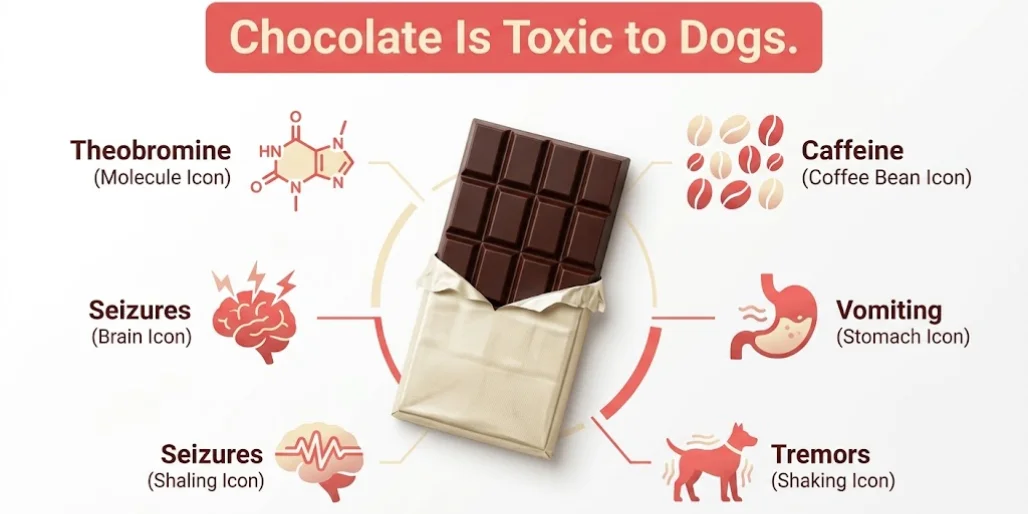
If your dog ate chocolate, it’s natural to be worried. This guide will help you understand why chocolate is toxic to dogs, what signs to look for, and when to seek veterinary advice, ensuring you’re prepared to act quickly and effectively.
Understanding Chocolate Toxicity in Dogs
What Makes Chocolate Toxic to Dogs?
Chocolate toxicity in dogs is a serious concern for pet owners, primarily due to certain compounds found within it. Unlike humans, dogs metabolize these substances very slowly, leading to a buildup that can become toxic. It’s crucial for any pet owner to understand these inherent dangers to protect their furry friends.
Theobromine and Its Effects
The main culprits behind chocolate toxicity are theobromine and caffeine, both of which are methylxanthines. While humans can process these quickly, a dog’s body struggles, leading to a prolonged and potentially harmful effect. The amount of chocolate ingested, coupled with your dog’s body weight, dictates the severity of the symptoms, which can range from mild discomfort to severe health complications and even death if left untreated.
Types of Chocolate and Their Toxicity Levels
Not all chocolate is created equal when it comes to the level of danger it poses. The type of chocolate your dog ate significantly impacts the risk. Dark chocolate, baking chocolate, and cocoa powder contain much higher concentrations of theobromine than milk chocolate. White chocolate, on the other hand, has very little theobromine and caffeine, making it the least toxic. However, all chocolate contains fat and sugar, which can still cause digestive upset like vomiting or diarrhea, even in small amounts.
Signs of Chocolate Toxicity in Dogs
Common Clinical Signs to Watch For
If your dog ate chocolate, it’s essential to recognize the common clinical signs of chocolate toxicity. These can appear anywhere from 6 to 12 hours after ingestion, though sometimes sooner. Early symptoms often include vomiting, diarrhea, increased thirst, and restlessness, progressing to more severe issues like tremors, seizures, and an elevated heart rate if treatment for chocolate toxicity isn’t sought.
When Your Dog Seems Fine: What to Monitor
Even if your dog seems fine after eating chocolate, it doesn’t mean you’re out of the woods. The effects of theobromine and caffeine can be delayed, so continuous monitoring for at least 24 hours is crucial. Keep an eye out for any subtle changes in behavior or energy levels, as even small amounts of chocolate can cause problems, especially in smaller dogs.
Symptoms Varying by Chocolate Type
The severity of symptoms directly correlates with the type of chocolate your dog ingested. Dark chocolate, baking chocolate, and cocoa powder are much more dangerous due to their high concentration of theobromine and caffeine, leading to more pronounced and severe signs of chocolate toxicity. Milk chocolate and white chocolate, while still a concern due to fat and sugar, generally cause milder symptoms unless consumed in very large quantities.
What to Do If Your Dog Ate Chocolate
Immediate Steps for Pet Owners
If your dog ate chocolate, the immediate steps you take as pet owners can be crucial. First, try to determine the amount and type of chocolate ingested. This information is vital for your veterinarian. Do not try to induce vomiting at home without professional guidance, as this can sometimes cause more harm than good, especially if too much chocolate was consumed or if it has been hours after ingestion.
When to Contact a Veterinarian
You should contact a veterinarian or a pet poison helpline immediately if your dog ate chocolate, especially if it was a significant amount or a darker and more bitter type. Even if your dog seems fine, a quick call can provide peace of mind and professional advice. They can assess the risk based on your dog’s body weight and the type of chocolate, guiding you on whether an emergency visit to a veterinary hospital is necessary.
Home Treatments vs. Veterinary Treatment
While you might want to try home treatments, it’s generally best to consult a veterinarian when your dog ate chocolate. A vet might induce vomiting if the chocolate ingestion was recent, or administer activated charcoal to absorb toxins. They can also provide supportive care for symptoms like tremors or seizures. Never assume home remedies are sufficient, as theobromine is toxic to dogs and professional medical intervention is often required to prevent serious complications.
Treatment for Chocolate Toxicity
Veterinary Interventions and Protocols
When your dog ate chocolate, prompt veterinary intervention is key to managing chocolate toxicity effectively. Your veterinarian will likely begin by assessing the amount and type of chocolate ingested, along with your dog’s body weight, to determine the severity of the exposure. They may induce vomiting if the chocolate ingestion was recent, typically within a few hours, to remove as much chocolate as possible from their system. Following this, activated charcoal might be administered to absorb any remaining theobromine and caffeine, preventing further absorption into the bloodstream. Supportive care, such as intravenous fluids, medications to control seizures or heart arrhythmias, and careful monitoring of clinical signs, will be provided based on the specific symptoms your dog is exhibiting.
Recovery Timeline and Aftercare
The recovery timeline for a dog that ate chocolate can vary widely depending on the amount of chocolate consumed, the type of chocolate, and how quickly treatment for chocolate toxicity was initiated. Most dogs show significant improvement within 24 to 48 hours after receiving veterinary care. During this period, your veterinarian will monitor for any lingering effects of theobromine and caffeine, as these methylxanthines can take time for dogs to metabolize fully. After returning home, it’s important to follow all aftercare instructions, which may include a bland diet for a few days to ease digestive upset and continued observation for any recurring signs of chocolate toxicity. Ensuring a calm environment will also aid in their recovery.
Preventing Future Incidents
Preventing future incidents where your dog ate chocolate is paramount for responsible pet owners. The best approach is to keep all chocolate products – including milk chocolate, dark chocolate, baking chocolate, and cocoa powder – completely out of reach. Remember that even small amounts of chocolate can be toxic to dogs, especially for smaller breeds. Store chocolate in high cabinets or secure containers that your dog cannot access. Educate all family members and guests about the dangers of chocolate to dogs, emphasizing that no amount of chocolate is safe for them to ingest. Vigilance and proactive measures are the most effective ways to protect your furry friend from the dangers of chocolate toxicity.
Additional Resources
Learning More About Chocolate Toxicity
Understanding chocolate toxicity in dogs is a continuous learning process for responsible pet owners. Beyond knowing what to do if your dog ate chocolate, it’s beneficial to delve deeper into why chocolate is toxic to dogs, focusing on the harmful effects of theobromine and caffeine. Familiarize yourself with the varying levels of theobromine and caffeine in different types of chocolate, such as the high concentrations found in darker and more bitter chocolates like baking chocolate and cocoa powder, compared to the lower levels in milk chocolate. This knowledge helps reinforce the importance of prevention and prompt action, ensuring you can quickly identify signs of chocolate toxicity and seek appropriate veterinary care.
Related Guides: Toxic Foods for Dogs
While chocolate is a well-known danger, many other common household foods can also be toxic to dogs. Expanding your knowledge beyond chocolate toxicity to other harmful substances is crucial for your pet’s safety. For a comprehensive overview, consult resources that detail a wider range of foods dogs can and can’t eat. Understanding these various toxins will help you create a safer home environment for your pet, preventing accidental ingestion and ensuring you’re prepared to act if your dog consumes something harmful. Remember, a quick check with a pet poison helpline or your veterinarian is always advisable if you suspect your dog has eaten something they shouldn’t have.
Final Thoughts on Chocolate and Dogs
Ultimately, the message for all pet owners is clear: chocolate is toxic to dogs and should never be given to them. Even seemingly small amounts of chocolate can lead to serious health issues due to theobromine and caffeine, which dogs metabolize poorly. If your dog ate chocolate, immediate contact with a veterinarian or animal poison control is essential for the best possible outcome. Prioritizing prevention by keeping all chocolate out of reach is the most effective way to protect your beloved companion from the dangers of chocolate toxicity. For more expert advice on pet care and safety, explore the extensive guides available at Pawandbreeds.
FAQ
Q: Why is chocolate toxic to dogs in the first place?
A: So here’s the deal – chocolate contains two compounds called caffeine and theobromine, and dogs metabolize theobromine way slower than we do. That means it builds up in their system and starts messing with their heart, nervous system, and gut. This is actually one of the most common calls vets get, so you’re definitely not the only pet parent dealing with this panic moment.
Q: What factors affect chocolate toxicity levels in dogs?
A: A few things matter here: the amount eaten, the size of your dog, and the type of chocolate involved. The darker the chocolate, the more dangerous it is – baker’s chocolate and dark chocolate have way more theobromine than milk chocolate. On the flip side, white chocolate contains barely any theobromine, so it’s usually less of an emergency (though still not great for your pup).
Q: My dog ate chocolate but seems totally normal. Should I still worry?
A: Yes, honestly. Dogs may also seem fine for several hours before symptoms actually show up, since it takes time for the toxins to build up in their system. Don’t just wait around hoping nothing happens – contact your veterinarian right away and let them help determine if you need to bring your dog in based on what and how much they ate.
Q: How much chocolate is actually dangerous for my dog?
A: This depends heavily on your dog’s weight and the amount of theobromine in whatever chocolate they snagged. A small dog eating a few squares of dark chocolate is way more at risk than a big dog who licked a chocolate wrapper. Every dog reacts differently too, so there’s no one-size-fits-all “safe amount” – when in doubt, call your vet and give them the details.
Q: Should I induce vomiting at home if my dog ate chocolate?
A: Nope, please don’t try to induce vomiting at home unless a vet specifically tells you to do it and walks you through it safely. Doing it wrong can cause choking or other complications that are honestly worse than the chocolate itself. Always get professional guidance first – this is one of those situations where DIY isn’t the move.
Q: What symptoms should I watch for after chocolate ingestion?
A: Keep an eye out for vomiting, diarrhea, restlessness, increased heart rate, panting, tremors, or in severe cases, seizures. Chocolate ingestion often causes gastrointestinal upset first before things escalate, so catching it early really helps. If you notice any of these signs, don’t wait it out – get in touch with your vet immediately.
Q: Can chocolate cause other health problems besides toxicity?
A: Definitely. Since chocolate is high in fat and sugar, it can trigger pancreatitis in dogs, which is a painful and potentially serious inflammation of the pancreas. So even if the theobromine dose isn’t lethal, your dog could still end up dealing with some nasty digestive issues afterward.
Q: What will the vet do if I bring my dog in for chocolate ingestion?
A: In veterinary medicine, the standard approach usually involves inducing vomiting (if it’s caught early enough), giving activated charcoal to absorb toxins, and monitoring your dog’s heart rate and symptoms. The veterinarian may also run bloodwork or keep your dog for observation depending on how much chocolate was eaten and how your dog is responding.
Q: How can I prevent my dog from getting into chocolate again?
A: Honestly, the best defense is just keeping dog chocolate exposure at zero – store all chocolate, cocoa powder, and baking supplies well out of reach, especially during holidays when treats are everywhere. Teach family members and guests not to leave chocolate lying around too, since curious noses find things fast!