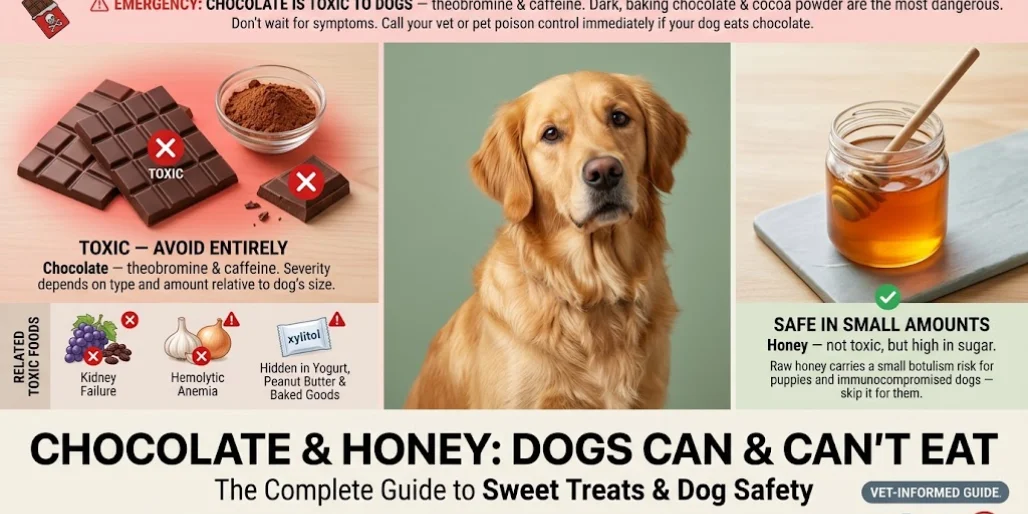
This category holds two very different foods: one that’s a genuine, well-known toxin, and one that’s simply a sugary extra to give in moderation. They’re grouped together because both come up constantly in searches about sweet treats and dog safety.
Part of the Human Foods Dogs Can and Can’t Eat directory.
Toxic — avoid entirely
- Chocolate — contains theobromine and caffeine, which dogs metabolize slowly; severity depends on chocolate type and amount relative to the dog’s size. Dark chocolate, baking chocolate, and cocoa powder are the most dangerous forms.
Safe in small amounts
- Honey — not toxic, but high in sugar; raw honey carries a small botulism risk for puppies and immunocompromised dogs.
Related toxic foods covered elsewhere in this directory
Chocolate is far from the only ingredient in this category of genuine dangers. See also:
- Grapes and Raisins — linked to acute kidney failure
- Garlic and Onions — cause hemolytic anemia
- Xylitol-sweetened products — covered throughout the Dairy and Nuts & Seeds guides, since it shows up hidden in yogurt, peanut butter, and baked goods more often than as a standalone product
What to do in a genuine emergency
If your dog eats chocolate, grapes, raisins, garlic, onions, or anything containing xylitol, don’t wait for symptoms to appear. Contact your veterinarian or an emergency animal poison control line immediately, and have information ready about what was eaten, roughly how much, and your dog’s weight.
This article is for general information only and isn’t a substitute for advice from your veterinarian.