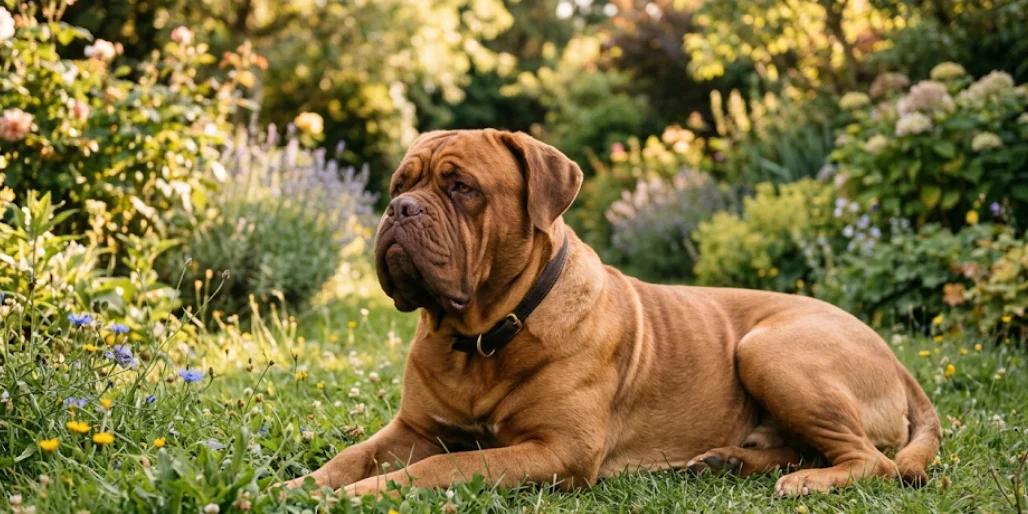
The Dogue de Bordeaux, a magnificent and powerful French Mastiff, is known for its distinctive massive head and muscular build. This ultimate guide will delve into everything you need to know about this loyal companion, from its rich history and unique characteristics to its temperament and care, helping you decide if a Dogue de Bordeaux is the right dog breed for your home.
History of the Dogue de Bordeaux
Origin and Ancestry
The Dogue de Bordeaux has a rich history, with its origins tracing back to ancient Molosser dogs. This formidable French Mastiff breed is believed to have existed in France for centuries, potentially descending from Roman war dogs or even Tibetan Mastiffs. The earliest records suggest these powerful dogs were used for various demanding tasks, including guarding estates, hunting large game, and even participating in dog fights, showcasing their inherent strength and courage.
Development of the Breed
Over time, the Dogue de Bordeaux was selectively bred to enhance its distinct physical traits and temperament. This development focused on creating a dog breed with a massive head, muscular body, and a loyal, protective nature, ideal for guarding. Different regions in France contributed to the breed’s evolution, leading to some variations, but the core characteristics of a powerful and affectionate guardian remained central to its development.
Recognition by Kennel Clubs
The Dogue de Bordeaux gained significant recognition from various kennel clubs relatively late compared to some other breeds. The breed standard was formalized, outlining the ideal physical attributes and temperament. The American Kennel Club, for instance, officially recognized the Dogue de Bordeaux, solidifying its place among esteemed dog breeds and ensuring the preservation of its unique qualities through responsible breeding practices.
Characteristics of the Dogue de Bordeaux
Physical Traits
The Dogue de Bordeaux is immediately recognizable by its impressive and muscular physique. This large breed possesses a massive head, often covered in characteristic wrinkles, and a powerful, athletic body. Their short coat typically comes in various shades of fawn, ranging from light fawn to a deep mahogany, sometimes accompanied by a red or black mask. Their hazel eyes and pendulous lips, which often lead to drooling, complete their distinguished appearance.
Temperament and Behavior
Despite their formidable appearance, the Dogue de Bordeaux is known for its affectionate and gentle temperament, especially with its family. This dog breed makes an excellent family companion, exhibiting a strong guarding instinct while remaining calm and devoted indoors. A well-socialized Dogue de Bordeaux puppy will mature into a loyal and protective adult Dogue de Bordeaux, demonstrating patience and a loving nature, making them wonderful pets.
Common Health Issues
Like many giant breed dogs, the Dogue de Bordeaux can be prone to certain health concerns. Potential owners should be aware of common issues such as hip and elbow dysplasia, heart conditions, and certain cancers. Responsible breeders will screen their Dogue de Bordeaux puppies for these genetic predispositions. A proper diet, regular exercise needs, and routine veterinary care are crucial to ensuring a healthy lifespan for your Dogue de Bordeaux.
Raising a Dogue de Bordeaux
Choosing a Breeder
Choosing a responsible breeder is paramount when considering bringing a Dogue de Bordeaux into your home. A reputable breeder will prioritize the health and temperament of their Dogue de Bordeaux puppies, adhering to the breed standard. They should be transparent about their breeding practices, provide health clearances for the parent dogs, and allow you to meet the puppy’s parents to assess their temperament and ensure they align with the characteristic affectionate and gentle nature of the breed.
Training and Socialization
Early training and socialization are crucial for a Dogue de Bordeaux puppy to develop into a well-adjusted adult Dogue de Bordeaux. Given their powerful and muscular build as a large breed, consistent positive reinforcement training is essential. Exposing your Dogue de Bordeaux to various people, places, and other dogs during puppyhood will help foster a balanced temperament, mitigating their natural guarding instinct and ensuring they become an excellent family companion.
Exercise Needs and Daily Care
Despite their size, the Dogue de Bordeaux has moderate exercise needs. Daily walks and playtime are sufficient to keep this French Mastiff healthy and content. They are not high-energy dogs, but regular activity is vital for maintaining their muscular physique and preventing obesity, which can exacerbate potential health concerns. Daily care also involves cleaning their distinctive wrinkles to prevent skin irritations and managing their tendency to drool.
Caring for Dogue de Bordeaux Puppies
Puppy Development Stages
Understanding the puppy development stages is vital for nurturing your Dogue de Bordeaux puppy. From the playful explorations of early puppyhood to the more independent phases, each stage requires specific care and attention to health and socialization. Monitoring their growth, ensuring proper nutrition, and continuing gentle training will help your Dogue de Bordeaux develop into a well-rounded and affectionate family companion, ready to display its loyal guarding instinct.
Grooming Requirements
The grooming requirements for a Dogue de Bordeaux are relatively straightforward due to their short coat. Regular brushing will help manage shedding and keep their coat healthy and shiny, showcasing their beautiful shades of fawn, mahogany, or dark brown. Special attention should be paid to cleaning their facial wrinkles daily to prevent infections, and routine nail trims and dental care are also important for the overall health of this massive-head, muscular breed.
Nutritional Needs
The nutritional needs of Dogue de Bordeaux puppies, as a giant breed, are critical for their healthy development and preventing common health concerns. A high-quality dog food formulated for large breed puppies is essential to support their rapid growth without overstressing their developing joints. Consult with your veterinarian for specific dietary recommendations to ensure your Dogue de Bordeaux receives the balanced nutrition necessary for a long and healthy lifespan. Pawandbreeds provides a helpful “Dog A-Z Breeds Guide” that can assist with dietary and care advice.
Lifespan and Health Considerations
Average Lifespan
The Dogue de Bordeaux, a magnificent giant breed, typically enjoys an average lifespan of 5 to 8 years, which is common for many large breed dogs. Understanding this lifespan is crucial for prospective owners, as it influences long-term care planning and emotional preparedness. Providing a high-quality diet, meeting their specific exercise needs, and ensuring regular veterinary check-ups are all vital factors that can contribute to maximizing the lifespan of your Dogue de Bordeaux and ensuring a healthy, happy life as an affectionate family companion.
Preventive Health Care
Preventive health care is paramount for the Dogue de Bordeaux to mitigate common health concerns often associated with this muscular, massive-head dog breed. This includes regular vaccinations, parasite control, and routine veterinary examinations. Early detection and intervention for issues like hip and elbow dysplasia, heart conditions, and certain cancers can significantly improve their quality of life. A responsible breeder will have screened Dogue de Bordeaux puppies for genetic predispositions, setting a strong foundation for their health.
Common Health Screenings
For the Dogue de Bordeaux, common health screenings are an essential part of responsible ownership and breeding. These screenings often include evaluations for hip and elbow dysplasia, cardiac assessments to detect heart conditions, and thyroid checks. Eye examinations are also recommended. These proactive measures help ensure the long-term well-being of the Dogue de Bordeaux, allowing potential owners to make informed decisions and providing valuable information for maintaining the breed standard and health of their beloved pet.
Conclusion
Recap of the Breed Standard
The Dogue de Bordeaux embodies a distinct breed standard, characterized by its impressive muscular build, massive head, and distinctive wrinkles. This French Mastiff is known for its affectionate temperament, strong guarding instinct, and loyalty, making it an excellent family companion. Their short coat comes in various shades of fawn, often with a red or black mask, and their hazel eyes complete their noble appearance. Understanding this standard is key to appreciating the unique qualities of this dog breed.
Importance of Responsible Ownership
Responsible ownership is crucial for a Dogue de Bordeaux. This involves committing to early training and socialization during puppyhood, providing appropriate exercise needs, and maintaining their specific grooming requirements, including cleaning their wrinkles. Ensuring proper nutrition with high-quality dog food tailored for a giant breed, along with regular veterinary care, is vital for their lifespan and managing health concerns. A responsible owner also understands the importance of choosing a reputable breeder.
Recommended Resources: Dog A-Z Breeds Guide and Pawandbreeds
For those seeking to delve deeper into the world of the Dogue de Bordeaux or explore other dog breeds, the “Dog A-Z Breeds Guide” is an invaluable resource. Additionally, Pawandbreeds offers comprehensive information on various aspects of dog care, from training and nutrition to health and breed-specific advice. These resources provide ultimate guide material for current and prospective owners, ensuring they have access to accurate and helpful information for raising a healthy and well-adjusted Dogue de Bordeaux.
FAQ’s
Q: What kind of dog breed is the Dogue de Bordeaux, exactly?
A: So the Dogue de Bordeaux is basically an old-school French Mastiff, sometimes called the Bordeaux Mastiff too. It’s a massive, powerful working dog that’s been around in France for centuries, originally bred for hauling heavy stuff, guarding property, and even hunting big game. Nowadays it’s mostly a chill (but still huge) family companion. If you’ve watched the movie Turner & Hooch, you’ve already met one!
Q: Why do Dogues de Bordeaux have that massive head?
A: Honestly, that giant head is like THE signature feature of the breed. In fact, according to most breed standards, the Dogue de Bordeaux has the biggest head of any dog breed relative to body size. It’s a defining characteristic of the breed and gives them that unmistakable wrinkly, powerful look. Combined with their brown mask on the face, you really can’t mistake a Dogue for anything else.
Q: What’s this “brown mask” everyone talks about with Dogues?
A: Great question! The brown mask is basically dark shading around the muzzle and face that’s super common (though not required) in this breed. Some Dogues have it, some don’t – both are totally normal. Their eye color usually ranges from hazel to dark brown too, which just adds to that soulful, kinda droopy expression they’re known for.
Q: Is the American Kennel Club cool with this breed, and when did that happen?
A: Yep, the American Kennel Club officially recognized the Dogue de Bordeaux back in 2008, putting it in the Working Group where it totally belongs. There’s also a dedicated Dogue de Bordeaux Society (and the Dogue de Bordeaux Society of America specifically) that helps promote responsible breeding and educates people on what to know about Dogue de Bordeaux ownership before they jump in.
Q: Are Dogues de Bordeaux actually good with kids and families?
A: For sure! Despite looking like a total bruiser, this is a breed whose temperament is surprisingly sweet. They’re known to be gentle with children and super loyal to their families. They’re also eager to please their owners, which makes training easier than you’d expect from such a big, stubborn-looking dog. Just remember, any giant breed puppy needs early socialization to make sure that gentle nature sticks around as they grow.
Q: How much exercise does a Dogue de Bordeaux actually need?
A: This isn’t a breed that needs marathon-level activity, but they do need regular movement to stay healthy. A common rule of thumb some owners follow is roughly 5 minutes of exercise per month of age until they’re fully grown (since over-exercising a giant breed puppy can hurt their developing joints). Once mature, daily walks and playtime are usually enough – they’re not exactly hyperactive dogs.
Q: What should I know about feeding my Dogue de Bordeaux?
A: Feeding your Dogue de Bordeaux is a big deal, literally. These guys grow FAST as puppies, so you need a proper large-breed puppy formula to avoid growth issues. As adults, portion control matters too since obesity puts extra strain on their joints and heart. Always chat with your vet about the right diet, especially during that critical giant breed puppy growth phase.
Q: What health conditions should I watch out for with this breed?
A: Like most giant breeds, Dogues de Bordeaux face some common health conditions including hip and elbow dysplasia, heart issues (cardiomyopathy is a known one), and unfortunately a shorter lifespan of around 5-8 years. Bloat is also a risk with deep-chested dogs like this one. Regular vet checkups and buying from a reputable breeder go a long way in keeping your pup healthy.
Q: Do Dogues de Bordeaux shed a ton, and how do I groom them?
A: Good news here – their coat is short and pretty low-maintenance! You don’t need to bathe them constantly, just occasionally when they get dirty (and trust me, with all those wrinkles, they can get a bit stinky if you neglect face-cleaning). A weekly brush to remove loose hair keeps shedding under control. Just don’t forget to clean between those facial wrinkles regularly to avoid skin infections.
Q: Is a Dogue de Bordeaux a good choice for a first-time dog owner?
A: Honestly, probably not ideal as your first dog. While they’re loving and eager to please, their sheer size, drooling, stubborn streak, and specific health/exercise needs mean they do better with owners who’ve had some experience with big breeds. If you’re set on getting one anyway, definitely connect with the Dogue de Bordeaux Society of America or a solid breed guide first – and maybe talk to current owners about the overall soundness of this breed before bringing one home.