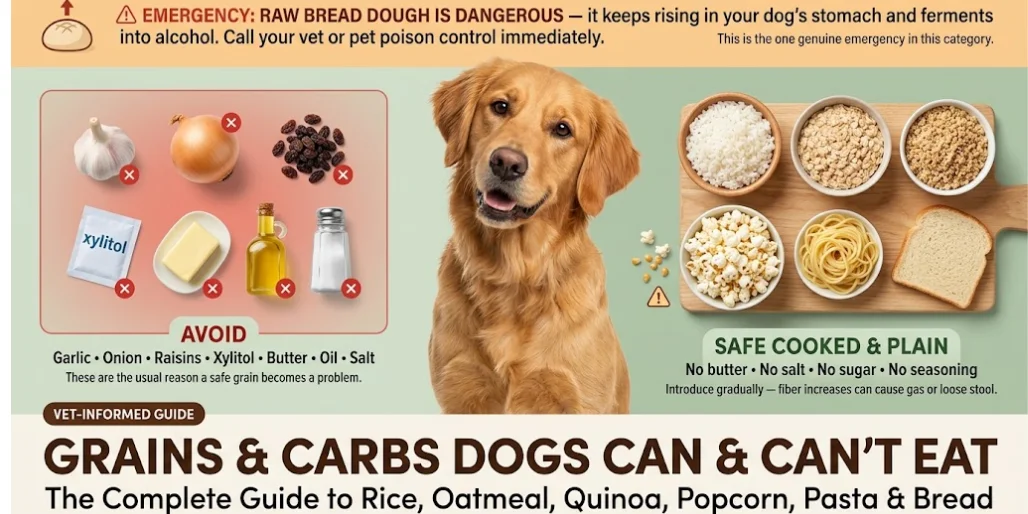
Grains and starches are generally the lowest-risk category in this guide — none of them are toxic to dogs on their own. The problems almost always come from what’s added: butter, salt, sugar, garlic, onion, or in one case, raw yeast dough that keeps rising after your dog swallows it.
Part of the Human Foods Dogs Can and Can’t Eat directory.
The one genuine emergency in this category
Raw bread dough is the exception to “grains are low risk.” If a dog eats raw yeast dough, it continues rising in the warmth of their stomach, which can cause dangerous bloating and stomach distension, and the fermenting yeast produces alcohol that can lead to alcohol poisoning. Contact your veterinarian or an emergency animal poison control line immediately if this happens — don’t wait for symptoms to appear.
Grains and carbs that are safe cooked and plain
| Food | What to watch for | Full guide |
|---|---|---|
| Rice | Plain and cooked; white rice for bland diets, brown for everyday | Can Dogs Eat Rice? |
| Oatmeal | Cook plain in water; avoid flavored instant packets | Can Dogs Eat Oatmeal? |
| Quinoa | Rinse before cooking; serve plain | Can Dogs Eat Quinoa? |
| Popcorn | Air-popped and unsalted; remove unpopped kernels | Can Dogs Eat Popcorn? |
| Pasta | Plain cooked noodles only — never with sauce | Can Dogs Eat Pasta? |
| Bread | Plain baked bread only; raw dough is dangerous | Can Dogs Eat Bread? |
What to avoid across the whole category
- Garlic and onion — common in pasta sauce, garlic bread, seasoned rice mixes, and savory seasonings
- Raisins — found in raisin bread, some oatmeal varieties, and baked goods; toxic to dogs
- Xylitol — appears in some low-carb breads and flavored instant oatmeal
- Butter, oil, and salt — the usual reason an otherwise-safe grain becomes a problem
- Raw or undercooked grains — harder to digest and, in the case of dough, genuinely dangerous
General rules for feeding grains and carbs to dogs
- Cook everything plain, in water, with nothing added.
- Introduce new grains gradually — fiber increases can cause gas or loose stool if added too quickly.
- Grains are calorie-dense for their volume; they should stay a small topper rather than a meaningful portion of the diet.
- Rice and oatmeal are the two worth keeping on hand for short-term digestive support, but a bland diet isn’t nutritionally complete and shouldn’t run for more than a day or two without veterinary input.
- Dogs with known grain sensitivities don’t need any of these foods — nothing here is nutritionally essential.
This article is for general information only and isn’t a substitute for advice from your veterinarian.