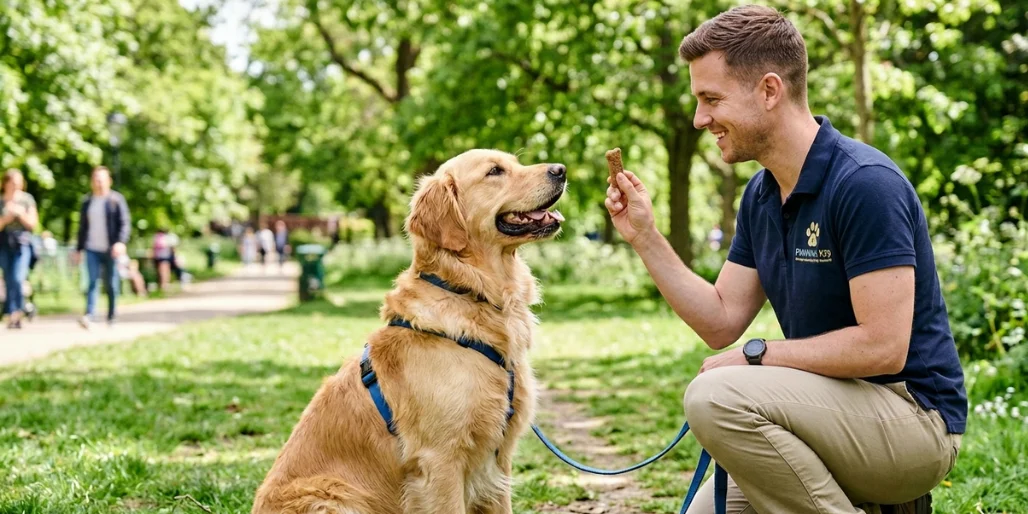
Every dog owner wants a well-behaved companion — one that sits on cue, walks calmly on a leash, and generally makes life easier and more joyful. But getting there requires a thoughtful method of training, and the approach that consistently delivers the best results is positive reinforcement.More and more professional trainers, animal behaviourists, and dog psychology researchers agree: rewarding your dog for good behavior is not just kinder — it is smarter. If you are just starting out, the dog training fundamentals covered in the complete beginner’s guide are the perfect place to build your foundation.
This article explores what positive reinforcement means, how it compares to punishment-based methods, and why it remains the gold standard for training your dog at any age or stage.
What Is Positive Reinforcement in Dog Training?
At its core, positive reinforcement means adding something the dog likes immediately after a desired behavior occurs, making that behavior more likely to repeat in the future. In practical terms, it means that when a dog does something right, it gets something good — a treat, praise, a toy, or a scratch behind the ears.
Positive reinforcement means a dog learns through reward, not fear. When a dog gets excited about training, it is usually because the sessions are fun, predictable, and consistently rewarding. This creates an environment where the dog actively wants to participate and is eager to figure out what earns the next reward.
It is worth noting that positive reinforcement is not the same as bribery. A bribe is offered before a behavior to coax it into happening. Positive reinforcement, by contrast, comes after the behavior — it teaches the dog that a certain behavior leads to something worthwhile, which strengthens the habit over time.
How Positive Reinforcement Works: The Science Behind It
Positive reinforcement works by tapping into the natural way animals learn. Dogs, like all mammals, are wired to repeat behaviors that result in pleasant outcomes and avoid behaviors that lead to discomfort or nothing at all. When training is built around reward, the dog begins to associate specific actions — sitting, staying, coming when called — with something it genuinely enjoys.
This is not just theory. Decades of research in animal behavior and dog psychology confirm that reward-based training builds faster, more reliable results than methods rooted in correction or punishment. Dogs trained using positive reinforcement tend to be more confident, more engaged, and less likely to develop behavioral issues down the line.
A skilled dog trainer using this approach will reinforce correct responses consistently, vary the types of rewards to keep a pup interested, and gradually raise the difficulty of tasks so the dog continues to learn and grow. The result is a dog that is not just obedient — but genuinely happy to work.
Positive Reinforcement vs. Punishment: Understanding the Difference
The Problem With Punishment in Training
When people talk about punishment in a training context, they are usually referring to adding something unpleasant (positive punishment) or removing something pleasant (negative punishment) to discourage a behavior. While punishment can suppress behavior in the short term, it comes with serious drawbacks.
Dogs trained primarily through punishment often show signs of stress, confusion, and even aggression. They may learn to avoid certain behavior out of fear rather than genuine understanding. This is particularly concerning with a reactive dog, where punishment can actually worsen reactivity by pairing already-stressful triggers with further negative experiences.
Correction-based methods may appear to work quickly, but they do not teach the dog what to do — only what not to do. A dog needs to understand the desired behavior, not just avoid the wrong one. Without that clarity, undesirable behaviors often resurface or shift into new bad behaviors.
What Negative Reinforcement Actually Means
Negative reinforcement is frequently misunderstood. It does not mean punishing a dog — it means removing something unpleasant when the dog performs a desired behavior. For example, releasing leash pressure the moment a dog stops pulling is a form of negative reinforcement.
While negative reinforcement and positive reinforcement can both be effective, positive reinforcement tends to produce more enthusiastic responses and creates a stronger emotional association with the behavior. When the choice is between teaching through relief from discomfort versus teaching through genuine reward, the latter builds a more joyful and willing learner.
Positive Punishment vs. Negative Punishment
Positive punishment involves adding an aversive stimulus — such as a physical correction or a sharp verbal “no” — to discourage behavior. Aversives like prong collars or shock devices fall into this category.
Negative punishment, on the other hand, involves taking away something the dog wants. For instance, turning away and withdrawing attention when a dog jumps up on someone is a form of negative punishment — the dog loses access to something it values (attention) and learns that dog jumping leads to the opposite of what it wanted.
Of these four quadrants of learning theory, positive reinforcement and negative punishment tend to be the most humane and effective tools in a trainer’s kit — particularly when used together.
Using Positive Reinforcement: Practical Techniques That Actually Work
Treat Training and Reward Variety
Treat training is one of the most accessible ways to begin using positive reinforcement with a dog. A small, high-value treat delivered immediately after the correct behavior gives the dog instant, clear feedback. Timing matters enormously — the reward should arrive within a second or two of the behavior to ensure the dog makes the right connection.
That said, a treat does not have to be food. Depending on what something the dog wants most in a given moment, the reward might be a game of tug, a quick game of fetch, enthusiastic praise, or a good scratch. Rotating rewards keeps training sessions fresh and prevents the dog from becoming overly dependent on any single type of reinforcement.
Giving your dog a variety of rewards also helps the trainer discover what truly motivates the animal — because not all dogs are food-driven, and a trainer who only relies on one type of reward may struggle with dogs that want something else entirely.
Teaching Basic Commands With Positive Reinforcement
Teaching a dog to sit is one of the clearest examples of positive reinforcement in action. The trainer waits for or lures the dog into a sit position, then immediately marks the moment with a cue word or a clicker and delivers a reward. After enough repetitions, the dog understands that sitting on cue reliably leads to something it values — and the behavior becomes automatic.
From there, positive trainers can layer complexity, introducing duration, distance, and distraction gradually. Each step is small enough for the dog to succeed, and every success is rewarded. This incremental approach is particularly effective when working to teach your dog new tricks or more advanced behaviors like crate manners or potty training.
Managing Reactivity With Reward-Based Methods
A reactive dog — one that barks, lunges, or becomes overwhelmed in certain situations — can be one of the more challenging cases to work through. But positive reinforcement training is arguably the most effective and compassionate way to address reactivity.
The approach typically involves teaching the dog to associate previously triggering stimuli with positive outcomes, building confidence, and training an alternative behavior to replace the reactive response. Using aversive tools or harsh corrections with a reactive dog often backfires, heightening fear and making reactivity worse over time. Aversives may suppress the bark in the moment, but they do not address the underlying emotional state driving the behavior.
Positive reinforcement trainers work calmly and patiently within the dog’s threshold — the distance or intensity at which the dog can still think and respond — gradually helping the dog build a new, calmer association with what once triggered a meltdown.
Is Positive Reinforcement Just a Bribe? Clearing Up the Confusion
One of the most common objections to reward-based training is the idea that it is little more than bribe-based compliance. This misunderstanding is worth addressing directly.
A bribe involves offering a reward before a behavior to coax compliance — the dog sees the treat and then performs the action. Positive reinforcement, by contrast, is delivered after the behavior. The dog performs the action, then receives the reward. Over many repetitions, the behavior becomes a habit — something the dog does reliably even when no treat is visible.
Think of it this way: humans go to work because they get paid, but no one accuses employers of bribing their staff. The reward follows the effort. Positive reinforcement operates on the same logic, and with good timing and consistency, dogs learn quickly that certain behaviors reliably produce good outcomes.
A good trainer will also fade treats gradually over time, replacing them with variable reinforcement schedules — the same mechanism that makes behavior incredibly resistant to extinction. The dog keeps trying because the reward is sometimes there, and it is worth the effort.
Positive Reinforcement and Dog Behavior Modification
Beyond basic obedience, positive reinforcement training is a powerful tool for behavioral issues like separation anxiety, excessive barking, and inter-dog reactivity. These behavioral challenges often have emotional roots, and addressing them requires an approach that helps the dog feel safe, not threatened.
Behavior modification using positive reinforcement involves carefully designed training programs that replace undesirable behaviors with incompatible alternatives, reinforce calm and confident responses, and communicate with your dog in a clear and consistent way. Rather than trying to punish out bad behaviors, this approach builds new, better ones — and those new behaviors become the dog’s default response over time.
Positive reinforcement trainers understand that a dog cannot be forced into a calm emotional state. It has to be taught — through patient repetition, clear reward history, and an environment where the dog feels safe enough to learn.
How to Communicate With Your Dog Using Positive Reinforcement
One of the underrated benefits of positive reinforcement is that it teaches owners how to communicate with your dog more effectively. Dogs do not understand human language the way people sometimes assume, but they are exceptional readers of patterns and outcomes. When training is built on reward, dogs learn to read their owner’s cues accurately — because understanding those cues has consistently led to good things.
A cue — whether a verbal word, a hand signal, or a combination of both — becomes meaningful only because it has been repeatedly paired with reinforcement. This is why positive reinforcement trainers emphasise the need to be consistent with language, timing, and reward delivery. The cleaner and more predictable the communication, the faster and more reliably the dog learns.
This way to communicate also builds the kind of trust and attentiveness that makes a dog a genuine pleasure to live with. A dog that has been trained positively tends to check in with its owner frequently, watches for guidance, and responds eagerly — because doing so has always been worth it.
Choosing a Positive Reinforcement Dog Trainer
Not all trainers use the same approach, and choosing the right one matters. When looking for a dog trainer, it is worth asking directly about their philosophy. Positive reinforcement trainers will be upfront about their methods and will not use tools like shock collars or prong collars.
Look for affiliations with professional dog training associations such as the Certification Council of Professional Dog Trainers or the Association of Professional Dog Trainers, and ask whether the trainer is familiar with current behavioral science. A trainer who dismisses reward-based methods in favour of dominance-based correction should be approached with caution.
Positive reinforcement training is also an excellent training tool for dogs of all ages — from young puppies to senior dogs navigating new behavioral challenges. The belief that dogs cannot exhibit new behaviours or learn new tricks later in life simply does not hold up. A well-structured reward program can reshape behavior at any stage.
The Long-Term Benefits of Positive Reinforcement Dog Training
The rewards of positive reinforcement extend far beyond a dog that can sit and stay on command. Dogs raised with this approach tend to be more confident, more adaptable, and less prone to fear-based behavioral issues. The relationship they develop with their owners is one of genuine trust — a bond built through hundreds of small, positive interactions.
For owners, the benefits are equally real. Positive reinforcement training programs are engaging, accessible, and genuinely enjoyable. There is no need to exhibit dominance, apply physical discipline, or create fear to get results. Instead, owners learn to reinforce the behaviors they want to see more of — and gradually, those behaviors become the norm.
Final Thoughts: Why Positive Reinforcement Remains the Best Way to Train
The evidence is clear. Whether addressing a reactive dog’s struggles, working through separation anxiety, teaching basic obedience, or simply building a stronger bond with a beloved companion, positive reinforcement is consistently the most effective, humane, and sustainable approach to dog training.
It teaches the dog what to do. It makes training sessions enjoyable. It strengthens the relationship between dog and owner. And it produces a safe and happy dog that is not just well-behaved — but genuinely content.
For anyone considering how best to train their dog, the answer starts with a simple idea: reward what is right, and the right things will happen more and more often.