It’s a common misconception that all Labradors are the same, but once you delve into the nuances, you’ll discover distinct differences between the English Lab and the American Lab. This article aims to clarify these distinctions, helping you understand what sets these two beloved types of Labrador Retrievers apart. Whether you’re looking for a new family pet or a working dog, understanding these variations is crucial for making the best choice.
Introduction to Labrador Breeds
Overview of the Labrador Retriever
The Labrador Retriever is one of the most popular dog breeds in the world, renowned for its friendly demeanor, intelligence, and versatility. Originally bred as a hunting dog to retrieve game, especially in water, the Labrador’s trainability and gentle temperament have also made it an exceptional family dog and a top choice for service work. Labrador lovers often praise their Labs for their loyalty and joyful spirit, making them truly beloved companions.
Understanding the Differences: English vs American
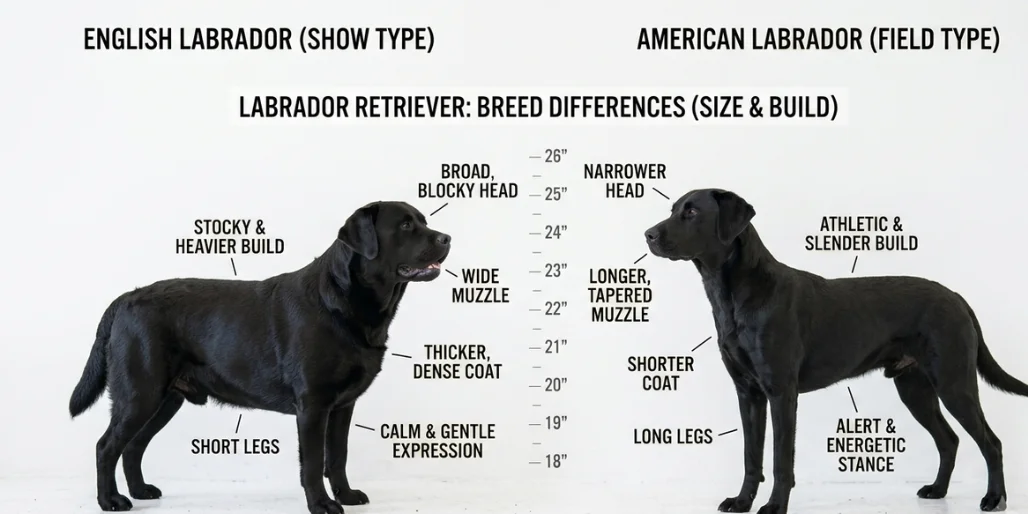
While both are Labrador Retrievers, there are notable differences between English and American Labs that go beyond their geographic origin. The English Lab, often referred to as a British Lab or show Lab, tends to be stockier and bred for conformation, excelling in the show ring. The American Lab, or field Lab, is generally bred for working purposes, such as field trials and hunting, resulting in a leaner and more agile physique.
Importance of Choosing the Right Lab
Choosing the right Lab, whether an English or American type Labrador, largely depends on your lifestyle and expectations for your pup. If you’re looking for a more laid-back family pet with a stocky build, an English Labrador might be a better choice. However, if you’re an active individual seeking a high-energy hunting dog or a canine for agility sports, the American Labrador could be a more suitable fit. Knowing what the difference is will help you find your ideal companion from Pawandbreeds.
Physical Differences Between English and American Labs
Size and Build Variations
When considering the physical characteristics, the most noticeable differences between English and American Labs often lie in their size and build. English Labradors typically possess a stockier, more robust frame, giving them a “blockier” appearance. They are generally shorter in stature but have a broader chest and a more substantial bone structure. In contrast, the American Lab tends to be taller and has a leaner, more athletic build, reflecting its heritage as a working dog bred for greater agility. These American Labradors, often referred to as field Labs, are designed for endurance and speed in the field.
Coat Color and Texture
While both the English and American Labrador Retriever breeds come in the standard colors of black, yellow, and chocolate, there can be subtle differences in their coat texture and appearance. English Labs frequently have a denser, thicker coat that is often described as feeling softer, which is a characteristic that aligns with their show dog lineage. The American Lab, on the other hand, might have a slightly coarser or thinner coat, which is practical for dogs that spend a lot of time retrieving in various outdoor conditions. Despite these minor variations, both types of Labrador maintain the breed standard for a short, dense, and water-resistant double coat.
Distinct Features of Each Breed
Beyond overall size and coat, several distinct features help differentiate an English Lab from an American Lab. English Labradors often have a broader head, a shorter muzzle, and a more pronounced stop. Their “otter tail” tends to be thicker at the base and tapers less dramatically. American Labs are usually characterized by a narrower head, a longer muzzle, and a less defined stop, giving them a more refined, athletic look. Their tails are typically thinner and more tapered, contributing to their streamlined appearance, which is advantageous for a hunting dog or a field trial participant.
Temperament and Trainability
Personality Traits of English Labs
English Labradors are often celebrated for their calm and placid temperament, making them an excellent choice as a family pet. They tend to be more laid-back than their American counterparts, with a gentle disposition that makes them wonderful with children and other pets. This “show type” Lab often exhibits a steady and patient nature, making the English Lab a great companion for those seeking a less intense canine friend. Their reliable temperament contributes to their popularity as therapy and service dogs, showcasing their ability to remain composed in various situations, truly a great family member.
American Lab Temperament Explained
In contrast, the American Lab typically possesses a more energetic and driven temperament. Bred primarily for working purposes, such as hunting and field trials, the American Lab is characterized by its high drive, alertness, and boundless enthusiasm. These “field Labs” are known for their intense focus and desire to retrieve, making them ideal for active individuals or families who can channel their energy into engaging activities. While still affectionate, the American Labrador needs consistent mental and physical stimulation to prevent boredom and ensure it is a well-behaved family dog.
Trainability: Which Lab is Easier to Train?
Both English and American Labradors are highly intelligent and possess a strong desire to please, making them generally easy to train. However, the approach to their training might differ due to their inherent temperamental variations. The English Lab, with its calmer demeanor, might respond well to a more patient and reward-based training style, excelling in obedience and conformation. The American Lab’s high energy and drive make it incredibly eager to learn, but it requires consistent, engaging training sessions to keep its attention, often excelling in agility and advanced retrieve work. Ultimately, the “easier to train” aspect depends more on the owner’s consistency and understanding of their pup’s individual needs.
Energy Levels and Activity Requirements
Comparing Energy Levels of English and American Labs
When comparing the energy levels of English and American Labs, it’s clear there are distinct differences that impact their suitability for various lifestyles. The English Lab, often considered a “show Lab” or “British Lab,” generally has a lower energy level. These Labs tend to be more relaxed and content with moderate exercise, preferring a leisurely walk or some playtime in the yard. In contrast, the American Lab, also known as a “field bred” or “hunting dog,” possesses a significantly higher energy level. These American Labradors are bred for endurance and require substantial physical activity to keep them happy and healthy.
Exercise Needs for Both Breeds
Due to their differing energy levels, the exercise needs for English and American Labradors vary considerably. An English Labrador Retriever typically thrives on at least 30-60 minutes of daily exercise, which can include walks, light jogging, or interactive play. This amount helps them maintain a healthy weight and satisfies their need for mental stimulation. The American Lab, however, demands much more. A minimum of 60-90 minutes of vigorous exercise daily, such as running, swimming, or extensive fetch sessions, is essential to adequately tire out these high-drive dogs and prevent destructive behaviors stemming from boredom or pent-up energy.
Best Activities for Labradors
Regardless of whether you have an English Lab or an American Lab, both types of Labrador Retrievers benefit greatly from activities that engage both their bodies and minds. For the calmer English Labrador, activities like obedience training, puzzle toys, and leisurely walks in varied environments are excellent. They also enjoy swimming and retrieving games. The more active American Lab thrives on high-intensity activities such as dock diving, agility courses, long-distance fetching, and even participating in field trials. Both breeds, being true Labrador lovers, adore water activities, so incorporating swimming into their routine is always a great choice.
Field Trials and Hunting Capabilities
American Labrador in Field Trials
The American Labrador, often celebrated for its exceptional drive and athletic build, truly shines in field trials. These American Labs are purpose-bred to retrieve with incredible speed and determination, making them outstanding competitors. Their high energy level and keen intelligence mean they excel at intricate tasks, such as complex retrieves over various terrains and through water, showcasing the breed’s natural capabilities. A skilled American Labrador in a field trial is a marvel to behold, demonstrating the pinnacle of a working dog’s trainability and instinct, a testament to the dedicated breeding practices of many a good breeder.
English Labrador as a Hunting Dog
While the English Labrador is often associated with the show ring and a calmer demeanor, it’s important to remember that these English Labradors retain their heritage as capable hunting dogs. Their stockier build and steady temperament make them excellent, reliable retrievers, particularly in situations requiring patience and a methodical approach. An English Lab might not exhibit the same explosive speed as an American Lab in a field trial, but its strong desire to retrieve, combined with its biddability, makes it a wonderful companion for bird hunting, especially for those seeking a more composed hunting partner. They embody the classic Labrador Retriever traits.
Choosing the Right Lab for Field Work
Choosing the right Lab for field work ultimately depends on your specific hunting style and expectations. If you desire a dog with intense drive, boundless energy, and the ability to cover ground quickly in demanding field trial scenarios, an American Labrador is likely the better choice. However, if you prefer a more methodical, less high-strung partner for upland bird hunting or waterfowl retrieving that can also double as a calm family pet, an English Lab might be more suitable. Both types of Labrador have the inherent retrieve instinct, but their approaches to field work reflect their distinct breeding.
Conclusion: Selecting Your Ideal Lab
Summary of Key Differences
In summary, the key differences between the English Lab and the American Lab lie primarily in their physical attributes, temperament, and purpose. The English Lab is typically stockier, with a broader head and a calmer disposition, often excelling as a show dog or a more laid-back family pet. Conversely, the American Lab is leaner, taller, and possesses a higher energy level and drive, making it ideal for field trials and as a hunting dog. Understanding these distinctions is crucial when deciding which type of Labrador Retriever best fits your lifestyle and expectations for your new pup.
Final Thoughts on English vs American Labs
Ultimately, whether you choose an English Lab or an American Lab, you are bringing a beloved Labrador Retriever into your home. Both English and American Labs embody the core qualities of the breed: loyalty, intelligence, and an eager-to-please attitude. The “best” choice isn’t about one being inherently superior, but rather about aligning the dog’s characteristics with your family’s lifestyle and activities. An active owner seeking a high-drive partner will lean towards an American Lab, while a family desiring a calmer companion might find an English Labrador to be a better fit.
Pawandbreeds Recommendation
At Pawandbreeds, we understand that finding your ideal Labrador is a significant decision. For those seeking a calm, robust family pet that also does well in conformation, an English Labrador might be the perfect match. If you’re an avid outdoors enthusiast or desire a high-performance hunting dog or field trial competitor, an American Lab would likely be the better choice. We recommend thorough research into a reputable breeder for either type of Labrador to ensure you welcome a healthy, well-socialized pup into your home, ensuring a happy life for both you and your new furry friend.
FAQ’s
Q: lab vs American lab — what’s the difference between an english lab vs american lab?
A: The main difference between an english and an american lab is purpose and build: american labs (often called American Labrador Retriever) are usually leaner and taller — bred for field work and agility — while english labrador retriever types tend to be stockier, blockier heads, and bred more for the show ring and companionship. If you want a dog for hunting and running, an american or working lab may suit you; if you want a calm family pet or showing in the british field lines, an english side lab might be better.
Q: breed standard — how do kennel or american kennel club standards view english lab vs american lab?
A: The American Kennel Club recognizes the Labrador Retriever breed as one standard, but within that standard you’ll see variations: show-bred (often called english types) conform to certain head and body proportions typical of show lines, while many american field dogs are judged more by performance. Kennel clubs measure things like 21.5 to 22.5 inches for certain classes, but you’ll still find overlap between american and english labs.
Q: english lab vs american lab size — are english labs smaller than american labs?
A: Not necessarily; english lab may be a little shorter and stockier, while an american lab may have longer legs and be taller. People often say english labrador retriever are “smaller than american labs” in height but heavier in build. If you want a lanky water dog for field work choose an american field line; for a compact, chill companion choose english types.
Q: what’s the difference when choosing lab puppies — should I get a puppy from a breeder of american or english lines?
A: It depends on your lifestyle. If you want to train for hunting or agility, many american labs are bred for the field and have high energy. If you want a calmer first lab for family life or showing, an english lab may be a better fit. Always ask the breeder about temperament, health tests, and whether the puppies are from working retrievers or bred for the show ring.
Q: lab vs in temperament — are american labs more energetic than english labrador retriever?
A: Generally yes: american labs often have higher drive and are better suited to active owners who like running, hunting, or training. English lab and american lab differences in temperament can be subtle, but english labs are often bred to be more laid-back and people-focused. Labs are often friendly either way — choose based on activity level.
Q: american or working lab — which is better for water work and retrieving?
A: A: Many american field lines are specifically bred as working retrievers and excel at water work thanks to longer legs, leaner bodies, and drive. That said, english types can be great water dogs too, but if serious retrieving or hunting is your goal, look for american field or working lines.
Q: color and types — does a black lab indicate american or english lineage?
A: Coat color (like a black lab) doesn’t reliably show whether a dog is american or english. Both american and english labrador retriever lines produce black, chocolate, and yellow labs. Focus on conformation, temperament, and pedigree rather than color when deciding.
Q: first lab — how do I pick between american lab may be a little more active and an english lab for a family?
A: For a first lab, think about activity, space, and training commitment. If you have a yard and love outdoor sports, an american lab may be a perfect fit. If you want a calmer indoor companion or plan to enter the show ring, an english lab might be better. Either way, choose a reputable puppy from a breeder who health-tests parents and socializes lab puppies.
Q: american and english — can a kennel or breeder mix these lines and what should lab lovers watch for?
A: Yes, breeders sometimes cross american and english lines to balance energy and structure. Lab lovers should ask breeders about health clearances, lineage (american or british field or show lines), and whether the pup’s parents were bred for working retrievers or for conformation. That helps avoid surprises like getting a dog that may be a little higher-energy than you expect.