
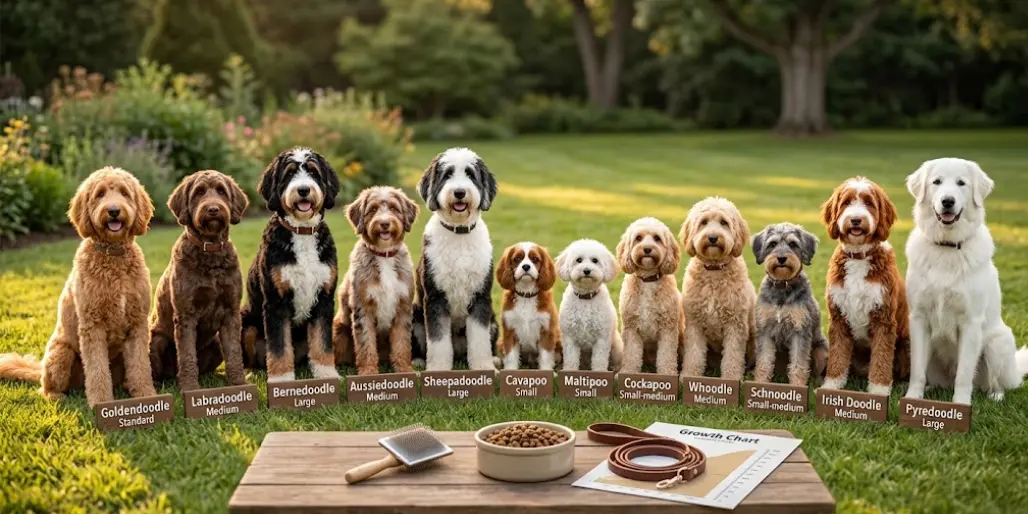
If you are wondering about the exact goldendoodle size, standard adult goldendoodles typically range from 50 to 90 pounds, while smaller variations drop down to just 15 pounds, depending on whether your puppy comes from a standard poodle or a miniature parent. This popular mixed breed combines the loyal golden retriever with an intelligent poodle to create a wonderful family companion.
Overview of Goldendoodle Sizes
What is a Goldendoodle?
A goldendoodle is a beloved hybrid breed created by crossing a golden retriever with a poodle, resulting in a friendly companion that often inherits a low-shedding, hypoallergenic coat. When you visit a reputable breeder, you might see terms like F1, F1B, or multigenerational, which simply describe the genetic makeup and generation of your new puppy.
Importance of Goldendoodle Size
Understanding the typical goldendoodle size is crucial before bringing a puppy home because it ensures your living space can comfortably accommodate an adult dog that might range from toy to standard proportions. Knowing the expected weight and height at the withers helps you plan for exercise needs, supplies, and visits to your veterinarian.
General Size Chart for Goldendoodles
Different goldendoodle sizes span a wide spectrum, usually categorized into petite, mini, medium, and standard categories that fit various lifestyles and homes.
| Size Category | Weight | Height |
| Petite | Under 25 pounds | Around 14 inches |
| Standard | Exceeds 50 pounds | Over 21 inches at the withers |
Types of Doodles
Petite Goldendoodle
A petite goldendoodle is the smallest variety you can find. This tiny pup comes from crossing a miniature poodle with a golden retriever, sometimes adding a touch of cocker spaniel to shrink the overall goldendoodle size down for apartments.
| Weight | Height at the withers |
| Under 25 pounds | About 14 inches |
Medium Goldendoodle
When you want something right in the middle, a medium goldendoodle hits the sweet spot with an adult size typically ranging around 17 inches and weighing up to 45 pounds. If you are exploring various types of doodles, this specific goldendoodle size bridges the gap nicely between tiny companion pups and giant dogs.
F1 vs. F1B Goldendoodles
Understanding the genetic differences between doodle generations helps every breeder explain why certain sizes might have a more hypoallergenic coat and less shedding overall.
| Generation | Composition / Breeding | Coat Characteristic |
| F1 puppy | First-generation mix of a golden retriever and a standard poodle | Standard mix coat |
| F1B | Backcrosses an F1 pup with another poodle | Curlier coat |
Comparison with Other Doodle Breeds
Goldendoodle vs. Aussiedoodle
Comparing your favorite goldendoodle to an energetic Aussiedoodle reveals fascinating differences in their activity level and herding instincts inherited from their distinct parent breeds. While every standard size and smaller goldendoodle loves playing fetch, an Aussiedoodle might need a bit more mental stimulation to keep that clever brain fully satisfied.
Goldendoodle vs. Bernedoodle
Both the friendly goldendoodle and the charming bernedoodle make wonderful family pets, though the bernedoodle mixes in a sturdy Bernese mountain dog instead of a golden retriever. Checking out a helpful Doodle Types & Care guide can show you how each fluffy crossbreed compares regarding weight, temperament, and grooming needs in your home.
Choosing the Right Doodle Breed for You
Picking the ideal dog from any litter depends entirely on your available living space, daily routine, and whether you prefer a tiny puppy or a large companion. PawandBreeds suggests researching every pedigree and consulting a trusted veterinarian to ensure your new furry friend fits your lifestyle perfectly for years to come.
Factors Influencing Goldendoodle Size
Genetics and Parent Breeds
Every single puppy inherits traits from its parent breeds, meaning the specific goldendoodle size largely depends on whether the mother or father was a standard poodle, a mini goldendoodle, or a pure golden retriever. Studying the pedigree and understanding how each first-generation and multigenerational breeding choice affects the final adult size helps every breeder predict what the litter will look like once fully grown.
Nutrition and Health Considerations
Providing proper nutrition during the crucial growth stages keeps your adorable goldendoodle healthy and ensures it develops within the expected weight and size range for its specific variety. Consulting a trusted veterinarian regularly helps monitor your dog, especially if you have a petite goldendoodle or a medium goldendoodle that requires balanced meals to match its daily activity level.
Growth Stages of Goldendoodles
Watching your fluffy doodle grow from a tiny baby into a sturdy adult involves tracking various growth milestones, from standing around 14 inches at the withers to reaching over 21 inches for larger dogs. Different goldendoodle sizes develop at slightly different speeds, so measuring your dog’s height at the withers helps you understand if your pet is progressing normally through each life stage.
Conclusion
Final Thoughts on Goldendoodle Sizes
Choosing the right goldendoodle size ultimately depends on your available living space, lifestyle, and how much time you can dedicate to grooming a hypoallergenic coat. Whether you prefer a tiny dog under 25 pounds or a large companion, understanding these fascinating doodle sizes ensures you make a wonderful choice for your household.
Where to Find More Information
If you want to dive deeper into canine genetics, coat types, and health tips, exploring resources supported by the Goldendoodle Association of North America or checking out official GANA guidelines can be incredibly useful. Always rely on educated professionals and experienced mentors when you are planning to welcome a new furry friend into your family home.
About PawandBreeds
PawandBreeds is dedicated to providing accurate, helpful, and reliable information about all popular hybrid dogs, helping future pet parents understand breed weights, grooming routines, and proper care guidelines with confidence.
FAQ
Q: What are the main doodle sizes you need to know about?
A: When looking at doodle sizes, you generally find toy, miniature, medium, and standard categories depending on the specific parent dog breeds used.
Q: How heavy do standard goldendoodles usually get?
A: Standard goldendoodles are a mix of a golden retriever and poodle, and they typically grow to be over 50 or even 75 pounds as they reach full maturity.
Q: What can you expect from a first-generation cross regarding weight?
A: A first-generation cross like a standard or miniature pairing can be a bit unpredictable, but puppies usually fall somewhere in the middle of their parents’ weight ranges once they finish growing and developing.
Q: Are miniature versions considered a good lap dog?
A: Yes, smaller pups bred down using a toy or miniature poodle often make a wonderful lap dog because they love cuddling just as much as active families love playing with them.
Q: How do size genes impact bernedoodles and other mixes?
A: Size genes are passed down from both parents, meaning mixed dog breeds like bernedoodles can vary wildly in height from the top of the shoulder to the ground depending on whether the non-poodle parent was a giant or small breed.
Q: What is the typical height range for medium-sized pups?
A: Many medium-sized doodles stand around 12 to 15 inches or slightly taller, bridging the gap between tiny companions and large athletic dogs.
Q: How big do f1b doodles get compared to standard puppies?
A: Because f1b doodles have a higher percentage of poodle DNA, they often turn out smaller and more consistent in weight, frequently landing between 26 and 35 pounds for the medium variety.
Q: Can you expect small dogs to reach maturity faster?
A: Generally speaking, small dogs finish growing much earlier than giant breeds, sometimes reaching their adult height of around 24 inches or much less within their first year of life.
Q: Why is monitoring body condition more important than just looking at the scale?
A: Checking your pup’s body condition helps you ensure they stay healthy and affectionate without carrying extra weight, no matter if you own a tiny companion or a giant gentle giant.





