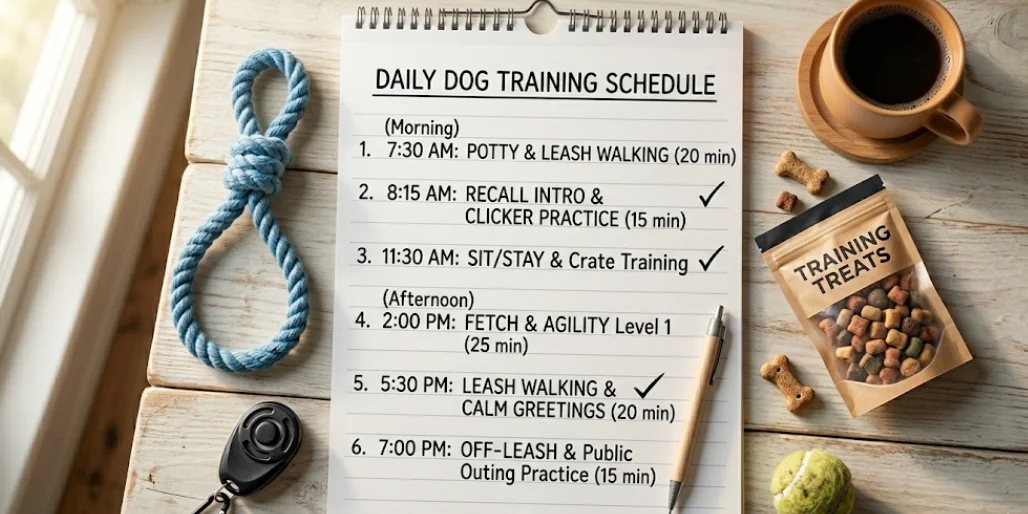
Embarking on the journey of dog ownership is incredibly rewarding, and a crucial part of building a strong bond with your furry friend is through effective dog training. This guide will walk you through how often you should train your dog, offering practical tips and insights — paired with our dog training guide for a complete look at the methods you’ll be practicing during those sessions.
Understanding Dog Training
The Importance of Training Your Dog
Training your dog isn’t just about teaching them tricks; it’s about fostering clear communication and building a harmonious relationship. When you consistently work with your dog, you’re not only instilling good manners but also strengthening your bond and providing vital mental stimulation. A well-trained pup is a happier pup, and a happier pup often means a happier household, free from common behavioral challenges.
Benefits of Early Puppy Training
Starting puppy training early offers a wealth of benefits, setting your young pup up for a lifetime of success. Introducing your puppy to basic obedience and socialization during their formative weeks can significantly impact their future behavior, making them more adaptable and confident. Early training sessions with your dog can prevent undesirable habits from forming and lay the groundwork for learning more complex commands as they grow.
Setting Training Rules for Success
To ensure your training efforts are effective and consistent, it’s essential to set clear training rules from the outset. By creating a structured training environment, you help your pup understand expectations and reinforce new behaviors more efficiently, leading to a much more successful and less confusing learning experience for everyone involved.
| Aspect of Training | Key Action |
| Routine | Establish a consistent schedule. |
| Cues | Decide on specific signals. |
| Family Involvement | Ensure all family members are on the same page. |
Determining Training Frequency
How Often Should You Train Your Dog?
When considering how often to train your dog, there isn’t one definitive answer. However, most dog trainers suggest multiple short training sessions daily, rather than a single long one. This consistent, bite-sized approach helps reinforce new behaviors without overwhelming your dog.
| Dog’s Age | Recommended Session Length & Frequency |
| Young Puppy | Several times a day, 5-10 minutes each time |
| Older Dog | Gradually extend session length as attention span increases |
Factors Affecting Training Frequency
Determining the ideal training frequency for your dog involves several key factors, including their age and your training goals. Always consider your dog’s individual personality and energy levels.
| Factor | Impact on Training Frequency |
| Puppy | Requires more frequent, shorter sessions due to a shorter attention span. |
| Older Dog | Might benefit from slightly longer, less frequent formal sessions. |
| Complex Behaviors / Dog Sports | May require more dedicated training time. |
| Basic Obedience | May require less training time compared to complex behaviors. |
Best Practices for Training Sessions
To make the most of your dog training efforts, focus on creating positive and engaging training opportunities. Keep training sessions with your dog fun and rewarding, using high-value treats and praise to reinforce desired behaviors. Aim for consistency in your daily routine, even if it’s just a few minutes of training each day. Short training sessions are often more efficient ways to train, preventing your pup from getting bored or frustrated. Remember, working with your dog should be an enjoyable experience for both of you, strengthening your bond while teaching essential life skills and impulse control.
Designing Effective Training Sessions
Keeping Training Sessions Short
When you’re thinking about how often you should train your dog, remember that keeping training sessions short and sweet is often the most efficient way to achieve positive results, especially with a young puppy. Long, drawn-out sessions can quickly lead to a loss of attention span and make your pup bored or even frustrated, which isn’t conducive to learning new behaviors. Dog trainers universally recommend aiming for multiple short training sessions throughout the day — a recommendation echoed by the American Kennel Club (AKC), which similarly advises 5-10 minute sessions to keep dogs engaged and prevent frustration. This approach helps to reinforce good habits without overwhelming your furry friend and keeps the process enjoyable for everyone involved, making your daily routine more effective.
Adapting to Your Dog’s Attention Span
A crucial aspect of effective dog training is understanding and adapting to your dog’s individual attention span. A young puppy, for instance, will naturally have a much shorter attention span than an adult dog, meaning puppy training sessions need to be very brief and engaging. As your pup matures, you might find you can gradually extend the training time, but always be mindful of signs of disinterest or fatigue. If your dog starts to wander, sniff, or simply ignores your commands, it’s a clear signal that it’s time to end the training session. Always prioritize quality over quantity when you train your dog to ensure they remain motivated and happy to learn.
Creating Training Opportunities Throughout the Day
You don’t always need to set aside specific, formal training sessions to work with your dog; often, the best training opportunities arise organically throughout your daily routine. Think about incorporating short bursts of basic obedience into everyday activities. For example, ask your dog to “sit” before you put down their food bowl, “stay” before opening the door for a walk, or “come” when you call them from another room. These impromptu moments are efficient ways to train and reinforce good behaviors, helping your pup generalize commands in various contexts. Making training a natural part of your day ensures consistent learning without it feeling like a chore for either of you.
Common Challenges in Dog Training
Addressing Short Attention Span Issues
One of the most common hurdles when you train your dog, especially a puppy, is their often-short attention span. To combat this, dog trainers suggest keeping your training sessions brief and highly rewarding. If your pup starts to lose focus, immediately end the session on a positive note, even if it’s just for successfully completing a simple command. Varying the location of your training can also help keep things interesting and prevent boredom. Remember, consistency in your approach, combined with plenty of praise and high-value treats, will gradually help extend their ability to focus. Don’t push them too hard; small victories are still victories!
When to Adjust Your Training Approach
Knowing when to adjust your training approach is a hallmark of a good dog owner. If you find your dog is consistently struggling with a particular command, or if they seem stressed or unhappy during training sessions, it’s a clear sign that you need to re-evaluate. Perhaps the training time is too long, the environment is too distracting, or the rewards aren’t motivating enough. Sometimes, breaking down a complex behavior into smaller, more manageable steps can make all the difference. Don’t be afraid to experiment with different techniques or seek advice from a professional trainer; flexibility is key to successful dog training and ensuring your pup enjoys learning.
Maintaining Consistency in Training
Consistency is, without a doubt, one of the most critical elements for effective dog training. Whether it’s basic obedience or more advanced commands, maintaining a consistent approach in your daily routine helps your dog understand expectations and reinforces new behaviors. This means everyone in the household should use the same commands, hand signals, and reward systems. Irregular training or conflicting signals can confuse your pup and slow down their learning progress significantly. Even if you can only dedicate a few short training sessions each day, making them consistent and predictable will yield much better results than sporadic, intense bursts of training time.