Crate training your puppy can be one of the most effective ways to ensure they become a well-behaved member of your family. This guide will walk you through everything you need to know, from understanding what a dog crate is to mastering the techniques that will make your pup love their crate.
Understanding the Dog Crate
What is a Dog Crate?
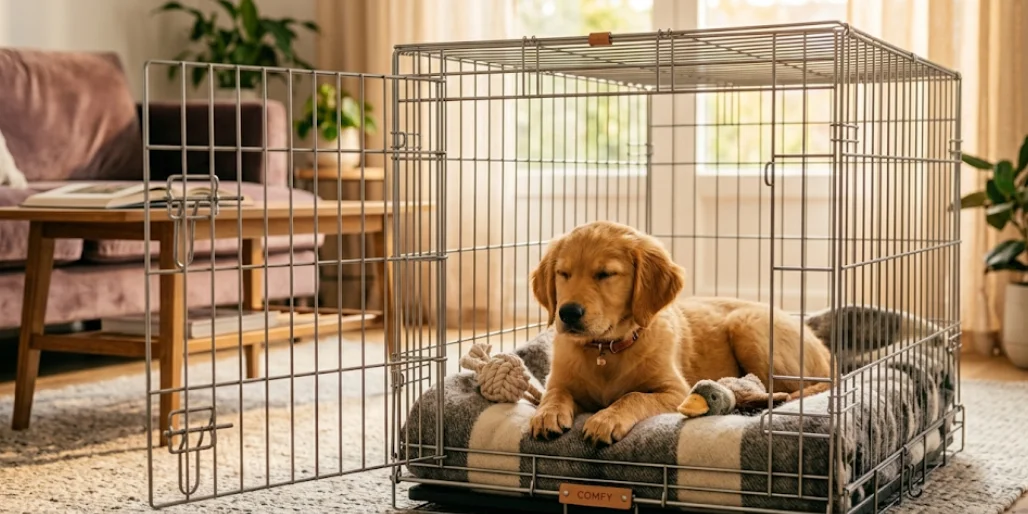
A dog crate, sometimes called a kennel, is essentially a den for your dog, a safe and comfortable space that belongs entirely to them. It’s not a punishment tool, but rather a secure enclosure that serves multiple purposes in your puppy’s development. When you crate train your dog, you’re teaching them to view this space as their personal sanctuary, a place where they can feel safe and relaxed, especially when you need to leave them for short periods of time or while they are sleeping. It’s a fundamental aspect of house training and can significantly reduce stress for both you and your new puppy — see our dog training guide for how crate training fits into your puppy’s broader training foundation.
Choosing the Right Crate for Your Puppy
Selecting the perfect crate for your dog is a crucial first step in the training process. The crate needs to be large enough for your dog to stand up, turn around, and lie down comfortably. If the crate is too big, your pup might be tempted to use one corner as a potty area, which defeats the purpose of potty training. However, it shouldn’t be so small that your dog feels cramped or uncomfortable. Many crates come with dividers, allowing you to adjust the size as your puppy grows, ensuring it’s always the right fit. You want your new puppy to have plenty of room to stretch out without feeling confined.
Benefits of Crate Training
Crate training offers a myriad of benefits that will make your life with a new puppy much easier and more enjoyable. One of the primary advantages is accelerated potty training, as dogs naturally don’t want to soil their sleeping area. When you crate your dog, you’re providing a safe space where they can’t get into trouble, preventing destructive chewing or other unwanted behaviors when left alone. This method can also alleviate separation anxiety, as the crate becomes a positive association, a secure den where your dog feels safe and relaxed. It’s also an invaluable tool for travel, making trips to the vet or visits to friends and family much less stressful for your pup. Ultimately, a well-crate-trained dog loves their crate and sees it as a place of comfort and security.
Steps to Crate Train Your Dog
Step 1: Introducing the Crate
The initial step in this entire training process is to introduce your puppy to the crate in a way that feels natural and non-threatening. You want your new puppy to associate the crate with positive experiences right from the start. Place the dog crate in a high-traffic area of your home, like the living room or kitchen, where your family spends a lot of time. This helps your dog feel like they are still part of the action, even when they are near the crate. Keep the crate door open and secure it so it doesn’t swing shut and potentially scare your pup. The goal here is to make the crate seem like a normal, everyday piece of furniture.
Step 2: Encouraging Your Puppy to Go Into the Crate
Now that the crate is set up, it’s time to gently encourage your puppy to go into the crate. The key is to never force your dog in, as this can create a negative association with the crate. Start by tossing some delicious treats or a favorite toy just inside the door of the kennel. When your puppy retrieves the item, praise them enthusiastically. As your pup becomes more comfortable, toss the treats further back into the crate. You can also place a comfy dog bed or a familiar blanket inside to make it more inviting. The idea is to make the experience of entering the crate a rewarding one, so your dog willingly enters the crate on their own.
Step 3: Building Positive Association with the Crate
Building a strong positive association with the crate is crucial for successful crate training. Once your dog is comfortable going into the crate, begin to feed them their meals inside. Start by placing the food bowl just inside the door, and as they get more accustomed, move it further back. Keep the crate door open during meal times initially. After a few days of successful mealtime experiences, you can try gently closing the crate door for short periods while your dog is eating. Immediately open the door once they’ve finished. This helps your dog understand that the crate is a good place to be and that confinement is not something to fear.
Managing Time in the Crate
How Long Can Your Puppy Stay in the Crate?
Understanding how long your puppy can comfortably stay in the crate is essential for successful crate training. Generally, a puppy can hold their bladder for one hour per month of age, plus one. So, a three-month-old pup can be in the crate for approximately four hours. However, it’s crucial to consider individual needs. Never leave your dog in the crate for longer periods of time than they can manage, as this can lead to accidents and develop a negative association with the crate. Always let your dog out of the crate for potty breaks and exercise at appropriate intervals, ensuring they associate the crate with comfort, not confinement.
Signs of Separation Anxiety and How to Address Them
Separation anxiety can be a real challenge for both you and your new puppy, and the crate training process can sometimes bring these issues to light. If your dog exhibits excessive barking, whining, destructive chewing when left alone in the kennel, or tries to escape the crate, these could be signs of separation anxiety — the same calm-building techniques covered in our guide to reactive dog training can help address the underlying fear driving this behavior. To address this, start with very short periods of time in the crate, gradually increasing the duration as your dog becomes more comfortable — an approach consistent with American Veterinary Society of Animal Behavior (AVSAB) guidance on using gradual desensitization rather than forced confinement to reduce anxiety. Creating a positive association with the crate through treats and toys can also help alleviate these worries.
Dealing with Barking and Whining
It’s normal for a puppy to bark or whine a little when first introduced to the crate, as they adjust to the new environment and the feeling of confinement. The key is to avoid reinforcing this behavior. If your dog is barking or whining, wait until there’s a brief moment of silence before you let your dog out of the crate. Immediately letting your dog out when they are vocal teaches them that barking gets your attention. You can also try covering the dog crate with a blanket to create a den-like atmosphere, making your pup feel more secure. Remember, consistency and patience are vital in helping your dog understand that the crate is a safe and quiet place.
Crate Training for Adult Dogs
Adapting the Training Process for Adult Dogs
Crate training an adult dog follows many of the same principles as training a puppy, but often requires a bit more patience due to established habits. An adult dog may have previous experiences, good or bad, with confinement, so it’s crucial to start fresh and build a strong positive association with the crate. Ensure the dog crate is large enough for your dog to stand up, turn around, and lie down comfortably. Introduce the kennel slowly, just like you would a puppy, making sure the crate door is open and inviting, encouraging your dog to go into the crate with treats and praise.
Overcoming Challenges with Adult Dogs
Adult dogs can present unique challenges during crate training, especially if they have had negative experiences with crates or have never been in one before. An adult dog may resist going into the crate, or they might bark or whine more persistently than a puppy. If your dog barks or whines, it’s important to remember that they are likely expressing discomfort or fear, not defiance. Never use the crate as a negative or punishment tool. Instead, focus on making the dog crate an incredibly rewarding place to be, using high-value treats and toys to lure them in, and gradually increasing the time in the crate.
Maintaining a Positive Association with the Crate
For an adult dog, maintaining a positive association with the crate is paramount for long-term success. Once your dog is comfortable with the crate, continue to make it a pleasant space. Feed meals inside, provide special long-lasting treats only when your dog is in the crate, and ensure it always has a comfy dog bed. Occasionally, leave the crate door open during the day so your dog can enter the crate voluntarily for naps or to retrieve toys, reinforcing the idea that it’s their personal sanctuary. This helps ensure your dog loves their crate and sees it as a safe and happy haven, rather than a place of confinement.