Having a reactive dog can be an incredibly frustrating and often embarrassing experience for any dog owner. Those peaceful walks once envisioned can quickly turn into a stressful dance of avoidance, with a furry friend barking and lunging at everything from other dogs to skateboards. But there is real hope. This article will help owners understand their reactive dog and provide practical dog training tips to manage and modify reactive behavior. For anyone starting from scratch, building this work on a strong dog training foundation makes the entire process more structured and effective.
What is Reactivity in Dogs?
Have you ever wondered why your dog suddenly barks and lunges at what seems like nothing in particular, especially when on a leash? Reactivity in dogs isn’t aggression, but rather an over-the-top reaction to certain triggers in their environment. This can manifest in several ways, including:
- Barking
- Lunging
- Growling
- Pulling
It’s often driven by fear, frustration, or over-excitement, making your dog react intensely to stimuli that other dogs might ignore. Understanding this core concept is the first step in effective reactive dog training.
Understanding Reactive Behavior
Reactive behavior in a dog isn’t about being “bad”; it’s a response to an internal state of arousal or anxiety. A reactive dog often struggles to cope with certain situations, and their barking and lunging are their ways of communicating their discomfort or trying to create distance from a perceived threat. As a dog owner, recognizing that your dog’s needs are unmet in these situations is crucial. Effective reactive dog training focuses on changing how your dog feels about their triggers and providing them with better coping mechanisms.
Common Triggers for Reactivity
Many things can trigger a reactive episode in a dog. Identifying these specific triggers is a vital part of your training plan, as it allows you to anticipate and manage situations to help your reactive dog. Common triggers include:
| Category | Examples |
| Other Animals | Dogs (especially on-leash) |
| People | Strangers |
| Moving Objects | Bicycles, skateboards, cars |
| Sounds | Certain noises |
| Environments | Busy streets, dog parks |
The Role of Body Language
Understanding your reactive dog’s body language is absolutely essential for effective reactivity training. Before your dog barks or lunges, they often display subtle signals like a stiff tail, whale eye, lip licking, or a low growl. Learning to read these early warning signs allows you to intervene before your dog reacts fully, helping them to stay calm. A good dog trainer will always emphasize observing these non-verbal cues to better understand what your dog is trying to communicate and how they truly feel about a situation.
How Can You Train Your Reactive Dog?
Training your reactive dog might seem like a daunting task, especially when dealing with constant barking and lunging on the leash. However, with the right approach and a clear understanding of your dog’s needs, you can make significant progress. The key is to remember that reactive behavior is often a response to fear or overstimulation, not a sign of a “bad” dog. Effective reactive dog training focuses on changing your dog’s emotional response to triggers, helping them to stay calm and confident in various situations. This involves a combination of patience, consistency, and the implementation of proven training methods.
Effective Training Techniques
Several effective training techniques can help your reactive dog manage their responses. Each method offers a unique approach to building your dog’s confidence and focus.
| Technique | Key Focus |
| Desensitization and Counter-Conditioning | Gradually exposing your dog to triggers at a distance while associating them with positive rewards (e.g., treats). |
| Behavior Adjustment Training (BAT) | Allowing your dog to explore and disengage from triggers on their own terms to build confidence. |
| Control Unleashed | Teaching your dog to focus on you amidst distractions, providing coping skills for challenging stimuli. |
The American Kennel Club’s dedicated guide to desensitization and counter-conditioning explains this process in depth — the goal is to shift a dog’s negative emotional association with a trigger into a positive one, starting at a distance where the dog stays under threshold and gradually closing the gap as confidence builds.
Using Positive Reinforcement
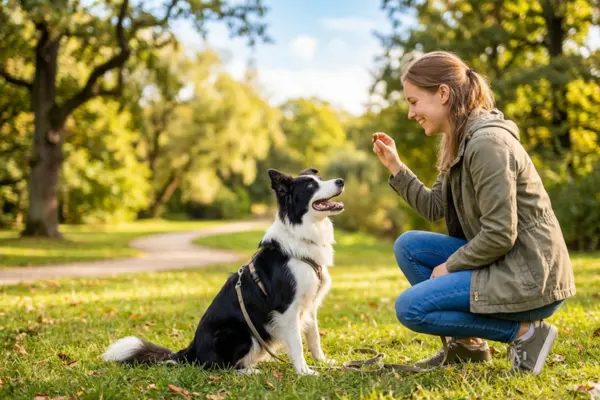
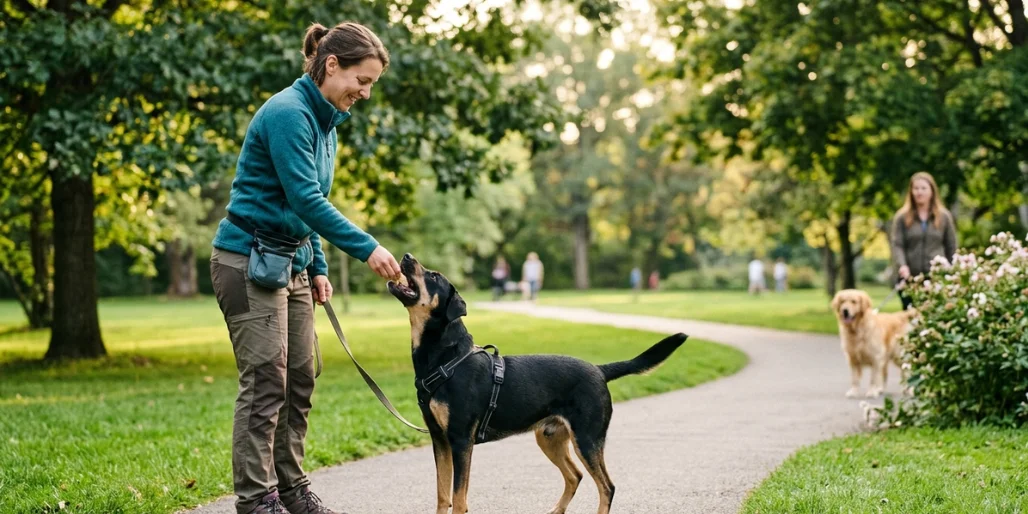
Positive reinforcement is the cornerstone of successful reactive dog training. Instead of punishing your dog for barking or lunging, which can exacerbate their fear or frustration, you reward desired behaviors. When your reactive dog sees a trigger but chooses to look at you, or remains calm, you immediately offer a high-value treat or praise. This teaches your dog that good things happen when they choose a different, calmer response. Using a clicker can be incredibly effective here, as it precisely marks the exact moment your dog performs the desired behavior. This method builds a strong bond between you and your dog and makes training a fun and rewarding experience for both of you. These same calm-focused, marker-based techniques are also central to specialized work like ADHD service dog training, where a dog must learn to stay grounded and responsive even in overstimulating environments.
When to Seek Professional Help
While many dog owners can make significant progress with their reactive dog through consistent home training, there are times when seeking professional help is highly beneficial. If your dog’s reactivity is severe, causing significant stress for both of you, or if you feel overwhelmed and unsure how to proceed, a certified professional dog trainer or a veterinary behaviorist can provide invaluable guidance. They can assess your dog’s specific reactive behavior, identify underlying causes, and develop a tailored training plan. Organizations like the Cornell University College of Veterinary Medicine often have resources or can refer you to qualified professionals who specialize in helping reactive dogs, ensuring your furry friend receives the best possible support.
Why Do Dogs Bark and Lunge?
Identifying the Causes of Barking
Understanding why your reactive dog barks is the first step in effective reactive dog training. Often, barking is a form of communication, but for a reactive dog, it can escalate into a full-blown reactive episode. Your dog might bark out of fear, trying to make a perceived threat, like another dog or a stranger, go away. Sometimes, it’s frustration, especially if your dog is on a leash and can’t reach something it wants to investigate. Over-excitement can also lead to barking, particularly in a young puppy who hasn’t learned appropriate coping mechanisms. Pinpointing the specific trigger and the emotion behind your dog’s bark is crucial for creating a successful training plan that helps your reactive dog.
Understanding Lunging Behavior
Lunging behavior, much like barking, is a strong indicator that your reactive dog is struggling to cope with a situation. When your dog lunges, they are often trying to create distance from something that makes them uncomfortable or attempting to get closer to something they are intensely interested in, but are prevented by the leash. This can be a scary experience for a dog owner and is often a clear sign that your dog feels overwhelmed. It’s a key reactive behavior that needs to be addressed through consistent dog training and behavior modification. Understanding this body language helps you interpret your dog’s needs and tailor your approach to help your reactive dog stay calm.
The Importance of Staying Calm
When your reactive dog barks and lunges, it’s natural to feel stressed or even embarrassed, but maintaining your own composure is incredibly important. Dogs are highly attuned to our emotions, and if you become anxious or tense, it can inadvertently escalate your dog’s reactive behavior. Your dog looks to you for guidance, and if you stay calm, it helps them to also stay calm. A calm dog owner can better assess the situation, manage the leash, and implement the training tips you’ve learned. This creates a more secure environment for your reactive dog and reinforces the idea that their human is a reliable source of safety and reassurance, which is vital for effective reactivity training. A well-managed crate training routine can reinforce this same sense of security, giving your reactive dog a calm, predictable space to retreat to when overwhelmed.
What Are the Benefits of Reactive Dog Training Classes?
Learning in a Controlled Environment
Enrolling your reactive dog in specialized reactive dog training classes offers a wealth of benefits, not least of which is the opportunity to learn in a controlled and structured environment. These classes are specifically designed to manage and mitigate common triggers, ensuring that your reactive dog can practice new skills without being overwhelmed. A certified dog trainer or a professional dog trainer will meticulously set up scenarios where your dog can gradually build confidence and learn to stay calm around other dogs or people, which are often major triggers. This structured approach helps in addressing your dog’s needs effectively, making it easier for your furry friend to stop barking and lunging.
Socialization with Other Dogs
While the idea of socialization might seem counterintuitive for a reactive dog, specialized training classes offer a safe and managed way for your dog to learn to interact with another dog. Unlike crowded dog parks, these classes facilitate controlled exposure where each reactive dog can practice appropriate behavior at a comfortable distance. This progressive socialization helps to change how your dog feels about other canines, fostering more positive associations and reducing their reactive behavior. With the guidance of an expert, your dog can learn to stay calm and confident, moving beyond the fear or frustration that often makes them bark or lunge.
Expert Guidance and Support
One of the most invaluable aspects of reactive dog training classes is the access to expert guidance and unwavering support from experienced professionals. A qualified dog trainer or veterinary behaviorist brings a deep understanding of dog behavior and can quickly identify the root causes of your dog’s reactivity. They provide personalized training tips, show you how to effectively use tools like a clicker, and help you develop a robust training plan. This expert support is crucial for a dog owner who feels overwhelmed, offering not just techniques but also reassurance that you are not alone in helping your reactive dog.
How Can Veterinary Advice Help with Reactivity?
Assessing Health Issues Related to Reactivity
It’s crucial to consider that sometimes, a reactive dog’s behavior might stem from underlying health issues rather than purely behavioral problems. Consulting with your veterinary professional is a vital step in reactive dog training, as they can assess your dog’s overall health and identify any physical discomfort or medical conditions that might contribute to their reactivity. Pain, thyroid imbalances, or even neurological issues can make a dog more irritable or anxious, leading them to bark and lunge more frequently. A thorough veterinary check-up ensures that you’re addressing all potential factors affecting your dog’s needs, helping them to stay calm.
Medication vs. Training: What to Consider
For some reactive dogs, particularly those with severe anxiety or fear-based reactivity, medication might be a valuable adjunct to behavior modification training. Your veterinary professional can discuss whether pharmaceutical intervention could help manage your dog’s emotional state, making them more receptive to dog training efforts. It’s not usually a case of medication versus training, but rather how they can work together to help your reactive dog. Medication can help lower your dog’s overall stress levels, allowing them to learn and practice new, calmer responses without being constantly overwhelmed by their triggers, thus making training your reactive dog more effective.
Integrating Veterinary Insights into Training Plans
Integrating veterinary insights into your reactive dog training plan provides a holistic approach to managing reactivity. When your veterinary doctor weighs in, they can offer crucial perspectives on your dog’s temperament and potential biological predispositions that contribute to their reactive behavior. This collaboration ensures that your training methods are not only effective but also compassionate and tailored to your dog’s unique needs. For instance, if your vet identifies a specific anxiety disorder, your dog trainer can adjust the intensity and pace of training sessions, ensuring your reactive dog receives comprehensive care that addresses both the physical and emotional aspects of their reactivity, helping them to stay calm.