Welcome to My Paw and Breeds, your ultimate resource for dog enthusiasts! If you’re a proud owner of a Newfoundland puppy or considering bringing one into your home, you’ve come to the right place. This guide is specifically crafted to help you navigate the exciting journey of training your gentle giant. For an even more comprehensive resource, check out our pillar page, “dog breeds guide,” where you can find in-depth information on various breeds.
Understanding the Newfoundland Breed
Characteristics of Newfoundlands
The Newfoundland breed is renowned for its majestic size and distinctive appearance, immediately setting it apart from smaller breeds. These giant breeds are often described as having a sweet expression and a thick, water-resistant double coat that requires regular grooming. Their physical characteristics are a testament to their heritage as working dogs, which you can read about in the AKC Newfoundland Dog Breed Information. A Newfoundland dog’s substantial build necessitates a proper training approach to ensure they are well-mannered and easy to manage, even as full-grown adults.
The Gentle Giant: Temperament and Behavior
Newfoundlands are affectionately known as “gentle giants” for a good reason. Their temperament is characterized by extreme patience, loyalty, and a loving nature, making them wonderful family pets. This breed thrives on companionship and forms strong bonds with its human family. While Newfies are generally calm, a Newfoundland puppy still requires socialization and consistent training sessions to channel their natural instincts positively. Their innate desire to please makes them remarkably easy to train, especially with positive reinforcement methods.
Common Misconceptions about Newfies
| Common Misconception | Reality |
| All Newfoundlands constantly drool. | Not always the case, although some do more than others. |
| Due to their size, they are aggressive or difficult to train. | They are one of the most docile and easy-going breeds. |
Training Your Newfoundland Puppy
Welcome back to My Paw and Breeds! Training your Newfoundland puppy is a rewarding journey, essential for both their well-being and your peace of mind. These giant breeds, while known for their gentle nature, still require consistent and early training to ensure they grow into well-mannered companions. From the moment you bring your Newfie puppy home, establishing a clear and positive training approach will lay the foundation for a happy life together. It’s important to train your Newfoundland dog, whether you’re a first-time owner or have experience training other breeds, and remember to use positive reinforcement. For even more insights, refer to our comprehensive “dog breeds guide”.
Why Early Socialization is Crucial
Early socialization is absolutely crucial for your Newfoundland puppy. Exposing your pup to a variety of sights, sounds, people, and other friendly dogs from a young age helps them develop into confident and well-adjusted adults. A well-socialized Newfie is less likely to be fearful or aggressive, making them a joy to live with. Consider enrolling in puppy classes or arranging supervised playdates to ensure your Newfie puppy gets plenty of positive interactions, which is a key component of effective training.
Creating Effective Training Sessions
Creating effective training sessions for your Newfoundland puppy involves consistency, patience, and short, engaging periods. Keep sessions brief, around 5-10 minutes, especially when your pup is young, to maintain their focus. Focus on one or two commands per session and always end on a positive note. A well-structured training approach will make the learning process enjoyable for both you and your Newfoundland, fostering a strong bond and making it easy to train your Newfoundland.
Positive Reinforcement Techniques for Newfoundlands
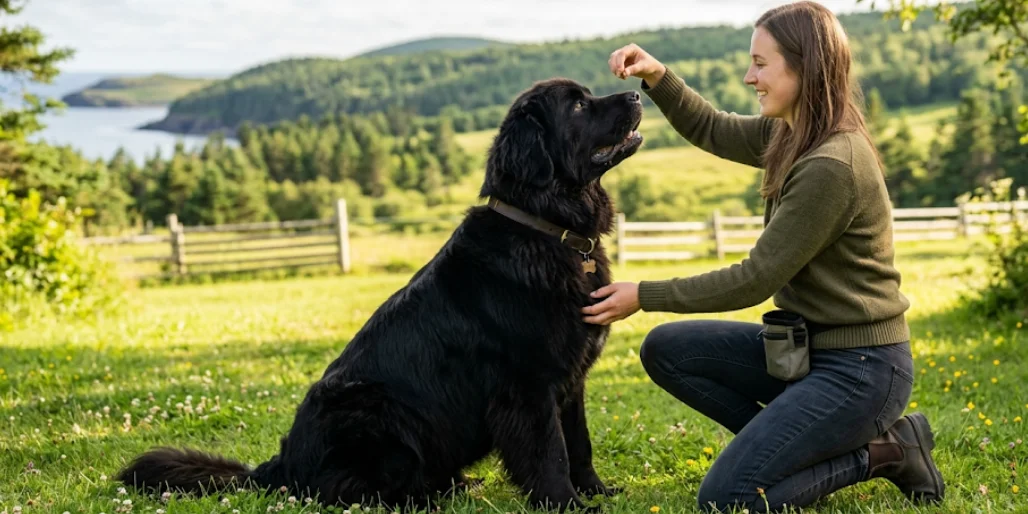
Positive reinforcement techniques are the most effective way to train a Newfoundland. These gentle giants respond wonderfully to praise, treats, and toys as rewards for good behavior. Avoid harsh corrections, which can be counterproductive and damage your Newfie’s trust. Instead, focus on rewarding desired actions, such as sitting quietly or coming when called. This approach encourages your Newfoundland to repeat good behaviors, making training a positive experience for your gentle giant.
Newfoundland Training Tips
How to Handle Drooling Issues
| Action | Purpose |
| Keep a “drool rag” handy | Especially after your Newfie drinks or eats |
| Provide a raised food and water bowl | May help minimize mess |
| Regularly clean your Newfoundland’s face and jowls | Important for hygiene and to prevent skin irritation |
| Consult your veterinarian | If excessive drooling is a concern |
Exercising Your Newf: How Much is Enough?
Newfoundlands need moderate physical exercise to stay healthy and happy, but it’s important not to over-exercise a growing Newfoundland puppy to protect their developing joints. Daily dog walks, around 30-60 minutes, are usually sufficient for an adult Newf. They also enjoy swimming, a natural activity for this working breed. Mental stimulation through puzzle toys and training sessions is just as important as physical exercise for these intelligent dogs, preventing boredom and destructive behaviors.
Grooming Your Newfoundland: Best Practices
Grooming your Newfoundland is a significant commitment due to their thick double coat. Regular brushing, several times a week, is essential to prevent mats and reduce shedding. Bathe your Newf as needed, using a shampoo appropriate for dogs. Pay special attention to their ears, cleaning them regularly to prevent infections. Early training to tolerate grooming sessions will make the process much easier for both you and your Newfoundland dog throughout their life, ensuring they stay comfortable and healthy.
Challenges in Training a Newfie
Common Behavioral Issues and Solutions
| Behavioral Challenge | Recommended Approach |
| Leash Pulling | Early training with a front-clip harness or head halter to teach polite walking. |
| Stubbornness | Train with consistency and patience, reinforcing desired behaviors with positive rewards. |
Staying Positive During Training
Staying positive during training is paramount, especially when working with a sensitive breed like the Newfoundland. Frustration can be counterproductive and may even damage the bond you share with your Newfie. Remember that every Newfoundland puppy learns at their own pace, and setbacks are a normal part of the process. Celebrate small victories, keep training sessions short and fun, and always end on a high note. Your positive attitude will encourage your Newfoundland to engage more readily and make the entire training experience enjoyable for both of you, strengthening your relationship with your gentle giant.
Help Training: When to Seek Professional Assistance
While Newfoundlands are generally easy to train, there might be times when professional assistance is beneficial. If you’re encountering persistent behavioral issues that you’re struggling to resolve, such as excessive barking, separation anxiety, or aggression, it’s wise to seek out certified dog trainers. A professional can provide a tailored training approach and identify underlying causes for specific behaviors. The Newfoundland Club of America or your veterinarian can often recommend reputable trainers specializing in giant breeds, ensuring your Newfie receives the best possible guidance and support.
Conclusion
Recap of Key Training Tips for Newfoundlands
To recap, successfully training your Newfoundland involves a blend of early socialization, consistent positive reinforcement, and understanding the unique characteristics of this gentle giant breed. Remember to keep training sessions short and engaging, celebrate progress, and always maintain a positive attitude. Addressing common issues like leash pulling with appropriate tools and patience is crucial. Regular grooming and moderate physical exercise are also vital for your Newfie’s overall well-being. By following these Newfoundland training tips, you’ll foster a strong bond and raise a well-behaved companion.
Final Thoughts for Newfie Owners
As a Newfie owner, you’re embarking on a wonderful journey with one of the most loving and loyal breeds. Living with a Newfoundland is a truly rewarding experience, marked by their affectionate nature and gentle spirit. While there are challenges, the dedication you put into early training and socialization will pay dividends, resulting in a well-adjusted and happy Newfoundland dog. Embrace every moment with your furry friend, cherishing the unique joy that only a Newfoundland can bring into your life. My Paw and Breeds is here to support you every step of the way!
Resources for Further Reading: The Dog Breeds Guide
For those eager to delve deeper into the world of dog training and breed-specific information, My Paw and Breeds offers a wealth of resources. Our comprehensive “dog breeds guide” is an invaluable tool for any dog owner, providing detailed insights into various breeds, including Newfoundlands. You can find more Newfoundland training tips, advice on common Newfie issues, and general dog care information to help you along your journey. Whether you’re a first-time Newfie owner or an experienced enthusiast, our pillar page is designed to enhance your knowledge and support your dog ownership experience.
FAQ’s
Q: How easy to train is a newfoundland dog compared to other breeds?
A: Newfs are known for being patient and eager to please, so many owners find them relatively easy to train. That said, because they’re big and strong and can be a bit stubborn, consistent short sessions and positive reinforcement work best. Start training early—ideally when your puppy is a month old or as soon as you bring them home—to avoid problems later and to build good habits for adult Newfoundlands.
Q: When should you start training a newfoundland dog puppy and what’s the best training time?
A: Start training as early as a month old with very gentle, fun sessions. Puppies have short attention spans, so several 5–10 minute sessions a day are better than one long one. Keep training time consistent in your daily routine and focus on basics like sit, recall, and leash walking to set the foundation for a well-trained adult Newfoundland.
Q: How much exercise do newfoundlands need and what kinds of exercise are best?
A: Newfoundlands need moderate, low-impact exercise, especially while their growing bones and growth plates are developing. Gentle walks, supervised play time, and swimming are great. Avoid high-impact activities and long runs until they’re fully grown and mature to protect growing joints and growth plates from injury.
Q: Are newfoundland dogs easygoing in the home and do newfoundlands are affectionate?
A: Yes — Newfoundlands are affectionate dogs and typically very calm indoors. They love family time and are gentle with kids, earning them the “gentle giant” reputation. Socialization and training help them be confident and less barker-prone, so they remain friendly as adult Newfoundlands.
Q: How do I stop pulling on the leash with a newfoundland and teach leash walking skills?
A: Teach leash walking early using positive reinforcement: stop or change direction when your dog pulls, reward them when they walk nicely. Use a sturdy harness if needed, and practice around low-distraction areas before tackling distractions like other dogs or squirrels. Consistency and short practice sessions make leash walking much easier for big and strong Newfs.
Q: What should I know about grooming and veterinary care for a newfoundland dog?
A: Newfoundlands have a thick double coat that needs regular brushing and occasional trips to a groomer to prevent mats. They also need routine veterinary care for vaccinations, joint checks, and monitoring of growth plates while young. Work with a trusted breeder and vet to follow a health plan—keeping on top of grooming and veterinary care helps prevent problems later.
Q: How do I plan exercise and play time without harming growing bones and joints?
A: Keep activity low-impact while they’re growing—short walks, gentle swimming, and supervised play time are ideal. Avoid jumping and repetitive high-impact activities that can stress growing joints and growing bones. Once your newfoundland is fully grown and mature, you can slowly increase intensity under vet guidance.
Q: How can I tell if the breed is right for me and what should newfoundland owners expect?
A: Consider space, grooming commitment, and strength—Newfoundlands are big, affectionate dogs that need regular care and moderate exercise. Talk to a reputable breeder or meet adult Newfs to see temperament. If you’re ready for a calm, loyal companion who loves family life and water work, this breed might be perfect. Expect training, vet visits, and lots of cuddles in return.