It’s a question many dog owners ponder: can our furry friends enjoy a bite of our beloved pasta? While the image of Lady and the Tramp sharing spaghetti is iconic, the reality of feeding human food to our pups often requires a closer look. Let’s delve into whether dogs can indeed eat pasta and if it’s truly safe for them.
Understanding Pasta and Dogs
What is Pasta?
Pasta, in its simplest form, is a staple food made from an unleavened dough of wheat flour, water or eggs, and often enriched with vitamins and minerals. It comes in countless shapes and sizes, from spaghetti to macaroni, and is a significant source of carbohydrates in many human diets. This versatile ingredient forms the base of many delicious meals enjoyed worldwide.
Can Dogs Eat Pasta?
The short answer is yes, dogs can eat pasta, but it’s crucial to understand the nuances. Plain pasta, cooked without any sauces, seasonings, or added ingredients, is not toxic to dogs. While it’s not a natural part of a dog’s diet, offering a small amount of plain cooked pasta as an occasional treat is generally considered safe for dogs. However, moderation is key to prevent any potential issues.
Health Benefits of Pasta for Dogs
While plain pasta isn’t packed with essential nutrients vital for a dog’s nutritional needs, it does offer a source of carbohydrates, which can provide a quick burst of energy. However, it’s important to remember that dog food is specifically formulated to meet their comprehensive dietary requirements. So, while pasta might offer a slight energy boost, it lacks the broader nutritional value that a balanced dog food provides for your pooch’s overall well-being.
Types of Pasta Dogs Can Eat
Cooked Pasta vs. Raw Pasta
When considering whether dogs can eat pasta, the preparation makes a significant difference. Cooked pasta, specifically plain noodles cooked without any sauce, salt, or other seasonings, is generally safe for dogs in small amounts. Raw pasta, however, should always be avoided as it can be difficult for a dog’s digestive system to break down and may pose a choking hazard. Always ensure any human food you feed your dog is properly prepared and free from ingredients that are toxic to dogs.
Different Noodle Varieties
Most common noodle varieties, like macaroni, penne, or fusilli, are essentially made from similar base ingredients – wheat flour and water or eggs. Therefore, if a dog can eat pasta, they can generally eat these different noodle varieties, provided they are plain and cooked. The key is to avoid any fancy pasta types that might contain added ingredients such as garlic or onion, which are harmful to pups. Always opt for the simplest, plainest options to ensure it’s good for dogs.
Feeding Your Dog Spaghetti
Many dog owners wonder, “Can dogs eat spaghetti?” Just like other pasta shapes, dogs can eat spaghetti as long as it’s plain and cooked. The image of Lady and the Tramp sharing a plate of spaghetti might be endearing, but remember that the spaghetti in that scene was likely plain. If you decide to feed your dog spaghetti, ensure it’s cooked without any sauce, especially those containing ingredients such as garlic or excessive salt, which are bad for dogs and can lead to digestive upset or more serious health issues.
Considerations When Feeding Pasta to Dogs
How Much Pasta is Too Much?
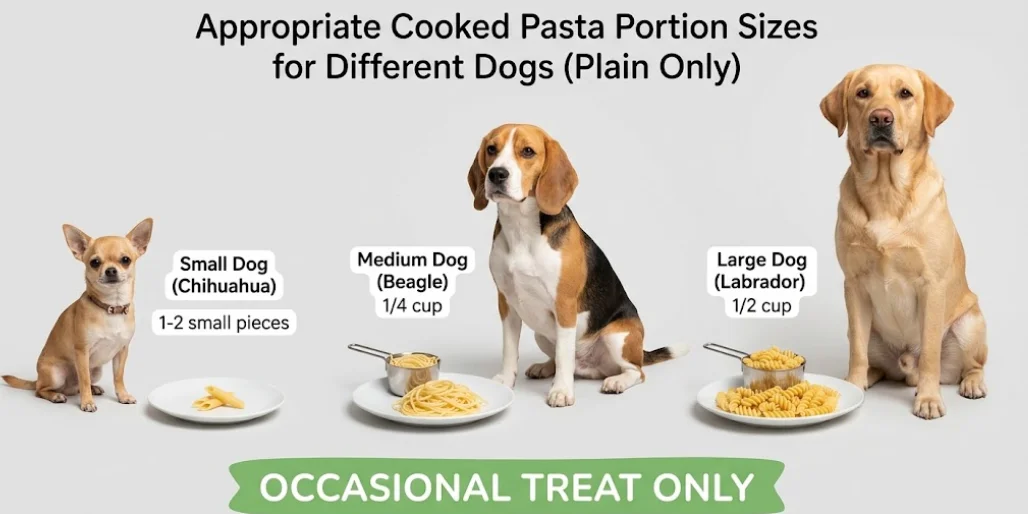
While it’s true that dogs can eat pasta in moderation, knowing how much pasta is too much is crucial for their well-being. A small amount of plain, cooked pasta, served as an occasional treat, is generally safe for dogs. However, due to its high carbohydrate content, excessive consumption can lead to weight gain and provide little nutritional value compared to their regular dog food. Always remember that pasta should never replace a balanced dog’s diet.
What Sauces are Safe for Dogs?
This is where many pet owners go wrong; while plain noodles are not toxic to dogs, most human food sauces are bad for dogs. Sauces often contain ingredients such as garlic, onions, excessive salt, or artificial sweeteners, all of which are harmful or toxic to dogs. For example, garlic and onions can cause red blood cell damage. To ensure the safety of your pup, always avoid feeding your dog pasta with any sauce. Stick to plain pasta cooked without sauces or salt.
Signs of Pasta Intolerance in Dogs
Even if pasta is generally considered safe for dogs, some pups might develop an intolerance or a wheat allergy. Signs of pasta intolerance in dogs can include digestive upset like diarrhea, vomiting, or excessive gas. Skin irritations, such as itching or rashes, could also be indicators of an adverse reaction. If you notice any of these symptoms after your dog eats pasta, it’s best to consult your veterinarian to rule out any underlying issues.
Conclusion
Final Thoughts on Dogs Eating Pasta
In conclusion, dogs can eat pasta, but it should always be plain, cooked, and offered in small amounts as an occasional treat. While plain pasta is not toxic to dogs and offers a carbohydrate boost, it doesn’t contribute significantly to a dog’s nutritional needs. Always prioritize your dog’s diet with specially formulated dog food, and consult your veterinarian if you have any concerns about introducing new human food to your pooch.
Explore More About Feeding Your Dog
Understanding what human foods are safe for your furry friend is a big part of being a responsible pet owner. If you’re curious about other dietary considerations beyond whether dogs can eat pasta, we have a wealth of information. For instance, delve deeper into the complexities of grains and carbohydrates in a dog’s diet by checking out our guide on “Grains & Carbs Dogs Can and Can’t Eat” to make informed choices for your companion.
Pawandbreeds: Your Guide to Pet Nutrition
At Pawandbreeds, we’re dedicated to helping you navigate the complexities of pet nutrition, ensuring your dog receives the best possible care. From understanding whether dogs can eat noodles to deciphering intricate dietary needs, our goal is to empower pet owners with reliable information and expert advice, fostering happier, healthier lives for their beloved companions.
FAQ
Q: Can dogs eat pasta or noodles in general?
A: Yeah, so whether dogs can have pasta is a pretty common question and the short answer is: plain pasta is generally okay in small amounts. It’s not toxic, so your dog won’t keel over if a piece of noodle ends up in their dog’s food bowl by accident. But that doesn’t mean it’s something you should make a regular part of their diet.
Q: Is pasta actually good for dogs?
A: Not really, no. Pasta is usually just carbs made from eggs and flour, sometimes eggs and water, so it doesn’t offer much nutritional value for your pup. It won’t necessarily hurt the dog if given occasionally, but it’s definitely not something that contributes to their health and wellbeing in any meaningful way. Think of it as an empty-calorie treat rather than something nutritious like the stuff you’d find in a bag of Purina.
Q: Can dogs eat noodles safely, and does it matter what kind?
A: Dogs eat noodles just fine in most cases, as long as they’re plain and cooked. Egg noodles, rice noodles, regular wheat noodles – these are all dog-safe when served without seasoning. The problems come in when noodles or spaghetti are covered in sauces, salt, or other extras that aren’t meant for canine tummies.
Q: Can dogs eat spaghetti specifically?
A: Sure, dogs eat spaghetti without much issue as long as it’s plain. The real danger with letting dogs eat spaghetti is usually the toppings. Garlic sauces need to be avoided completely since garlic is toxic to dogs, and a lot of spaghetti sauces are also high in sugar or loaded with onions, which are both harmful foods for pups. Plain noodles, though? Totally fine as an occasional bite.
Q: What happens if a dog eats raw pasta?
A: If your dog manages to eat raw pasta off the counter or out of the pantry, don’t panic. It’s not going to poison them, but raw pasta is hard and dry, so it can be tough to digest and might cause some stomach upset or even cause gas. It’s best to keep pasta boxes out of reach of your dog’s inquisitive nose just to avoid the mess and mild tummy troubles.
Q: How much pasta is too much for a dog?
A: This is where the “how much is too much” question really matters. A small piece of noodle here and there isn’t a big deal, but large quantities of pasta can lead to weight gain and mess with your dog’s weight and health over time, especially since it’s mostly carbs with little nutritional value. Pasta should never replace your dog’s normal balanced diet – it’s an occasional extra, not a meal replacement.
Q: Are there dogs who shouldn’t eat pasta at all?
A: Yep, some dogs have an intolerance to grains, and pasta is basically all grain. If your dog has a sensitive stomach, allergies, or a known grain intolerance, it’s best to skip sharing noodles with them altogether. Signs of a problem include itching, diarrhea, or excessive gas after eating it – if you notice any of that, just cut it out of their diet completely.
Q: Is it okay to make sharing noodles with my dog a regular habit?
A: Honestly, it’s better as an occasional thing rather than a regular part of their meals. Since pasta doesn’t offer much nutritional value, constantly sharing noodles can crowd out the healthier, more nutritious food your dog actually needs. Stick to it as a rare treat and your dog’s health and wellbeing will thank you.
Q: What’s the safest way to feed my dog pasta?
A: Keep it plain and simple – no sauce, no salt, no seasoning. Cooked plain noodles in small amounts are the safest bet. Avoid anything with garlic sauces, cream, cheese, or heavy spices. A tiny bit mixed into their regular food occasionally is fine, but it shouldn’t become something they expect daily.
Description: