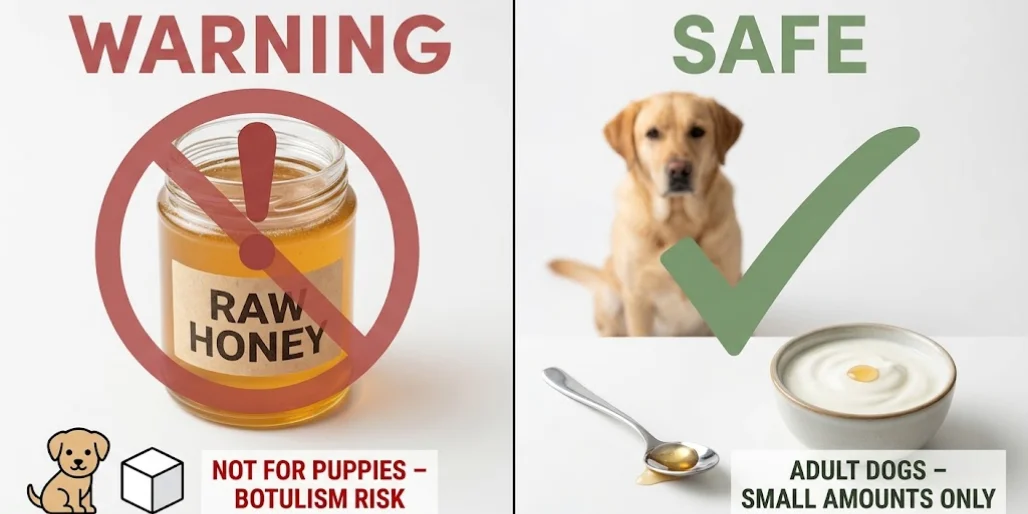
It’s a common question among pet parents: Can dogs eat honey? The short answer is yes, dogs can eat honey, and in small amounts, it can even offer some health benefits. However, like any human food, there are important considerations regarding the type, quantity, and frequency of giving honey to your canine companion to ensure it’s safe and beneficial.
Understanding Honey for Dogs
What is Honey?
Honey is a natural, sweet substance produced by bees, widely recognized for its various culinary and medicinal uses for humans. It is primarily composed of sugars like fructose and glucose, along with trace amounts of vitamins, minerals, and antioxidants. For dogs, honey is generally safe when given in moderation, but it’s crucial to understand its composition and potential impact on their digestive system and overall health before you decide to give your dog honey.
Types of Honey Safe for Dogs
When considering what types of honey are safe for dogs, raw honey is often recommended due to its preserved natural enzymes and nutrients, which are usually destroyed during pasteurization. Local honey is also a good option, as it may contain pollen specific to your area, potentially helping adult dogs with seasonal allergies, similar to its proposed benefits for humans. Manuka honey, known for its potent antibacterial properties, can also be beneficial, but any pure, unadulterated honey in small amounts can be suitable for your furry friend.
How Honey Can Help Dogs
There are several ways honey can help dogs, offering a surprising array of health benefits. For instance, dogs with a sore throat or kennel cough may find relief from the soothing properties of honey, as it can help calm irritation. Although honey is high in sugar, a small amount of honey can provide a quick energy boost. Honey also possesses antibacterial and anti-inflammatory properties, which can aid in minor wound healing when applied topically, or support a dog’s immune system when given orally in moderation.
Benefits of Honey for Dogs
Honey Helps with Allergies
Many pet owners wonder if honey can help with allergies in dogs, and there’s growing anecdotal evidence suggesting it might. Local honey, in particular, may contain small amounts of local pollen, which could potentially help adult dogs build a tolerance and reduce allergic reactions over time, similar to how it’s believed to work in humans. However, it’s essential to remember that while honey may offer some relief, it’s not a cure-all for severe allergies, and professional veterinary advice should always be sought.
Honey for Dogs with Kennel Cough
Honey can be a soothing remedy for dogs suffering from kennel cough, which often causes a harsh, dry cough and a sore throat. The thick consistency of honey helps to coat the throat, providing temporary relief from irritation and reducing the frequency of coughing. While honey can alleviate symptoms and make your dog more comfortable, it’s crucial to consult a vet for a proper diagnosis and treatment plan, as kennel cough can sometimes lead to more serious respiratory issues.
Nutritive Value: What Honey Contains
Honey is a natural sweetener that contains a variety of beneficial components beyond just sugar. It’s packed with natural sugars like fructose and glucose, which provide a quick energy boost. Additionally, honey contains trace amounts of vitamins such as B vitamins and minerals like calcium, iron, and potassium. It also boasts antioxidants, which can contribute to overall cell health. Raw honey, in particular, retains more of these valuable enzymes and nutrients, making it a potentially more beneficial option to give your dog.
Feeding Honey to Dogs
How Much Honey Can Dogs Eat?
Determining how much honey dogs can eat is crucial to ensure their safety and avoid potential health issues. For most dogs, a small amount of honey, such as a half to a full teaspoon per day for larger dogs, or even less for smaller breeds, is generally considered safe. It’s important to start with very little honey and monitor your dog for any adverse reactions. Overfeeding honey can lead to weight gain or digestive upset due to its high sugar content, especially for diabetic dogs.
How to Safely Feed Honey to Dogs
To safely feed honey to dogs, always introduce it gradually and in small quantities. You can mix a tiny bit of honey into their regular dog food, or offer it as an occasional treat. Ensure the honey is pure and unadulterated; raw honey is often preferred as it retains more nutrients. Avoid giving honey to puppies or dogs with compromised immune systems due to the potential presence of botulism spores in raw honey. Always consult your vet if you have any concerns or if your dog has underlying health conditions.
Local Honey: Is It Better?
Many wonder if local honey is better for dogs, especially concerning allergies. The theory is that local honey contains pollens specific to your area, and consuming these pollens in small amounts could help adult dogs build immunity to seasonal allergies. While the scientific evidence for this is limited, many pet owners believe in its benefits. If you choose to use local honey, ensure it’s raw and unpasteurized to maximize any potential advantages, and always remember that a small amount of honey is key.
Risks of Honey for Dogs
When Honey Can Be Bad for Dogs
While we’ve discussed the many benefits of honey for dogs, there are instances when honey can be bad for dogs. For instance, because honey contains a lot of sugar, it can be particularly detrimental for diabetic dogs, as it could spike their blood sugar levels. Puppies and dogs with compromised immune systems should generally not be given raw honey due to the potential presence of botulism spores, which their undeveloped or weakened systems may not be able to fight off. Always use caution when considering giving honey to your dog.
Signs of Allergic Reactions in Dogs
Although honey is generally safe for dogs, some may experience allergic reactions. It’s important to be vigilant for signs of an allergic reaction in your dog after they consume honey. These can include symptoms like vomiting, diarrhea, swelling around the face or muzzle, hives, or difficulty breathing. If you observe any of these signs, stop giving honey to your dog immediately and contact your veterinarian. Starting with a very small amount of honey allows you to monitor for any adverse effects closely.
Consulting Your Vet Before Feeding Honey
Before you feed honey to your dog, it is always a wise decision to consult your veterinarian. They can provide personalized advice based on your dog’s specific health profile, including any pre-existing conditions like diabetes or allergies, and discuss the benefits and risks. Your vet can also help determine the appropriate amount of honey, if any, and guide you on the best type of honey to give your dog. This ensures that any use of honey for dogs is safe and beneficial for their health.
Conclusion
Final Thoughts on Dogs and Honey
In conclusion, while dogs can eat honey and it offers several health benefits—from soothing a sore throat or kennel cough to providing antioxidants—it’s crucial to exercise moderation and awareness. A small amount of honey can be a beneficial treat, but its high sugar content means it’s not suitable for all dogs, especially those with diabetes or puppies. Always observe your dog for any adverse reactions and remember that raw honey comes with its own considerations.
References to Further Reading
For those interested in learning more about what foods are safe or unsafe for their canine companions, a comprehensive resource is the “Toxic Foods & Sweets Dogs Can and Can’t Eat” guide. This will provide further insight into protecting your dog’s health beyond just understanding the benefits and risks of honey. Always prioritize reliable information when making dietary choices for your pet to ensure their well-being.
Pawandbreeds: Your Trusted Source for Pet Care
Pawandbreeds is dedicated to providing pet owners with accurate, reliable, and up-to-date information to help you make the best decisions for your beloved companions.
FAQ
Q: Can dogs eat honey safely?
A: Yeah, for the most part dogs can eat honey in small amounts. Most healthy adult dogs handle a little bit of raw honey just fine. That said, you always wanna check with your vet first, especially if your pup has any health issues like diabetes or a weakened immune system, since honey isn’t exactly a health food for every dog out there.
Q: Is honey good for dogs or just empty calories?
A: Honey isn’t just sugar water, it actually has some potential benefits. There are antioxidants and enzymes found in honey that might help with allergies and give a little immune boost. But don’t go thinking it’s some miracle cure, the high sugar content in honey means it should stay a treat, not a daily supplement.
Q: What kind of honey should I give my dog?
A: Raw, unpasteurized honey is generally the better choice if you wanna use honey for any potential benefits. Processed honey from the grocery store shelf often has less of the good stuff since it’s been heated and filtered. Just remember raw honey shouldn’t be given to puppies or dogs with compromised immune systems because of botulism spore risks.
Q: How much honey can I feed my dog?
A: A general rule of thumb is about a teaspoon of honey for a medium-sized dog, and even less for smaller breeds. If you’re just starting to introduce honey into your dog’s diet, start small like a quarter teaspoon and watch how they react before giving more.
Q: Can honey be used to treat allergies in dogs?
A: Some owners swear that local honey helps with seasonal allergies, kinda like it works for humans. The theory is that small exposure to local pollen through honey helps build tolerance. There’s not a ton of hard science backing this up for dogs specifically, but it’s a popular reason people start adding honey to your dog’s diet.
Q: When can honey be bad for dogs?
A: Honey can be bad news if your dog is allergic to bee products, or if they’re diabetic since the sugar spike can mess with their blood sugar levels. Overweight dogs should also skip it or have it very rarely. And again, raw honey shouldn’t ever go to puppies under a year old because their gut isn’t developed enough to fight off potential bacteria.
Q: My dog is allergic to bees, can they still have honey?
A: If your dog is allergic to bee stings or bee products, it’s best to avoid giving them honey altogether. Even trace amounts of pollen or bee proteins could trigger a reaction. Better safe than sorry, talk to your vet about alternatives if you’re looking for similar benefits without the risk.
Q: What’s the best way to feed your dog honey?
A: You can drizzle a small amount of raw honey over their regular food, mix it into a homemade treat, or even offer it plain off a spoon if they love the taste of honey (and most dogs do). Just don’t make it a regular thing, more like an occasional special addition rather than an everyday habit.
Q: Are there side effects of honey I should watch for?
A: Yeah, keep an eye out for things like upset stomach, diarrhea, or vomiting after giving honey to your dog’s meal. These could mean their body isn’t handling it well or they got too much at once. If any of these symptoms happen, cut back or stop giving honey to your dog’s diet completely and check with your vet.
Q: Is giving honey to puppies safe?
A: Nope, this is one situation where honey isn’t a good idea. Puppies have immature digestive and immune systems, making them more vulnerable to the botulism spores that can sometimes be found in honey. Wait until your dog have honey privileges once they’re a full grown adult, usually after 12 months old, and even then only in moderation.