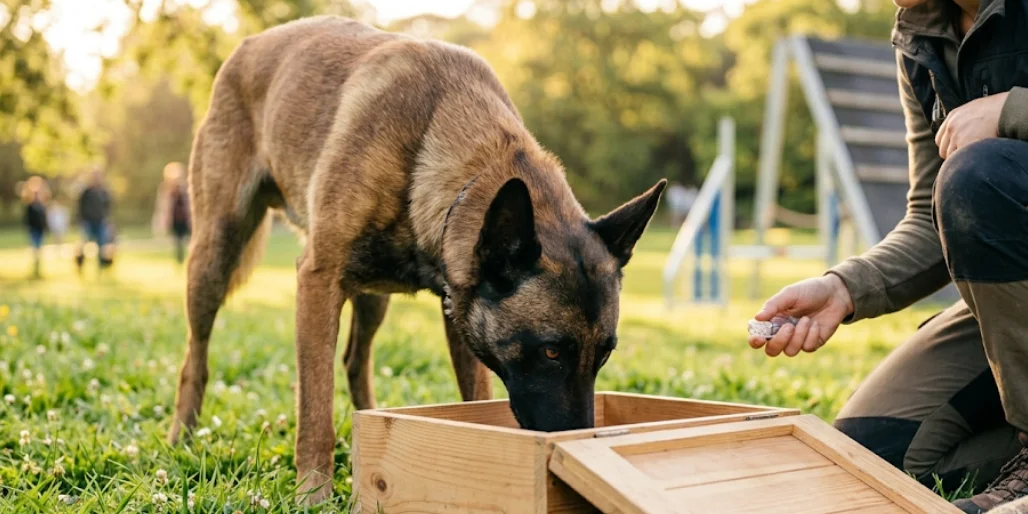
If you want your dog practically begging to train, welcome to the magic of the Dopamine Box and box feeding. Think of the Dopamine Box as a treasure chest of irresistible rewards—high-value treats, toys, or anything your dog goes nuts for—used strategically during training to make learning feel like play. Box feeding takes that idea into daily life by delivering meals from the same box or puzzle instead of a bowl, so mealtime becomes a reinforcing event that builds focus, curiosity, and a lovely association with working for rewards.
Together they crank up motivation, drive, and engagement without harshness or force—just smart, reward-based work — if you’re newer to this style of training, our dog training guide covers the foundational methods that the dopamine box builds on. In this piece I’ll cut through the fluff and show why these tools are game-changers for K-9 trainers, whether you’re teaching basic cues or prepping performance dogs who need consistent enthusiasm and reliable focus.
What Is Box Feeding (The Dopamine Box)?
Box feeding, or the “dopamine box, is a training method where a dog learns to put its head into a box or container for food delivery, creating a powerful indirect reward. This cornerstone technique helps dogs, puppies and k-9 detection teams understand that sniffing and tracking an odor leads to reinforcement, so pet dogs and working canine alike start to anticipate and want the cue. Trainers like Pat Stuart and many dog people use the box to teach calmness amid distraction, to build toughness and predictability, and to create a clear delivery system that reduces reactive dogs’ stress and increases obedience.
How to Start Box Feeding: Step-by-Step Guide
Begin by putting food into the box and encouraging your dog to sniff and put its head in the box; reward calmly every time so the dog thinks the box equals reward. Teach the dog with short, consistent sessions to build commitment, anticipation and the habit of heading into the box on cue. Use the box during meal times to ignite your training system, reinforce heel and other cues, and slowly add distractions like scent or blinder sounds so the dog can stay calm amid gunfire or chaos.
Why Dogs (and Trainers) Love It
Dogs love the dopamine box because the predictability of food into the box makes learning feel easy and enjoyable, which boosts desire and confidence fast. Trainers love that it’s portable for k9 teams, supports detection work by teaching odor association, and serves as an indirect reward that keeps handlers consistent. For reactive dogs the box becomes a safe, calming place that teaches them to be calm and focused rather than triggered by outside stimuli.
Keeping Your Dog Safe and Calm During Firework Season
Using the box or container during noisy times gives a dog a predictable routine and a calm place to sniff and receive reinforcement, which reduces panic. Teach the dog to go head into the box on cue and steadily generalize that behavior so the dog understands to seek the box calmly when distractions like fireworks or gunfire occur. This approach helps dog owners and handlers maintain control and keeps the dog’s training intact during stressful seasons.
Why Trainers Love It
Trainers appreciate that box feeding is simple to teach, easy to scale, and works for obedience, detection and tracking work because it directly links sniff, odor and reward. It’s a versatile tool for k-9 teams, puppy socialization, and tough training scenarios where a reliable, indirect reward prevents confusion. The dopamine box builds predictability, reinforces cues, and helps both handler and dog understand their roles.
Why Learn Dopamine Box?
Learning the dopamine box gives dog owners a foundational tool to teach, reinforce and build motivation without complex equipment, making it ideal for pet dogs and professional k9 units. It helps dogs track scent, think clearly about cues, and calmly accept training even when distractions arise, creating stronger obedience and detection capabilities. This training method ignites confidence and commitment in the dog, so the animal learns to work for the box rather than get triggered by the environment.
Key Benefits of Box Feeding
Benefits of box feeding include improved focus, predictable reinforcement, easier delivery of rewards, and better handling of distractions during training. The dopamine box dog quickly learns to sniff and head into the box for food, which builds anticipation and makes reinforcement feel natural. Overall, it’s a low-tech, high-impact tool that reinforces scent work, obedience, and handler cues while keeping training fun and calmly effective.
FAQ’s
Q: How can I teach my dog to use a dopamine box safely?
A: Start slow and make it predictable. Put a few kibble pieces in the box, let your dog sniff, then reward when they interact. Use a consistent marker (like a clicker or verbal “yes”) so your dog learns the action leads to reward. This safe way builds emotional balance and prevents overwhelm.
Q: How do I teach a dog to associate the dopamine box with emotional control?
A: Pair the box with calm moments—ask for a sit or paw, then drop another treat into the box and mark the behavior. Over time the dopamine box becomes a cue for settling, helping emotional control and reinforcing that calm behavior leads to reward.
Q: Can I teach the dopamine box as enrichment for dogs who have anxiety?
A: Yes. Use the box as low-pressure enrichment to provide feel-good neurotransmitter boosts through positive reinforcement. Start with short sessions, build desensitization to any scary parts, and gradually increase complexity to help emotional balance without forcing interaction.
Q: How do I teach my dog to nudge or paw the box on cue?
A: Shape the behavior—reward any small nudge or paw with a marker and treat, then slowly require a clearer nudge before marking. Reward with kibble or a treat dropped into the box so the dog learns the nudge leads to reward.
Q: How can I teach different dogs ethically to use a dopamine box without creating dependency on treats?
A: Use variable schedules: sometimes drop another treat, sometimes give praise or a brief game. Gradually fade food rewards by increasing task difficulty or switching to enrichment toys. This way you solve problems of over-reliance while still using the dopamine box ethically.
Q: How do I teach my rescue dog who’s fearful to approach the dopamine box?
A: Start with desensitization—place the box across the room with some kibble visible nearby. Reward any looked-at or approached behavior with a marker and food. Move the box closer over sessions. Keep interactions short and predictable so the dog learns the box is a safe way to get treats.
Q: How can I teach my dog to use the dopamine box during crate or management training?
A: Incorporate the box into existing routines—place it in the crate during calm times or use it for quiet settling before exits. Train the dog to target the box, then reward calm behavior. This links crate time with enrichment and helps maintain emotional control.
Q: How do I teach multiple dogs to share a dopamine box without resource guarding?
A: Train sharing with controlled turns—cue one dog to use the box while the other waits for a release word. Reward waiting dog with a different enrichment or guide them to a mat. Teach “trade” and “leave it” so everyone learns that patience leads to reward and resource guarding is less likely.
Q: How do I teach troubleshooting steps if my dog shows no interest in the dopamine box?
A: First, check motivation—try higher-value kibble or a favorite treat. Use a strong marker to reinforce tiny interactions. Make the box more enticing by adding scent or hiding treats slightly. If disinterest continues, reassess for stress or health issues and modify the approach to solve problems incrementally.