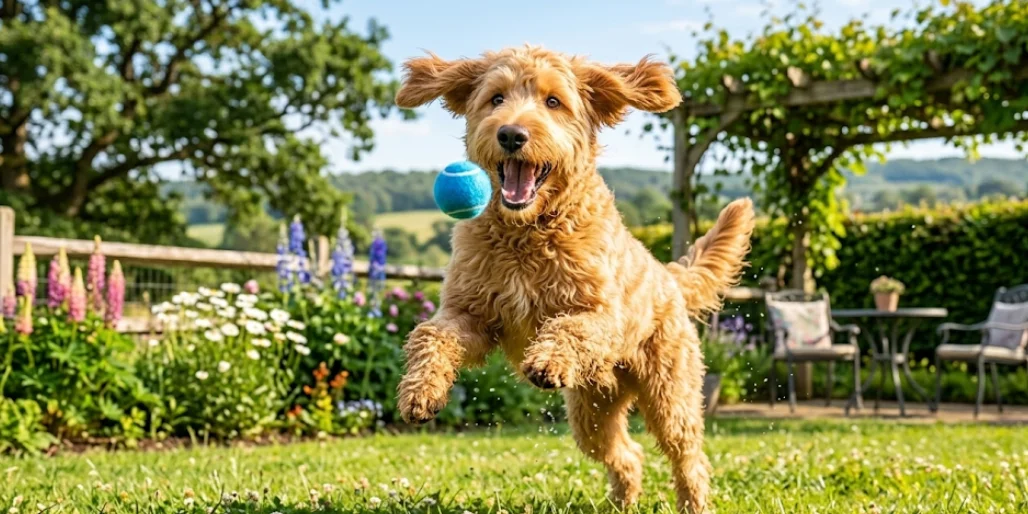
Goldendoodles are beloved for their friendly temperament and charming looks. This guide helps you understand everything about this wonderful breed, from its origins to its specific care needs.
Understanding the Goldendoodle
What is a Goldendoodle?
A delightful hybrid breed resulting from crossing a Golden Retriever and a Poodle. These lovable dogs inherit desirable traits from both parents, making them intelligent, friendly, and often low-shedding. Known for versatility, adapting well to various lifestyles and proving excellent companions for families and individuals alike.
History of the Breed
This crossbreed first emerged in the 1990s in North America, with breeders aiming to combine the gentle temperament of the Golden Retriever with the hypoallergenic qualities of the Poodle. That intention led to a popular breed that quickly gained recognition for its charming disposition and suitability for people with allergies, and it remains one of the most sought-after Doodle breeds today.
Generations Explained
Understanding generations matters for lineage and potential characteristics, especially coat type and hypoallergenic qualities. An F1 is a first-generation cross between a purebred Golden Retriever and a purebred Poodle. An F1B is a backcross, typically 75% Poodle and 25% Golden Retriever, often resulting in a curlier, more low-shedding, potentially more hypoallergenic coat, a key consideration for many owners.
Temperament
Renowned for exceptional temperament, inheriting the best traits from both parent breeds. This hybrid typically displays a friendly, outgoing, eager-to-please disposition, making it a wonderful companion for many households. A gentle nature often extends to children and other pets, contributing to widespread popularity among owners looking for a harmonious family dog.
Behavior Traits
Often playful and affectionate, a joy to have around. Intelligent and eager to please, which makes training a puppy rewarding, especially with positive reinforcement. Not usually high-energy, but these dogs enjoy regular exercise and mental stimulation to keep curious minds engaged. An adaptable temperament means they thrive in various living situations, from apartments to houses with yards, as long as their needs are met.
Interaction with Families
Well suited for family life, known for patience and gentleness with children, often forming strong bonds with every family member. A social nature means these dogs thrive on human companionship and can become quite sad if left alone for extended periods. Tolerant and happy to participate in family activities, whether a walk in the park or cuddling on the couch.
As a Service Dog
Given an intelligent, calm, eager-to-please temperament, these dogs excel as service animals. A gentle disposition combined with trainability makes them ideal candidates for assistance roles, including therapy and emotional support work. A strong desire to bond with humans further enhances their effectiveness in these roles.
Size and Lifespan
Typical Size
Sizes vary largely depending on whether the Poodle parent was Standard, Miniature, or Toy. A Standard can weigh 50 to 90 pounds and stand 20 to 24 inches tall, while a Mini typically weighs 25 to 45 pounds and stands 13 to 20 inches. The smallest, the Micro or Petite, from a Toy Poodle, might be under 25 pounds, so understanding the parent breeds helps estimate a puppy’s adult size.
Lifespan Expectations
Generally 10 to 15 years, typical for a dog of this size. Genetics, diet, and overall care play a significant role in longevity. Regular vet check-ups, a balanced diet, and plenty of exercise contribute to a healthy, long life.
Comparing Sizes Across Generations
It’s not strictly the generation (F1, F1B, etc.) that dictates size, but the size of the Poodle used in breeding. An F1 could be Standard-sized if a Standard Poodle was used, or Mini-sized if a Miniature Poodle was the parent, and the same logic applies to F1B, keeping a consistent range across generations.
Health and Care
Common Health Issues
While Goldendoodles are generally a healthy dog breed, they can be prone to certain health issues inherited from their Golden Retriever and Poodle parent breeds. These can include hip and elbow dysplasia, which affect the hip joint, and certain eye conditions. Reputable breeders will conduct health screenings to minimize the risk of these common Goldendoodle health issues, ensuring you adopt a Goldendoodle puppy with the best possible start.
Grooming Guide
The Goldendoodle coat can range from wavy to curly, and their low-shedding quality means they require regular grooming to prevent matting. Brushing several times a week is essential, and professional grooming every 6-8 weeks helps maintain their beautiful coat type. This regular care, whether it is brushing at home or a visit to the groomer, is vital for keeping your Goldendoodle comfortable and looking its best, especially for those with a curly coat, which often comes from the Poodle and Golden Retriever mix
Regular Vet Visits
Crucial for overall health and wellbeing, allowing early detection of issues, necessary vaccinations, and discussions about diet and exercise. A proactive approach with your vet helps manage conditions like hip dysplasia that might arise.
Training and Socialization
Training Tips
Training a puppy is a rewarding experience thanks to an intelligent, eager-to-please temperament. Positive reinforcement, treats and praise, works exceptionally well, helping commands and good manners click quickly. Short, regular sessions yield the best results, and the Golden Retriever and Poodle heritage both contribute to quick learning.
Importance of Early Socialization
Vital for developing a well-adjusted, confident adult. Exposure to a variety of sights, sounds, people, and other friendly dogs from a young age helps prevent fear and aggression later, fostering the naturally friendly, outgoing temperament this breed is known for.
Behavior Management
Understanding needs and providing outlets for energy and intelligence matters here. High energy and playfulness call for enough exercise and mental stimulation through toys and training to prevent destructive behavior. Clear boundaries and consistent routines from the start also help keep things well-mannered at home.
Conclusion
Final Thoughts
These are truly remarkable dogs, blending the best traits of the Golden Retriever and Poodle into a delightful, adaptable companion. Friendly temperament, low-shedding coat, and intelligence make for an excellent choice for many owners, including those with allergies. Whether considering a Miniature or Standard type, understanding training, grooming, and health care needs is essential for a long, happy life together.
Explore More
If you have enjoyed learning about the Goldendoodle, there is a whole world of canine knowledge waiting for you. Dive deeper into the fascinating characteristics of countless other breeds by exploring the comprehensive Dog A-Z Breeds Guide. You will find valuable information on temperament, care, and everything in between to help you understand more about our beloved four-legged friends.
About Pawandbreeds
At Pawandbreeds, we are passionate about helping dog owners provide the best possible care for their furry companions. We strive to offer comprehensive, reliable information and resources to support you through every stage of your dog’s life, ensuring a happy and healthy journey together.
FAQ
Q: What exactly is a Goldendoodle dog breed?
A: So technically, the Goldendoodle isn’t an “official” dog breed in the traditional sense – it’s a cross between a golden retriever and the poodle, which makes it a hybrid or “designer dog.” People sometimes call it a doodle for short. The goldendoodle dog breed took the best bits of both parent breeds and mixed them into one seriously lovable pup. The Goldendoodle Association of North America has been tracking and promoting this crossbreed for years, and honestly, once you meet one, you’ll get why people are obsessed.
Q: What’s the temperament of a Goldendoodle like?
A: Goldendoodle personality is basically a highlight reel of good traits. Since it’s a mix of the retriever and the poodle, you get the friendliness and eagerness to please that comes from the temperament of a golden retriever, combined with the poodle’s smarts. These dogs are typically goofy, affectionate, and great with kids and other pets. They’re not usually aggressive or standoffish – most goldendoodles just want to be near their humans 24/7, which is either adorable or slightly annoying depending on your mood that day.
Q: Are there different sizes of Goldendoodles?
A: Yep, definitely! You’ve got standard goldendoodles, medium goldendoodles, and mini goldendoodles (also called miniature goldendoodles). The size depends on what type of poodle was used in the breeding – standard poodle gives you standard goldendoodles, while mini or toy poodles give you the smaller versions. Standard ones can get up to 50-90 pounds, while mini goldendoodles usually stay in the 15-35 pound range. So whether you want a big goofy lap dog or something more apartment-friendly, there’s a size for you.
Q: What does the Goldendoodle coat actually look like?
A: This is where things get interesting because goldendoodle coat types can vary a lot, even within the same litter. You might get a wavy coat, a curly coat like the poodle side, or a straighter coat that leans more golden retriever. Some coats shed a little, others are pretty much non-shedding, which is why lots of people with allergies gravitate toward this breed. Regular brushing and grooming appointments are pretty much non-negotiable no matter which coat type your pup ends up with.
Q: How long is the lifespan of a Goldendoodle?
A: On average, the lifespan of a goldendoodle runs about 10-15 years, which is pretty solid for a dog this size. Since the goldendoodle is a hybrid, they sometimes benefit from “hybrid vigor,” meaning they can be healthier overall than one purebred parent alone. Of course, diet, exercise, and regular vet visits play a huge role too. Keep them active and feed them well, and you’re looking at many good years together.
Q: How do I find a good Goldendoodle breeder?
A: Finding a legit goldendoodle breeder takes a little homework. You want someone who health-tests both parent dogs (the golden retriever and the poodle side), lets you visit the puppies, and is transparent about genetics and temperament. Avoid anyone who seems shady or won’t answer basic questions – that’s a red flag. Checking resources through the Goldendoodle Association of North America can also help point you toward reputable breeders instead of backyard operations just cashing in on the doodle trend.
Q: Is training a Goldendoodle puppy hard?
A: Honestly, no – these pups are pretty quick learners thanks to their poodle brains. Positive reinforcement training works best, meaning treats, praise, and patience instead of harsh corrections. Because they’re so eager to please (a trait from the golden retriever side), goldendoodle puppies usually pick up basic commands, potty training, and leash manners without too much drama. Early socialization is key too, so get that puppy out meeting new people and dogs as soon as it’s safe to do so.
Q: Do Goldendoodles need a lot of exercise?
A: Yeah, they’re not couch potatoes. Whether you’ve got standard goldendoodles or mini goldendoodles, daily walks and playtime are important for keeping them happy and out of trouble. Bored doodles can get a little destructive, chewing stuff up or barking more than you’d like. A good hour of exercise, mixed with mental stimulation like puzzle toys, keeps most goldendoodles satisfied and mellow at home.
Q: Where can I find reliable Goldendoodle information before getting one?
A: There’s tons of goldendoodle information out there, but not all of it is accurate, so stick to trusted sources. The Goldendoodle Association of North America is a solid starting point, along with reputable breeder websites and goldendoodle-specific forums where actual owners share real experiences. Talking to a vet familiar with the goldendoodle dog breed can also help you understand what to expect health-wise and behavior-wise before bringing one home.