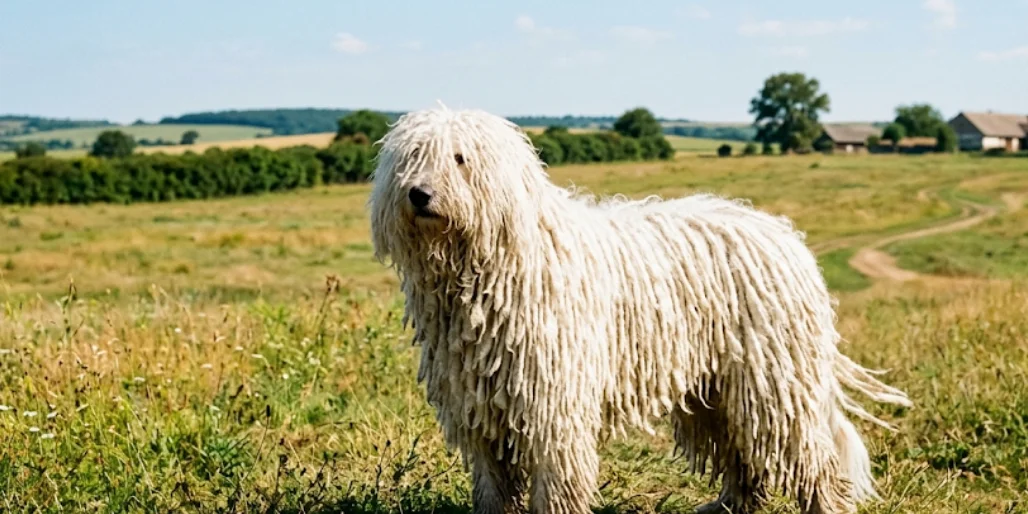
Discover everything you need to know about the majestic Komondor dog breed, from its unique temperament and specific care requirements to essential grooming tips and insights from various Kennel Clubs. This guide will help you understand if this Hungarian livestock guardian is the right companion for you and your family.
Overview of the Komondor Dog Breed
The Komondor dog breed, often affectionately called the “mop dog,” is a truly unique canine with a fascinating history and a striking appearance. Hailing from Hungary, this large breed was originally bred to work as a livestock guardian, protecting flocks from predators with its imposing presence and distinctive corded coat.
Breed Characteristics
Immediately recognizable by an impressive white corded coat, serving as natural camouflage among sheep and protection from elements and predators. Powerful and agile, embodying the standard of a formidable guardian with a strong, muscular build beneath that unique outer coat.
Temperament and Personality
The Komondor’s temperament is characterized by loyalty, courage, and a natural protective instinct towards its family and property. While reserved with strangers, a well-socialized Komondor exhibits a calm and confident personality, making it an excellent guard dog. Early socialization is crucial for a Komondor puppy to develop into a well-adjusted adult.
Lifespan and Health Considerations
The average lifespan of the Komondor dog breed ranges from 10 to 12 years. Like all large breeds, Komondors can be prone to certain health issues, so selecting a reputable breeder who conducts thorough health screenings is vital. Regular veterinary check-ups are important for maintaining a Komondor’s health throughout its life.
Komondor Grooming and Coat Care
Grooming a Komondor is an undertaking unlike grooming most other dog breeds due to its unique corded coat. This breed guide emphasizes that proper Komondor grooming is essential not only for aesthetics but also for the health and comfort of your Komondor, preventing matting and skin issues.
Corded Coat Care
The coat naturally forms into cords, requiring specific attention to maintain unique texture and prevent skin issues underneath. Owners must carefully separate cords by hand as the dog grows, ensuring they don’t mat together. This specialized care is a hallmark of maintaining this breed and sets it apart.
Grooming Needs
Beyond the distinctive corded coat, regular cleaning of eyes and ears, plus nail trims, round out the routine. While the coat sheds very little, it can accumulate dirt and debris, necessitating occasional bathing and thorough drying to prevent mildew and skin irritations.
Common Grooming Mistakes
One of the most common grooming mistakes with a Komondor is neglecting the regular separation of its cords, leading to painful matting and potential skin infections. Another error is attempting to brush the corded coat, which damages the cords and alters the breed’s characteristic appearance. Owners should also avoid letting the coat stay wet for too long.
Exercise Needs
Daily Exercise Requirements
The Komondor, a large breed originally bred to work as a livestock guardian, does not require the intense, high-impact exercise that some other large dogs do. While they are powerful and agile, their exercise needs are moderate. A good daily routine would include a couple of brisk walks or supervised playtime in a securely fenced yard to keep this Komondor dog breed happy and healthy.
Best Activities
Thrives on activities engaging natural instincts. Long, leashed walks around the neighborhood, or exploring a large, secure area to patrol, are excellent choices. Supervised play sessions in a yard with a strong, high fence suit the guarding temperament that needs to feel secure in its territory. Activities stimulating the mind, like scent work or basic obedience, benefit this intelligent breed too.
Socialization Needs
Early and consistent socialization is paramount for a Komondor puppy to develop into a well-adjusted adult dog. Exposing your Komondor puppy to a variety of people, sounds, and other friendly dogs from a young age helps to foster a balanced temperament and prevents them from becoming overly protective or reserved. Continuing to socialize your Komondor throughout its life will ensure it remains a confident and calm companion.
Finding a Komondor Breeder
What to Look for in a Breeder
Crucial to find someone reputable who prioritizes health and temperament. Look for transparency about breeding practices, the chance to meet the puppy’s parents, and knowledge of the breed standard. A good breeder conducts health screenings for common issues and happily provides references.
Questions to Ask Potential Breeders
Don’t hesitate to ask plenty. Inquire about parent health history, typical temperament, and how puppies are socialized. Ask about experience with the breed, what support comes after taking a puppy home, and registration with a reputable organization like the American Kennel Club.
Adoption vs. Buying
Deciding between adopting a Komondor from a rescue or buying a Komondor puppy from a breeder depends on your preferences and circumstances. Adoption can be a rewarding experience, giving a deserving dog a second chance, though you might have less information about its early life. Buying from a reputable breeder allows you to select a Komondor puppy with a known lineage and health background, ensuring you understand the breed characteristics from the start. For more information on various breeds, you can check out a comprehensive Dog A-Z Breeds Guide. Pawandbreeds is dedicated to helping you find the perfect companion.
Similar Breeds to the Komondor
Comparative Analysis of Related Breeds
When considering a Komondor, it’s helpful to look at other livestock guardian dog breeds that share similar traits in terms of temperament and purpose. Breeds like the Great Pyrenees, Anatolian Shepherd, or Maremma Sheepdog also possess that strong protective instinct and a calm, watchful demeanor. While they may not all have the distinctive corded coat of the Komondor dog breed, they are all large breed dogs bred to work, guarding their flock, and require an owner who understands their specific needs, especially when it comes to early socialization.
Choosing the Right Breed for Your Family
Selecting the right dog breed for your family involves carefully considering various factors, not just the unique appearance of a Komondor. Your living situation, activity level, and previous experience with large breed dogs all play a crucial role. If you’re seeking a loyal guard dog with a unique look and are prepared for the extensive Komondor grooming requirements of its corded coat, then this Hungarian breed might be an excellent fit. However, if you prefer a shorter coat or less demanding grooming, a different livestock guardian might be more suitable.
Breed Compatibility
Understanding breed compatibility is key to a happy household, especially when introducing a Komondor puppy. While Komondors are generally good with children and other pets within their own family, their natural guarding temperament means they need proper socialization from a young age. Their protective instincts are strong, so ensuring they are well-socialized to various situations and people is important for them to be a well-adjusted companion, preventing them from being overly reserved or suspicious of strangers.
Conclusion
Final Thoughts on the Komondor
The Komondor is truly a magnificent and unique dog breed, offering unparalleled loyalty and protection to its family. With its striking white coat and history as a Hungarian livestock guardian, it’s a breed that commands respect and admiration. Prospective owners must be prepared for the specific Komondor grooming needs, regular socialization, and the commitment required to manage such a powerful and intelligent large breed dog. For the right owner, a Komondor can be an incredibly rewarding companion.
Additional Resources and Guides
For those interested in delving deeper into the world of dog breeds, there are numerous resources available. Reputable Kennel Clubs, such as the American Kennel Club (AKC) or the United Kennel Club, offer extensive breed information and standards. You can also find detailed breed guides and forums where experienced owners share their insights on everything from Komondor health to training a Komondor puppy, helping you to make an informed decision.
Visit the Dog A-Z Breeds Guide for More Information
To explore a wider range of dog breeds, their characteristics, and care requirements, be sure to visit the Dog A-Z Breeds Guide. It’s an invaluable resource for anyone looking to learn more about different dogs or find the perfect companion. Pawandbreeds is dedicated to helping you find the perfect companion.
FAQ
Q: What’s the deal with the komondor breed anyway? Why does it look like a walking mop?
A: Great question! That distinctive corded white coat is actually functional, not just a quirky look. This ancient hungarian livestock guardian was bred to blend in with flocks of sheep while protecting them from wolves and other predators. The cords act like natural armor against harsh weather and bites. Once those cords are established, usually taking a couple of years to fully form, the dog looks like it’s wearing dreadlocks, but underneath is a seriously tough working dog built for herding breeds duty.
Q: How’s the komondor personality? Are they good family dog material?
A: The komondor personality is a mix of loyal, independent, and protective. They’re not the cuddly, eager-to-please type you might expect from other breeds. Thanks to their guardian temperament, they bond deeply with their family and can be excellent watchdogs, but they’re also stubborn and need an owner who understands herding dogs and their instincts. As a family dog, they do best with experienced owners who can handle a large, willful breed that takes its protective duties very seriously.
Q: What should I know from a solid komondor breed guide before getting one?
A: Any decent komondor breed guide will tell you this is not a low-maintenance pet. They’re deep-chested, large dogs, which means you need to be aware of potential health concerns like bloat. Some owners even discuss gastropexy with their vet as a preventative measure. They also need moderate exercise needs met daily, plenty of space, and a family committed to their unique grooming routine. This isn’t a breed for someone wanting a low-effort companion.
Q: What’s involved in a proper komondor grooming guide? That coat looks intense.
A: Oh, it’s intense alright! A komondor grooming guide will walk you through separating and maintaining the cords by hand, which takes serious time and patience. The double coat underneath, with its dense undercoat, means cords can trap moisture if you’re not careful, especially after baths or swims. You’ve gotta dry those cords thoroughly to avoid mildew or skin issues. Coat health is a big part of owning this breed, so be ready to invest hours into upkeep.
Q: What are the biggest komondor health concerns to watch out for?
A: When it comes to komondor health, the big ones are orthopedic issues like hip dysplasia, which is common in larger herding dogs. Bloat is another serious concern given their deep-chested build. Skin problems can pop up too if the coat isn’t dried properly since cords can trap moisture against the skin. Regular vet checkups and a good diet, sometimes supplemented with omega-6 for coat and skin health, go a long way in supporting overall health and welfare.
Q: Is the komondor really the largest of the hungarian herding breeds?
A: Yep, the komondor is indeed considered the largest of the hungarian herding dogs. They were built to be imposing enough to fend off predators while guarding flocks of sheep across the plains. Their size, combined with those heavy coats, made them look even bigger and scarier to wolves. This size also means they need enough room to move and a home that isn’t cramped for such a substantial dog.
Q: How does the komondor compare to something like an ovtcharka?
A: Good comparison! Both the komondor and the ovtcharka are livestock guardian types with heavy coats and serious protective instincts. However, the komondor’s corded coat is unique among guardian breeds and sets it apart visually. Both share that classic guardian temperament, independent thinking, and a wariness of strangers, but grooming needs are wildly different. An ovtcharka doesn’t require the intense cord maintenance a komondor does.
Q: Does the komondor have moderate exercise needs or do they need tons of activity?
A: Surprisingly, komondors have moderate exercise needs compared to some other working breeds. They’re not hyper dogs bouncing off walls, but they do need daily walks and some space to patrol, since that guarding instinct doesn’t switch off. A bored komondor can become destructive, so mental stimulation paired with physical activity keeps them balanced and happy.
Q: Where can I find reliable dog breed information about the komondor before committing?
A: Your best bet for solid dog breed information is checking with official kennel clubs, reputable breeders, and breed-specific rescue groups. They’ll give you the real scoop on health and welfare standards, temperament expectations, and what daily life with a komondor actually looks like. Talking to current komondor owners is also gold, since they can share firsthand experience about grooming, health concerns, and what it’s really like living with this ancient, fascinating breed.