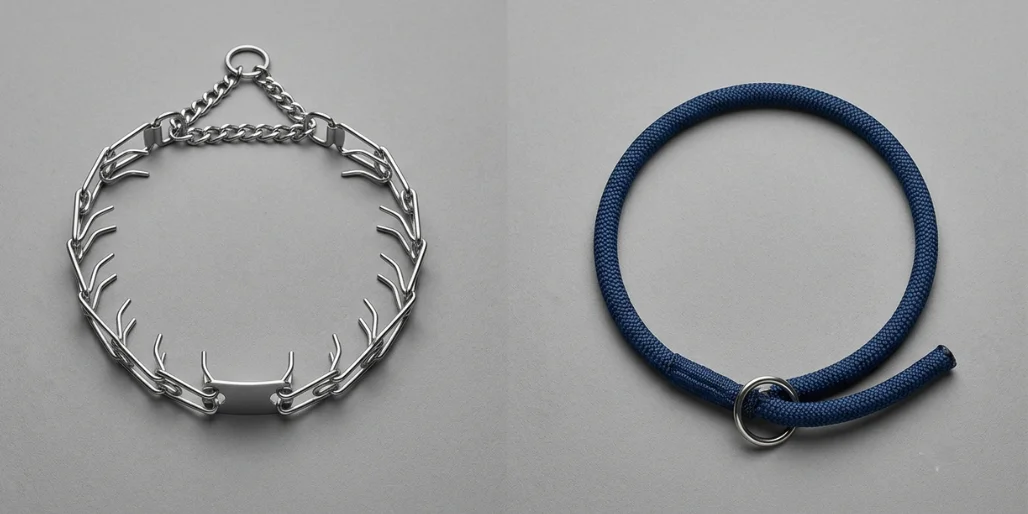
There are a lot of choices when it comes to picking the right training collar for your beloved canine companion, and two of the most talked-about options are the prong collar and the slip collar. oth have their unique places in dog training, and understanding how they work, along with their pros and cons, is crucial for any dog owner looking to effectively train their dog. Let’s dive in and explore these tools to help you make an informed decision for your dog’s training journey.
Understanding Dog Collars
Choosing the right dog collar for dog training can feel a bit overwhelming, especially with so many types available. Beyond just a fashion statement, a dog collar is a vital tool for communication and control between a handler and their dog. Different collars are designed for different purposes, whether it’s for everyday walks, specific training issues, or even just holding identification tags. Understanding the function of each type of collar is the first step toward responsible dog ownership and effective training.
What is a Prong Collar?
A prong collar, also known as a pinch collar, is a type of training collar designed to provide a very specific kind of correction. It’s often misunderstood, but when used correctly by a professional dog trainer or a knowledgeable handler, it can be a highly effective tool for dog training, especially for a pulling dog. The prong collar works by having metal links with blunted “prongs” that sit around the dog’s neck, making it a popular substitute for training when used correctly. These aren’t sharp and are designed to mimic a mother dog’s nip on a puppy’s neck, providing a clear, unmistakable signal without causing harm. Many dog owners are wary of using a prong collar, but it can be a humane and effective tool.
What is a Slip Collar?
A slip collar, often confused with a choke chain or choke collars, is another common training collar that can serve as a substitute for training in certain situations. It’s essentially a loop of material, usually nylon or chain, that slips around the dog’s neck. When the handler applies leash pressure, the loop tightens around the neck, which can help teach the dog not to tug or lunge. Unlike a flat collar or harness, the slip collar provides a corrective action when the dog pulls. A nylon slip lead is a popular variation that combines the leash and collar into one piece, often preferred by trainers as a substitute for training. While it can be useful for teaching your dog loose leash walking, it’s crucial to understand how to use a slip collar properly to avoid causing discomfort or injury to the dog’s neck.
Differences Between Prong and Slip Collars
When comparing a prong vs. slip collar, the key differences lie in their design and the type of correction they offer. A prong collar provides even pressure around the dog’s neck, distributing the force more broadly and mimicking a natural communication method. This makes it effective for dogs that are reactive or incredibly strong pullers, as it teaches leash pressure in a clear, consistent manner, which is crucial for large breed dogs. In contrast, a slip collar, like a nylon slip or a choke chain, tightens circumferentially around the dog’s neck and can be a useful tool for those who need to teach their dog proper leash behavior. If used incorrectly, this can put concentrated pressure on the trachea. While both are training collars, the mechanism and the nuanced feedback they provide to the dog are distinct, influencing how a trainer might choose one over the other. A professional dog trainer will often assess the individual dog’s breed, temperament, and specific training needs before recommending a type of collar.
Choosing the Right Collar for Training
Factors to Consider When Selecting a Dog Collar
When you are trying to find the best dog collar for your canine companion, there are many factors that you need to consider before making a final decision, including whether to use the prong or another type of collar. The breed of your dog, its temperament, and its specific training needs are paramount, especially when considering the variety of collars available for training. For example, a strong, reactive dog might benefit from the specific feedback provided by a prong collar, while a smaller dog learning loose leash walking might do better with a different type of collar. Your dog trainer will assess your dog’s neck, the way your dog pulls, and other behavioral aspects to recommend the most suitable training collar. It’s not just about what looks good; it’s about what will effectively and safely help you train your dog.
Benefits of Using a Prong Collar
The prong collar, often called a pinch collar, has several benefits when used correctly in dog training. One of the main advantages is the way it provides a consistent and clear correction without causing pain, mimicking the natural communication a mother dog uses with her pups. This makes it a very effective tool for a pulling dog or a reactive dog that might otherwise be difficult to control on a regular flat collar or even a harness. The design of the prong collar distributes leash pressure evenly around the dog’s neck, which many professional dog trainers find to be more humane and less likely to cause damage to the dog’s neck than other chain collars or choke collars when a dog pulls. The Herm Sprenger prong collar is a well-known example that many dog owners trust, especially those with large breed dogs that need to teach proper leash manners.
Benefits of Using a Slip Collar
A slip collar, which can come in nylon or chain varieties, offers distinct benefits, particularly for teaching your dog loose leash walking or for quick corrections. Unlike a fixed dog collar, the slip collar tightens around the dog’s neck when leash pressure is applied, giving immediate feedback to the dog. A nylon slip lead, which combines the leash and collar, is particularly convenient for handlers who need a simple, all-in-one tool for quick training sessions or temporary control. While it requires careful handling to avoid putting too much pressure on the dog’s neck, it can be an excellent tool to teach your dog to heel and walk politely by your side, especially if you have a dog that tends to pull but isn’t overly reactive.
Training Techniques with Collars
Using a Prong Collar Effectively
To effectively use a prong collar, also known as a pinch collar, it’s essential to understand that it’s a communication tool, not a punishment device, and can be a great option for a variety of collars. The goal when using a prong collar is to give precise, quick corrections that mimic a mother dog’s communication, immediately releasing the pressure as soon as the dog responds appropriately. A professional dog trainer will often teach you how to properly fit the prong collar, ensuring the prongs sit correctly on the dog’s neck, just behind the ears, and that it’s snug enough not to slide down but loose enough not to pinch constantly. This type of collar is particularly effective for a pulling dog or a reactive dog, as the even distribution of leash pressure around the dog’s neck provides clear feedback without causing harm, teaching the dog to walk politely on a loose leash.
Using a Slip Collar Effectively
When using a slip collar, whether it’s a nylon slip or a chain choke collar, the key is to apply quick, upward “pop and release” corrections rather than sustained pulling. The slip collar works by tightening around the dog’s neck when leash pressure is applied and immediately loosening when the pressure is released, providing clear feedback. It’s crucial not to let the slip collar act as a choke chain, constantly putting pressure on the dog’s neck. Many dog owners find a slip lead, which combines a leash and collar, particularly convenient for quick training sessions, especially when teaching your dog to heel or for loose leash walking. A skilled handler or dog trainer will show you how to ensure the slip collar is positioned high on the dog’s neck, just behind the ears, to maximize effectiveness and minimize discomfort.
Combining Collars with Other Training Tools
While a prong collar or a slip collar can be powerful tools on their own, their effectiveness can be enhanced when combined with other dog training methods and tools. For instance, using a prong collar to teach leash pressure and then transitioning to a flat collar once the dog consistently walks on a loose leash can be a great progression. Similarly, a slip collar can be used in conjunction with positive reinforcement techniques, where desirable behaviors are rewarded with treats or praise, making the correction a clear signal rather than a primary motivator. Some dog trainers might also use a harness for specific exercises, but for addressing pulling or reactivity, the direct feedback of a training collar like a Herm Sprenger prong collar or a sturdy nylon slip is often preferred. The goal is always to train your dog for good behavior and a harmonious relationship.
Alternative Options for Dog Training
Martingale Collars
Martingale collars, often called limited-slip collars, are a fantastic alternative to traditional choke chains or even a regular flat collar, offering a more humane approach for many dog owners. Unlike a slip collar or choke collars, a martingale collar is designed to tighten only to a certain point around the dog’s neck, preventing it from becoming too tight or causing a choking sensation if the dog pulls. This makes them particularly suitable for breeds with narrow heads, like sighthounds, who might easily slip out of a standard dog collar. A good dog trainer might recommend a martingale for dogs that need a gentle correction but where a prong collar or heavy leash pressure isn’t necessary.
Harnesses vs. Collars: When to Use Each
Deciding between a harness and a training collar like a prong collar or a slip collar depends heavily on the individual dog and the specific training goals. While a harness can be an excellent option for dogs with respiratory issues or those prone to neck injuries, it often doesn’t provide the same precise communication or feedback that a dog trainer might achieve with a dog collar. For a pulling dog, a front-clip harness can help redirect their momentum, but it might not teach leash pressure in the same way a prong collar or even a well-used slip collar would. Many professional dog trainers will use a harness for general walks and switch to a training collar for specific behavioral modifications, carefully assessing the dog’s breed and temperament.
Chain Collars and Their Uses
Chain collars, often referred to as choke chains, are another type of training collar, but their use requires significant understanding and caution, particularly when dealing with another dog in the vicinity. These collars are essentially a chain that forms a loop around the dog’s neck and tightens when the leash is pulled, which can be particularly effective for large breed dogs. While some dog owners and old-school dog trainers might still use them, modern dog training often prefers tools that offer clearer communication without the risk of discomfort or potential damage from sustained pressure. A choke chain is distinct from a slip collar, though both tighten around the neck. If not used with swift, snap-and-release corrections, a choke chain can put excessive pressure on the dog’s neck, which is why many trainers now opt for alternatives like a prong collar to help teach leash pressure more humanely.
Expert Opinions on Dog Collars
Insights from Professional Dog Trainers
Professional dog trainers often emphasize that the choice of dog collar, be it a prong collar, slip collar, or a simple flat collar, is less about the tool itself and more about the handler’s skill and understanding. A good dog trainer will tell you that no collar is inherently “bad”; it’s the misuse that causes issues, and it’s essential to understand how to use the prong effectively. For instance, while a prong collar works by distributing even pressure around the dog’s neck to mimic a mother dog’s corrective nip, a skilled handler knows how to use a prong collar to help a pulling dog or a reactive dog without causing harm. Similarly, using a slip collar effectively means employing quick, upward corrections rather than sustained pulling, which could turn it into a choke chain.
Safety Considerations for Different Collars
Safety is paramount when choosing any dog collar, especially training collars like a prong collar or a slip collar. When using a prong collar, it’s crucial that it fits properly and that the prongs aren’t sharp, ensuring the pressure is distributed evenly around the dog’s neck. A poorly fitted prong collar can cause discomfort or even injury. For a slip collar or a choke chain, the primary safety concern is preventing sustained pressure on the dog’s neck, which can damage the trachea or put strain on the dog’s neck.A professional dog trainer will always stress the importance of correct fit and technique to prevent a dog from being injured — a caution that aligns with the American Veterinary Society of Animal Behavior (AVSAB)‘s broader position that aversive tools carry meaningful risk and should be used only with extreme care, if at all.
Common Misconceptions About Prong and Slip Collars
There are many misconceptions surrounding both the prong collar and the slip collar, often fueled by a lack of understanding about their proper use in dog training. Many dog owners believe that a prong collar is cruel because of its appearance, when in reality, a properly fitted Herm Sprenger prong collar, when used correctly by a knowledgeable handler, applies less direct pressure than a choke chain or even a regular flat collar if a dog pulls. Similarly, the slip collar is often confused with a choke collar, leading to the false belief that all slip collars are designed to choke the dog. A good dog trainer will clarify that both are communication tools, designed to teach leash pressure and guide a dog, not to punish or cause pain.
FAQ”s
Q: What’s the difference between a prong training collar and a slip collar when you’re using a leash?
A: A prong training collar has metal prongs that sit against the dog’s neck and apply pressure like a natural correction, while a slip collar tightens around the neck when you yank the leash. Prongs are meant to distribute pressure more evenly; slip collars rely on constriction. Both are pieces of equipment and can be effective for one for training if used properly, but they work differently and feel different to the dog.
Q: Is a herm sprenger prong collar safer than other prong collars?
A: Many people trust a Herm Sprenger because it’s well-made and has smooth, even prongs, but safety really comes down to how you use it. Even a premium prong can cause issues if left on unsupervised, fitted poorly, or used by inexperienced trainers. For large dogs like a pitbull or husky, proper fit and technique are extra important.
Q: Can I use a slip collar on large dogs like a husky or pitbull for correcting undesirable behavior?
A: You can, but be careful. Slip collars can be effective at getting a quick correction for undesirable behavior or to bring a dog back to heel position, but they can also cause neck injuries if you yank or use negative reinforcement too hard. Many trainers recommend them only for short-term use during supervised training and prefer alternatives for long walks.
Q: When should I pick a prong collar over a slip collar for training collar work?
A: Consider a prong collar if your dog is very strong, has a thick neck, or needs a clear, brief correction you can pair with commands. It’s often chosen by experienced trainers for dogs that pull hard on a 6-ft leash. But you should get guidance on fit and technique—used properly, it’s a tool; used incorrectly, it can make problems worse.
Q: Do prong collars use negative reinforcement, and does that make them cruel?
A: Prong collars generally rely on aversive pressure, which many describe as negative reinforcement if the pressure is removed when the dog offers the right behavior. Whether that’s cruel depends on how it’s applied. When used properly by experienced trainers as a quick, predictable cue, some view it as a humane correction. If it’s used harshly, constantly, or unsupervised, it’s more likely to harm the dog.
Q: Can I use either a prong or slip collar as my everyday collar for walks with a 6-ft leash?
A: It’s not ideal to use a prong or slip collar as an everyday unsupervised collar. Many people prefer separate collars and harnesses for daily ID and loose-leash walking. If you do use one for walks, keep it supervised, fitted correctly, and don’t leave it on when you’re not around. For consistent training sessions, one for training and one for daily wear is common.
Q: How do I avoid my dog getting more aggressive or anxious with these collars?
A: Avoid yanking or punishing; instead pair corrections with clear commands and positive rewards. Ensure corrections are brief and predictable—this reduces confusion and prevents training from becoming all negative reinforcement. Work with experienced trainers who can teach you the right timing, fit, and when to transition to collars and harnesses that encourage better behavior without escalation.
Q: What practical tips help with fit and use so I don’t cause harm when I apply pressure?
A: Fit the collar snug but not choking, position it so it’s effective for a quick cue and not constantly tight, and practice short training sessions using a 6-ft leash for control. Learn to use less slack and light pressure—think of the prong as a signaling tool rather than something to yank on. Always supervise, especially with large dogs, and seek help from experienced trainers if you’re unsure.